



By Hira Bashir
Pakistan’s energy crisis is no longer just about power cuts; it is about survival. Every summer people face regular blackouts while electricity demand rises. Yet the country’s power system with an installed capacity of about 46,000 megawatts produces only 14,000 to 15,000 megawatts on average.

Behind Pakistan’s frequent power cuts is a much bigger problem. The power sector owes over Rs 1.3 trillion in circular debt, and the country spends $15–18 billion every year on importing oil. These problems make Pakistan’s energy system fragile and vulnerable to shocks from the global market.
Recent attacks by the United States and Israel on Iran show how serious this vulnerability can be. Brent crude briefly went above $82 per barrel, and more than 150 oil tankers had to wait outside the Strait of Hormuz. This narrow waterway is very important, as about one-fifth of the world’s oil and gas passes through it .Any disruption in this strait directly affects Pakistan, which imports most of its oil and relies on LNG for electricity generation. Even a short-term supply problem can raise fuel costs, hurt the economy, and make it harder for households and industries to cope.
Pakistan’s energy problems are also caused by the way the government buys electricity from Independent Power Producers (IPPs). These contracts, called “take-or-pay” agreements, require the government to pay billions even if the plants do not generate enough electricity. By mid-2025, the government had to borrow Rs 1.275 trillion just to pay old bills. Every rise in global oil prices, whether from Middle East conflicts or other shocks makes the problem worst.
Solar energy has helped in some ways, but it has also created new problems. About 650,000 solar-powered tube wells now operate in Punjab allowing farmers to pump groundwater at almost no cost. While this reduces diesel use and dependence on the grid it has led to overuse of water for crops like rice which expanded by roughly 30 percent between 2023 and 2025. Pakistan cannot rely on solar alone; it needs a steady and reliable source of electricity that does not harm water or other critical resources.
This is why nuclear energy, especially small modular reactors (SMRs) and micro reactors, is so important. Nuclear fuel costs are low compared to oil or gas so electricity prices are less affected by global market swings. SMRs can be built in factories, shipped in pieces, and installed faster than large traditional reactors. They can supply power to industrial areas, remote regions, or desalination plants, providing continuous energy while reducing losses from long transmission lines. Unlike solar, they work all the time, and unlike gas, they are not affected by global conflicts that push prices up.
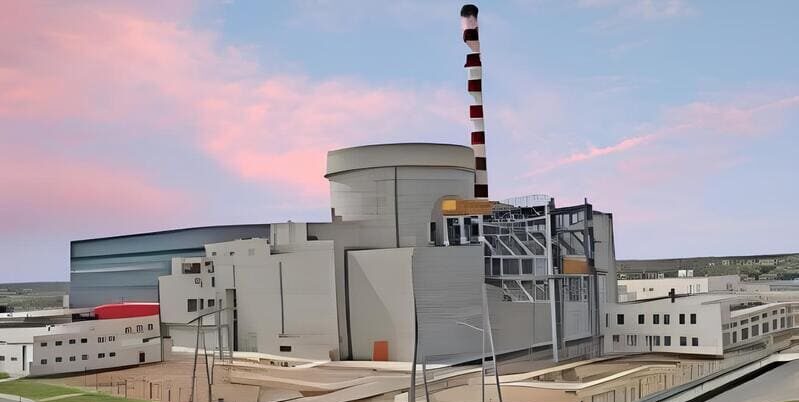
Pakistan also has the expertise to make this work. It already operates several nuclear plants and has trained engineers and regulators. Expanding into SMRs is a natural next step. Nuclear energy can protect the country from crises like the Iran conflict, where oil prices could rise above $100 per barrel if the Strait of Hormuz were fully blocked. Higher oil prices not only make electricity more expensive, they also increase fiscal pressure and threaten households and businesses.
SMRs are not without challenges. Commercial deployment is still new worldwide and financing, safety, and waste management need careful planning. But these challenges are manageable especially compared to the constant risks of relying on imported oil. Nuclear energy gives affordable, clean and reliable energy hence solving two problems at once: economic and environmental sustainability at a time.
Pakistan is facing three challenges at a time; unaffordable energy, growing debt, and shrinking water supplies. Temporary fixes or partial renewable solutions are not enough. Every oil price spike, every conflict in the Middle East, and every mismanaged IPP contract weakens the system. Only by combining renewable energy with a strong nuclear backbone can Pakistan stabilize its grid, protect the economy from shocks and preserve its water and natural resources.
The lesson is clear. Pakistan’s energy future cannot depend on global oil markets or temporary fixes. It needs technology that is reliable, independent, and sustainable. Investing in nuclear energy means fewer blackouts, less dependence on imported fuel and a sustainable energy system.
Author: Hira Bashir – Associate Research Officer at CISS AJK. She is also pursuing MPHIL in International Relations from Muslim Youth University, Islamabad. Her area of research is The Peaceful Use of Nuclear Technology.
(The views expressed in this article belong only to the author and do not necessarily reflect the views of World Geostrategic Insights).