



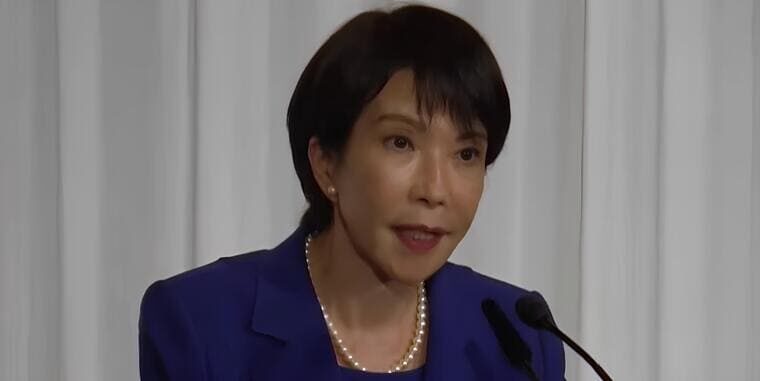
Japan’s 2026 House of Representatives election is unfolding under conditions that are rare even by the country’s snap-election standards: a midwinter campaign conducted on an ultra-short timetable. The House was dissolved at the opening of the ordinary Diet session on Jan. 23, the election was officially announced on Jan. 27, and voters will cast ballots on Feb. 8.

This election is also, unmistakably, a referendum on the new governing structure. The contest tests Prime Minister Sanae Takaichi’s administration and the post-realignment coalition—LDP plus Japan Innovation Party (Ishin)—while the principal opposition pole has been reshaped by the creation of “Chūdo Reform Union” (中道改革連合) through the merger of the Constitutional Democratic Party and Komeito.
The hard arithmetic: what counts as “winning”
The stakes are defined in parliamentary math rather than in vibes. Nikkei reports the election contests 465 seats—289 single-member district seats and 176 proportional representation seats—and that 1,285 candidates are running, including 313 women.
Most importantly, the governing side has pinned its survival on a single threshold. Nikkei reports the pre-election strength of the governing parties as 232 seats (LDP 198 + Ishin 34) and that the coalition has set 233 seats—a bare majority—as the line for maintaining power. Nikkei also reports that Takaichi has said she would resign immediately if the governing parties fall short, and Bunshun quotes her making the same pledge in the Jan. 26 party leaders’ debate hosted by the Japan National Press Club.
That pledge locks the election into a simple narrative: 233 is not just a “victory line,” it is potentially a leadership cliff-edge.
What the parties are actually selling: inflation relief, tax cuts, and the missing question of feasibility
Across the reporting you provided, the dominant policy terrain is cost-of-living relief. ANN’s report depicts the dissolution as having effectively started the campaign, with party leaders emphasizing inflation countermeasures and competing for attention with clear, headline proposals—such as Ishin’s call for social insurance premium reductions and zeroing the consumption tax on food.
Nikkei maps the wider policy menu. It reports that the LDP will accelerate consideration of a plan to treat food as not subject to consumption tax for two years, while Ishin emphasizes social security reform linked to premium reductions and other institutional changes. It also reports that Chūdo is pushing a “life-first” platform including a permanent food tax zero beginning in autumn and rent support; DPFP stresses “increase take-home pay”; and JCP and Reiwa propose deeper consumption tax reductions or abolition.
KSB’s ANN explainer adds what is often missing in campaign rhetoric: with almost every party leaning into some form of “consumption tax cut,” voters are entitled to demand answers on funding and on concerns about fiscal deterioration. In short, the election is not only a contest of promises but a contest of whether parties can defend implementation without destabilizing public finance credibility.
Turnout and winter conditions: a campaign held under constraints
TBS NEWS DIG highlights the practical downsides of a winter election—cold, snow, and exam season—and raises the political question of whether lower turnout helps or hurts the prime minister.
This matters because the more constrained the electorate’s participation becomes, the more the result can hinge on organization, mobilization networks, and the ability to convert broad sentiment into votes at the polling station.
Leader pull and early horse-race reporting: “Takaichi popularity” as a tailwind
The Yomiuri’s early-stage survey reporting argues that the LDP is eyeing a single-party majority (233 seats), describing “Takaichi popularity” and high cabinet support as a tailwind. Yomiuri reports a 69% cabinet support rate in its January national poll and notes on-the-ground signs of leader pull such as campaign leaflets featuring the prime minister’s photo disappearing quickly and audiences reacting differently compared with the previous election.
Yomiuri also flags opposition-side structural problems, including fragmentation across many districts. It reports that constituencies where one of Chūdo, DPFP, JCP, or Reiwa competes overlap in about 170 seats, which can limit head-to-head contests and potentially make it easier for the LDP to win pluralities.
The district-level counterpoint: old vote “machinery” may no longer be reliable
Bunshun and its Livedoor mirror (from Feb. 1) underline a different vulnerability: a coalition shake-up can disrupt vote transfers in ways that are invisible in national popularity metrics. Bunshun reports that its modeling places three sitting ministers in a “C-” danger zone, and quotes an analyst arguing that these districts share high “gakkai dependence”—i.e., they had relied heavily on Soka Gakkai-linked votes in close contests.
This is magazine forecasting, not an official projection, and it should be treated cautiously. But the mechanism is coherent: if an old organizational pipeline weakens, the value of leader popularity can vary dramatically by district.
New link included: how media dynamics may have blunted the “surprise dissolution” logic
The President Online analysis offers a specific explanation for why the government’s “short, surprise dissolution” strategy may not have produced a clean, leader-dominant narrative. It describes the election as a gamble led by the prime minister—“a short decisive battle, confidence-acquisition wager”—and argues that television coverage initially tilted heavily toward the ruling coalition but shifted after the creation of Chūdo, producing a kind of “turnaround” in exposure. The piece claims that, by late December, TV exposure devoted to the LDP–Ishin governing bloc was dominant, but that in January—after reporting that the prime minister was exploring dissolution and after the merger announcement—coverage expanded and began to feature the new opposition force more heavily. It also argues that high cabinet approval did not necessarily translate into higher LDP party support, attributing the gap in part to lingering distrust rooted in “politics and money” scandals and what it describes as a “silent departure” among some unaffiliated voters.
Even if one disputes aspects of that narrative, it strengthens the essay’s central point: in a compressed election, agenda control becomes decisive, and the government cannot assume that a snap timetable guarantees a one-sided media environment.
The broader question: can “star power” become governance capacity?
The Financial Times captures the governing dilemma in a headline: “Can Sanae Takaichi govern Japan on star power alone?”
In a short campaign, star power can win attention and votes. But governing requires a different kind of strength: sustained coalition discipline, policy sequencing, funding plans credible enough to survive contact with markets and ministries, and a style of leadership that can absorb scrutiny without turning every dispute into a referendum on personality.
Conclusion
In my view, a Takaichi victory—especially if it comes as a revived LDP after voters previously delivered a harsh verdict by depriving it of an “absolute” dominance—would be a powerful civic signal: the public may be willing to restore governing authority, but expects the party to clean up its act and end behavior widely perceived as corrupt. That is not a blank cheque; it is a mandate with conditions attached. The President Online analysis reinforces why this matters: it highlights the continued drag of “politics and money” distrust and the risk that high cabinet popularity can coexist with weaker party trust unless the LDP demonstrates genuine reform.
If the governing side wins strongly, I believe Japan could gain the political unity it has often lacked since the bubble’s collapse—unity not for its own sake, but to push through difficult domestic reforms and new policies that could help reverse long stagnation. On the foreign-policy front, I also believe Japan cannot afford more drift or rapid leadership churn. Today Japan faces widening uncertainty: a China that can be simultaneously strong and insecure, a Russia that is resentful and disruptive, persistent nuclear and missile pressures in Northeast Asia, and an American ally that—under President Trump—can treat alliances in sharply transactional terms. In such a world, Japan needs stable leadership with a vision and enough party unity to act decisively.
The election, then, is not only about which tax cut polls best in a midwinter sprint. It is about whether Japan can rebuild credible political authority—authority strong enough to govern, yet constrained enough to treat renewed power as an obligation to restore trust rather than a permission slip to repeat old habits. And because the prime minister has tied her own job to the majority threshold, the result will be read immediately not just as a seat count but as a verdict on the governability of the new political order.
Author: Stephen R. Nagy – Professor of Politics and International Studies at the International Christian University, specializing in Indo-Pacific geopolitics and great power competition. Concurrently, he holds strategic appointments as a Senior Fellow and China Project lead at the MacDonald Laurier Institute (MLI) and the Asia-Pacific Foundation (APF), and a Visiting Fellow at the Japan Institute for International Affairs (JIIA). He serves as the director of policy studies for the Yokosuka Council of Asia Pacific Studies (YCAPS), spearheading their Indo-Pacific Policy Dialogue series. He is currently working on middle-power approaches to great-power competition in the Indo-Pacific. The title of his forthcoming book is “Japan as a Middle Power State: Navigating Ideological and Systemic Divides.”
(The views expressed in this article belong only to the author and do not necessarily reflect the views of World Geostrategic Insights).