



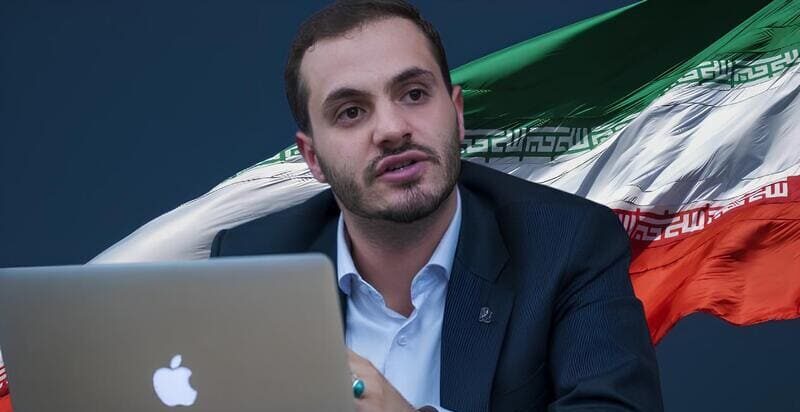
World Geostrategic Insights interviews Sayed Mohammad Ali Sayedhanaee on how the generational change in Iran, Track Two diplomacy (informal dialogues between non-state actors), and cultural diplomacy could open up new perspectives for Iran’s foreign relations.
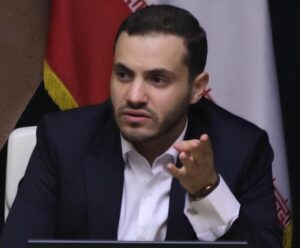
Sayed Mohammad Ali Sayedhanaee is an Iranian political science researcher, author, and youth delegate whose career bridges academia, diplomacy, and international engagement, fostering dialogue between civilizations, promoting public diplomacy and innovative approaches to international relations. He is the founder and president of the Nations Diplomacy Think Tank (NDT), Secretary general of the Iranian Political Science Students’ Union, and a founding member of the board of directors of the Iran Youth Diplomacy Center, a community of over 1,500 Iranian elites from more than 10 disciplines at 40 universities nationwide, the largest youth academic network in Iran.
Q1 – Over 60% of Iranians are under 30, while nearly 74% of the political elite are over 60. How would you describe the generational change in Iran and current role of the post-revolutionary generation? Do the values and visions of younger generations differ significantly from those of previous generations? To what extent could this influence the future trajectory of Iranian foreign policy?
A1 – Iran is experiencing a profound generational transition. The post-revolutionary generation—those born after the 1979 Revolution—constitutes the majority of the population and has grown up in a markedly different social, technological, and international environment compared to previous generations.
This generation is more globally connected, digitally fluent, and exposed to diverse narratives through education, social media, and transnational networks. While it does not represent a monolithic worldview, there is a noticeable shift toward pragmatism, issue-based thinking, and a preference for engagement over confrontation. Many younger Iranians place greater emphasis on economic stability, international cooperation, academic mobility, and global integration.
Although formal political decision-making structures remain largely dominated by older elites, the influence of younger generations is increasingly visible at the societal, academic, and intellectual levels. Over time, this generational shift is likely to reshape the discursive foundations of Iranian foreign policy, even if institutional change occurs gradually.
In this context, future foreign policy trajectories may be influenced less by ideological rigidity and more by cost-benefit calculations, image management, and soft power considerations—especially as younger actors enter advisory, academic, and informal diplomatic roles.
Q2 – Track II diplomacy is an informal dialogue between influential citizens, academics, NGOs, think tanks and former officials from conflicting groups, with the aim of improving understanding and exploring solutions outside formal government channels. It complements official diplomacy by addressing root causes and promoting creative problem-solving in tense relationships. Is Track II diplomacy playing a significant role in Iran’s foreign relations?
A2 – Track II diplomacy does play a role in Iran’s foreign relations, though it remains underutilized and unevenly institutionalized. Historically, Iran has participated in various informal diplomatic formats—academic exchanges, expert dialogues, scientific cooperation, and international conferences—particularly in areas such as nuclear policy, regional security, and conflict prevention.
Track II diplomacy has been especially relevant during periods when formal diplomatic channels were constrained by sanctions, political deadlock, or regional crises. In such contexts, non-official dialogues have helped maintain communication, reduce misperceptions, and preserve minimal levels of trust between Iranian and international actors.
However, the challenge lies in the limited integration between Track II initiatives and formal policy processes. While Iran possesses strong intellectual capital and an active academic community, the strategic value of Track II diplomacy has not always been fully recognized at the policy level.
That said, there is growing awareness—particularly among younger scholars, think tanks, and research institutions—that Track II diplomacy can function as a stabilizing layer, complementing official diplomacy rather than replacing it.
Q3 – Can you give an example of a Track II best practice initiative that has been implemented to promote regional collaboration?
A3 – One notable example is the International Congress of Nations Diplomacy, organized under the theme “Iran: A Lasting Civilization.” This initiative brought together academics, researchers, cultural figures, and young professionals from different countries to engage in dialogue on diplomacy, culture, and coexistence beyond official political frameworks.
The Congress functioned as a Track II platform by emphasizing civilizational dialogue, cultural understanding, and scholarly exchange, rather than political bargaining. It demonstrated how non-governmental and academic initiatives can create inclusive spaces for regional and international engagement, particularly in politically sensitive environments.
A second example is my participation and presentation at the Pugwash Conference, where I focused on the role of youth, independent research centers, and Track II diplomacy in de-escalating regional tensions. This engagement illustrated how scientific and academic forums can facilitate dialogue on sensitive security issues at times when official diplomacy is limited.
Both cases highlight the capacity of Track II initiatives to build trust, reduce cognitive barriers, and generate ideas that may later inform formal diplomatic processes.
Q4 – As the founder of the Nations Diplomacy think tank, what specific areas of research your organization is currently prioritizing to inform Iranian policy?
A4 – At the Nations Diplomacy Think Tank (NDT), our work is structured around the idea that research, dialogue, and policy relevance must be interconnected. Our current research priorities include:
- Track II diplomacy and informal dialogue mechanisms, with a focus on academic, youth-led, and think-tank-based engagement.
- Public diplomacy and narrative-building, particularly in digital and media spaces.
- Cultural and civilizational diplomacy, exploring how Iran’s historical and cultural assets can function as soft power.
- Youth and academic diplomacy, emphasizing capacity-building and international networking for emerging scholars.
- Regional security and confidence-building, approached through dialogue-oriented and non-securitized frameworks.
Our activities—documented through public lectures, expert panels, workshops, and ongoing digital engagement—aim to translate scholarly insight into practical diplomatic imagination, especially in areas where official channels face limitations.
Q5 – Not just Track II diplomacy: considering Iran’s millennial cultural heritage, is cultural diplomacy a strategic pillar of Iranian foreign policy to project soft power and promote international cooperation?
A5 – Cultural diplomacy is not only a potential strategic pillar—it is arguably one of Iran’s most underutilized comparative advantages.
Iran’s civilizational history positions it as a bridge between East and West, both geographically and intellectually. For centuries, Iran has been a space of cultural exchange, philosophical debate, and peaceful coexistence among different religions and traditions. This legacy provides a powerful foundation for engagement based on shared human values rather than political polarization.
In my research and public speeches, I have consistently emphasized that cultural diplomacy should be treated as a strategic asset, not a symbolic gesture. At NDT, cultural diplomacy is integrated into both theory and practice—through dialogue initiatives, academic forums, and public discussions that foreground culture, identity, and history as tools of engagement.
When combined with Track II diplomacy, cultural diplomacy allows Iran to:
- Engage societies rather than only states,
- Reframe its international image beyond securitized narratives,
- And contribute constructively to dialogue and cooperation.
Ultimately, if systematically developed, cultural diplomacy can transform Iran’s historical depth into a forward-looking platform for international dialogue, trust-building, and peace-oriented engagement.
Sayed Mohammad Ali Sayedhanaee – Founder and president of the Nations Diplomacy Think Tank (NDT).