



World Strategic Insights interview with Dhruv Katoch on the significance of India’s BRICS presidency in 2026, the prospects for Indian relations with China and the US, and the growing strategic importance of the oceans.
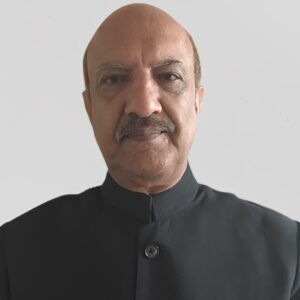
Maj. Gen. Dhruv C. Katoch (Retd.) is a decorated veteran of the Indian Army, a strategic and defense analyst, and an author. He is the Director of the India Foundation, a leading public policy think tank based in New Delhi. He is a third-generation officer of the Indian Army with nearly four decades of distinguished service. He was Director of the Centre for Land Warfare Studies (CLAWS), the Indian Army’s premier think tank. He is the author and co-author of several books on military and historical topics.
Q1 – India will hold the Presidency of BRICS from January 1, 2026, and on January 13, it officially presented its program entitled “Building for Resilience, Innovation, Cooperation, and Sustainability,” focusing its presidency on the themes “Humanity First” and Global South Leadership. India also intends to structure its leadership across three foundational pillars: Political and Security, Economic and Financial, and Cultural and People-to-People exchanges. The enlarged BRICS has now become a complex geopolitical arena, no longer just a forum for emerging economies. What is India’s vision for BRICS? Could BRICS 2026 under India’s presidency represent an important step towards a new global balance? Will the BRICS presidency also be a test for India’s global strategic leadership? What results can we expect from India’s BRICS presidency?
A1 – New Delhi does not see BRICS as an anti-West bloc or a substitute for the existing global order, but as a platform to rebalance global governance so that it reflects contemporary realities—especially the weight, interests, and vulnerabilities of the Global South.
Under the “Humanity First” and Global South Leadership frameworks, India is likely to push BRICS towards issue-based cooperation. I do not see India getting involved or promoting an ideological context in the BRICS framework. I think India will aim to turn BRICS into a cooperative structure that delivers outcomes, rather than an alliance-like structure with military implications. There will be a focus on reforming global institutions, such as the UN Security Council, the IMF, and the World Bank. It will not be framed as anti-West, but as pro-legitimacy and effectiveness. There will be a focus on strengthening the New Development Bank (NDB), expanding local-currency trade mechanisms, and improving access to climate and infrastructure finance, without, however, forcing decoupling from the dollar system. India may also push BRICS to shape norms in digital public infrastructure, climate adaptation, health security, and disaster resilience.
The BRICS presidency will be a test of India’s global strategic leadership. The year ahead will be interesting and challenging, and will determine whether India can shape complex multilateral coalitions without dominance or dependency, a skill increasingly central to global leadership in the 21st century.
Q2 – Could India’s presidency of BRICS also contribute to a substantial improvement in relations with China? How do you see the prospects for relations between China and India in 2026? Will the thaw continue?
A2 – There is a thaw in the India-China relationship. However, the trust deficit remains very high. The BRICS presidency is unlikely to lead to any substantial improvement in the relationship, though it would provide more opportunities to interact on the margins in a controlled setting. The thaw is likely to continue, and I do not expect the situation to get aggravated. It must be understood that BRICS cannot resolve the core problem—the unresolved Line of Actual Control (LAC) and China’s coercive posture along it.
Q3 – You have suggested that supporting Tibetan independence could be a long-term solution for Asian stability. How do you envision it could be done without triggering a full-scale regional conflict?”
A3 – No, overtly supporting Tibetan independence is not a viable long-term solution for Asian stability. The Govt of India will not take such a step. However, I feel the Indian media, think tanks, and civil society should at least talk about Tibetan independence, which, in a sense, keeps the issue alive. What the government should do is to focus on supporting religious freedom, cultural preservation, and the linguistic rights of the Tibetan people, and to also emphasise environmental protection of the Tibetan plateau. For now, there is no international coalition for Tibetan independence, and no major power will recognise Tibet as an independent entity.
Q4 – You have expressed concern that the use of tariffs as a weapon could create “hiccups” in bilateral relations between India and the United States. How do you assess Trump’s current rhetoric in international relations, and in particular his current intention to annex Greenland? In general, how do you see the prospects for relations between India and the United States?
A4 – Yes, tariffs can cause short-term turbulence on Indian exports, but these are manageable irritants, not structural fault lines. India has a large internal market, which gives it bargaining power. While India depends on the US, that dependency is not critical as it is for some western powers. Trump’s intention to annex Greenland is more of a bargaining chip. I do not think the USc will go on that path.
Structurally, the India-US relationship is strong. There is strategic convergence on China and in the Indo-Pacific. Defence ties between the two are strong, and I do not see any change in that position. India’s exercise of strategic autonomy while remaining cooperative with the US also serves US interests. There will be trade frictions in 2026, and the rhetoric may at times be loud, but there will be strategic continuity, especially in defence ties and tech integration.
Q5 – You have emphasised that “the future is in the oceans” Can you give more details here?
A5 – This is not a slogan but a strategic necessity. In the coming decades, economic power, security, climate stability, and technological dominance are all moving seaward. Presently, ~90% of global trade by volume moves by sea. Whoever controls the ports controls the supply chains. The oceans are also a major source of marine products, including minerals. Whoever governs, secures, and exploits oceans sustainably will shape global growth.
Maj. Gen. Dhruv C. Katoch (Retd.) – Director of the India Foundation.