



Reports that Chinese naval aircraft repeatedly illuminated Japan Air Self-Defense Force (JASDF) fighters with fire-control radar during exercises in the Pacific, on December 6, have understandably triggered alarm in Japan and elsewhere.

In military terms, fire-control radar illumination is not a routine act. It is widely understood as a pre-attack procedure, signaling readiness to engage. If such illumination indeed occurred as described, it would represent a serious escalation—one that implies a willingness by China to risk direct military confrontation with Japan.
Yet before accepting this interpretation, it is essential to examine not only what may have happened, but how the incident has been framed, communicated, and politicized. At present, the most troubling feature of the episode is not Chinese behavior per se, but the striking ambiguity surrounding the facts—and the strategic consequences of allowing ambiguity to harden into assumed truth.
An Incident Shrouded in Ambiguity
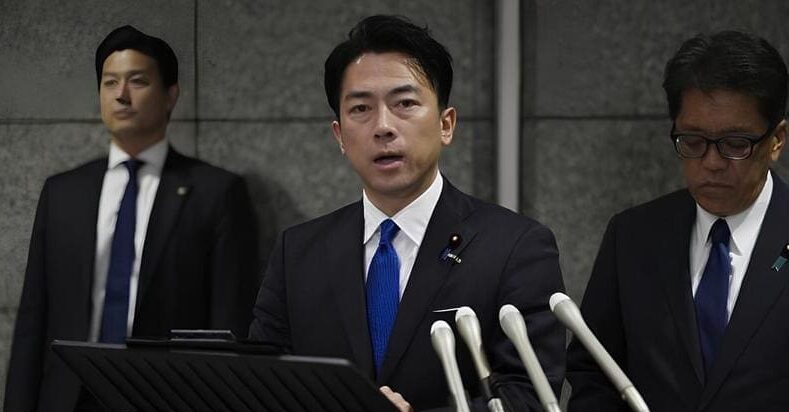
The Japanese defense minister’s emergency press statement, held at 2 a.m., conveyed urgency and gravity, leaving a strong public impression that a near-crisis had unfolded. However, the Ministry of Defense’s own official records stop short of explicitly confirming that fire-control radar was used. While they reference “radar,” they do not clearly distinguish between surveillance or tracking radar and fire-control radar, nor do they definitively state that the latter was directed at JASDF aircraft.
Since that press conference, no supplementary evidence has been released. No audio recordings of pilot–command communications have been disclosed. No technical explanation has been offered regarding radar modes. No formal clarification has been issued to reconcile the discrepancy between the severity of the initial messaging and the thinness of the official record. This silence is not merely unusual—it is anomalous when compared with Japan’s own past practice.
In earlier cases, Japan acted very differently. In 2013, when a Chinese naval vessel illuminated a Maritime SDF helicopter, the Defense Ministry provided an official explanation within days. In 2018, when a South Korean destroyer allegedly illuminated an MSDF P-1 patrol aircraft, Japan released detailed data and even published video footage with audio, despite Seoul’s categorical denials. By contrast, in the present case—arguably more serious—clarification has been conspicuously absent.
If relevant recordings exist but remain classified, that fact could be stated plainly. If the aircraft’s radar system uses a single platform that switches between surveillance and fire-control modes, that technical nuance could be explained. Instead, the absence of explanation has allowed conjecture to substitute for evidence.
Commentary Without Access
Compounding the problem, several figures in the defense circles—including a researcher from the Defense Ministry’s in-house thinktank, and a retired Air SDF general, as well as some anonymous former high-ranking defense officials publicly condemned China in the press, assuming as if fire-control radar illumination did occur. Yet none of these individuals plausibly have access to time-sensitive classified tactical intelligence.
This creates an uncomfortable dilemma. If their assertions are based on leaked information, it raises serious concerns about information security within Japan’s defense establishment. If they are based on inference or assumption, then the issue becomes one of professional and ethical responsibility. In either case, authoritative-sounding commentary unsupported by publicly verifiable evidence risks misleading the public and narrowing policy options.
Notification, Standards, and Strategic Precision
A second point of contention concerns prior notification of the Chinese exercise. Under customary practice, states conducting military exercises in designated maritime or airspace areas are expected to provide advance notice to reduce risk. China claims it did so and has released an audio recording to support its claim. Japan’s Defense Ministry officially confirmed that a Japan Maritime SDF destroyer received effective but inadequate communication from a Chinese naval vessel, although having initially denied the receipt of it.
Instead, the Defense Ministry emphasized that it understood the Chinese communication did not constitute a NOTAM (Notice To Air Mission) meeting international standards—complete with coordinates and timing. This response again blurs the line between fact and interpretation.
Thus, the issue is not only Chinese procedural inadequacy, but also why Japanese authorities did not seek clarification. Crisis management depends on precision. Vague language about “recognition” rather than clear statements of fact undermines credibility and fuels misunderstanding.
Strategic Logic and Chinese Incentives
Even assuming that the most serious interpretation of events was true, it would still be a mistake to conclude that China was prepared for war with Japan. Strategic context matters. President Trump’s unpredictability—and his own public statements indicating that China would avoid the use of force against Taiwan during his administration, as well as its deepening domestic economic and social difficulties after a gigantic economic bubble burst —creates strong incentives for Beijing to avoid reckless escalation.
Moreover, China’s political system is highly centralized. Under Xi Jinping’s personalized leadership, it is implausible that frontline naval commanders would independently engage in deliberate, high-risk provocation without authorization. Whatever the incident was, it is more likely to have been signaling, miscalculation, or information contestation than a rehearsal for imminent conflict.
Domestic Fault Lines and Narrative Incentives
The more consequential dynamics may lie within Japan itself. Contemporary international politics is increasingly structured around a divide between globalist and anti-globalist visions of order. Since the advent of Trump’s second administration, the anti-globalist camp has gained decisive influence in the United States. In allied countries, including Japan, this shift has exposed internal fractures.
The Prime Minister Sanae Takaichi administration has signaled a sharp break from Japan’s long-standing globalist, U.S.-subordinate posture, moving instead toward alignment with Washington’s emerging anti-globalist orientation. This shift has not been cost-free. Bureaucratic inertia remains strong, particularly within the foreign and security policy establishment, where personnel shaped by decades of globalist assumptions still occupy influential positions.
In this context, heightened perceptions of crisis with China serve a political function. They reinforce Cold War–style containment narratives centered on the “Free and Open Indo-Pacific” and the U.S.-led liberal international order. They constrain debate. And they marginalize alternative approaches that emphasize strategic restraint and balance-of-power logic.
The “fire-control radar” narrative thus operates not only as a description of an event, but as a political accelerant—amplifying threat perceptions and legitimizing predetermined policy trajectories.
The Risk of Accidental Escalation
Japan–China relations are burdened by historical grievances and structural rivalry, and further deterioration may occur over time. But acute deterioration is not inevitable at this moment. U.S. carrier movements and regional deployments were planned in advance and cannot plausibly be attributed to this incident. What is new—and dangerous—is the possibility that unverified claims, selective leaks, and emotionally charged framing could narrow decision-making space.
In an era of intensified great-power competition, ambiguity is not neutral. It is combustible. Allowing uncertainty to persist without clarification increases the risk of misperception, overreaction, and unintended escalation.
If the Takaichi government wishes to exercise strategic leadership, it must insist on transparency and factual discipline from its defense and foreign policy institutions. Clarifying what is known, what is not known, and what cannot be disclosed is not a sign of weakness. It is a prerequisite for credible crisis management.
Ultimately, the central question is not simply whether fire-control radar was used. It is whether Japan can manage crises with judgment and restraint—resisting information manipulation and internal strategic fault lines—or whether it will allow ambiguity to dictate its course in an increasingly unstable regional order.
Author: Masahiro Matsumura – Professor of International Politics and National Security at St. Andrew’s University in Osaka (Momoyama Gakuin Daigaku), Japan.
(The views expressed in this article belong only to the author and do not necessarily reflect the views of World Geostrategic Insights).
Image Source: AP (Japan’s Defense Minister Shinjiro Koizumi, speaks to the media, at the ministry in Tokyo, announcing that a Chinese military aircraft locked its radar on Japanese jets).