



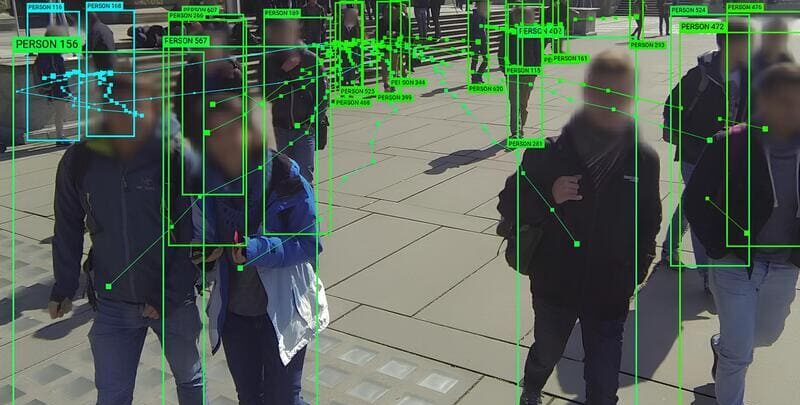
Some time ago, Shoshana Zuboff wrote this enlightening remark: “The United States and the other liberal democracies of the world have failed to construct a coherent political vision for a digital century, one capable of promoting democratic values and principles. While the Chinese have designed and developed digital technologies suitable for consolidating their authoritarian system of government, the West has remained ambivalent and confused”. (Zuboff, 2021).

Indeed, the 2017 National Intelligence Law, as well as other legal instruments, compel digital companies to provide the Chinese Communist Party (CCP) regime with all the information that they collect from their users. The super-app WeChat alone, which covers all the daily needs of its users, allows the regime to have direct knowledge over the thoughts and actions of millions and millions of its citizens.
As Yuval Noah Harari points out, in the mid-to-late twentieth century, democracies clearly outperformed dictatorships in processing information. Democracy, as he noted, distributed the power of information processing and decision making among multiple stakeholders. Authoritarian (or totalitarian) regimes, on the contrary, centralized such processes. Given the technology available in the 20th century, and its limitations in data processing capacity, concentrating too much information in a single point, inevitably led to inefficiency in decision making. Such centralization overflowed the human capacity to understand the flux of events. This greatly contributed to the Soviet Union falling behind the United States. (Harari, 2018, p. 94).
Clearly enough, indeed, the Soviet Union’s decision makers were overwhelmed by a volume of information that they couldn’t properly organize, digest or interrelate. Meanwhile, the flux of information in the United States was disseminated among media outlets, think tanks, lobbies, congressional committees, federal agencies and departments, and the White House itself. The plurality of stakeholders involved in this process allowed for such information to be filtered and digested, making it understandable and manageable.
However, as Harari remarks, nowadays the pendulum has swung in the opposite direction. With the advent of Artificial Intelligence, it is now possible to centrally process unlimited amounts of information. Moreover, machine learning is fed by information, which means that the greater the volume the greater the learning. This makes centralized systems much more efficient than diffuse ones in data processing. The main disadvantage of 20th century authoritarian (or totalitarian) regimes, is thus becoming their decisive advantage in the twentieth first century. (Harari, 2018, p. 95).
Democracies in the United States and Europe, thus, find themselves in a disadvantageous position in this regard. Saying this, however, represents a gross understatement. It would be far more accurate to say that the flux of digital information in the West, overtly conspires against the survival of their liberal democracies.
Through social media, indeed, digital technology has become a voracious disseminator of information detached from truth and even from reality. As such, it has given birth to a parallel universe divorced from facts and fed by anger. As a result, liberal democracy stumbles and illiberal populism arises.
It must be said that both in the West (essentially in the United States) and in China, the digital agents that collect, process, and disseminate information are private companies. The fundamental difference being, however, that while American companies pride themselves in preserving their independence, Chinese ones have a symbiotic relation with the CCP.
In China, digital private companies feed the State with information, thus becoming instrumental in its control over the population. Conversely, America’s digital companies have a fundamental consideration: Making money for its shareholders. Since a few years ago, though, some social media companies have gone a step further, overtly promoting an illiberal agenda.
Although liberal democracies could never aim at competing with China in its control of digital companies, which would imply a dereliction of its nature, they shouldn’t have remained defenceless in the face of the social media onslaught. Indeed, as Shoshana Zuboff remarked, liberal democracies grossly failed in constructing a coherent political vision for a digital century.
References:
Harari, Yuval Noah (2018). 21 Lecciones para el Siglo XXI. Madrid: Debate.
Zuboff, Shoshana (2021). “The Coup We Are Not Talking About”, The New Yor Times, January, 29.
Author: Alfredo Toro Hardy, PhD – Retired Venezuelan career diplomat, scholar and author. Former Ambassador to the U.S., U.K., Spain, Brazil, Ireland, Chile and Singapore. Author or co-author of thirty-six books on international affairs. Former Fulbright Scholar and Visiting Professor at Princeton and Brasilia universities. He is an Honorary Fellow of the Geneva School of Diplomacy and International Relations and a member of the Review Panel of the Rockefeller Foundation Bellagio Center.
(The opinions expressed in this article are solely those of the author and do not necessarily reflect the views of World Geostrategic Insights).
Image Source: WILDTRACK.