



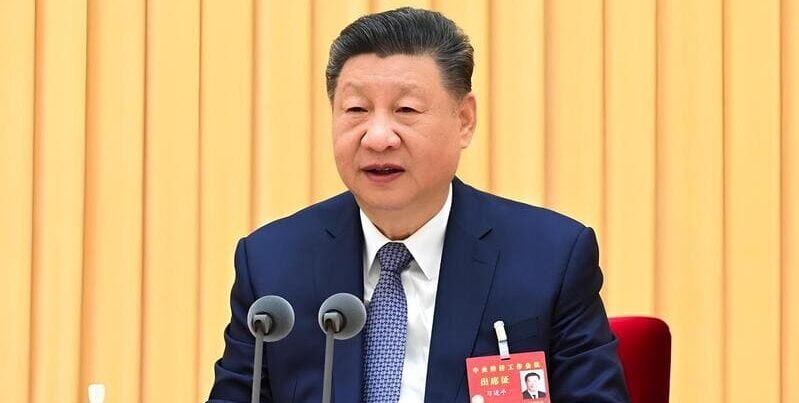
At a moment when the global economy faces sustained uncertainty, China’s Central Economic Work Conference held in Beijing from December 9 to 11, 2025, offered something increasingly rare in international economic governance: strategic steadiness anchored in long-term vision.

While many major economies remain absorbed in short-term political cycles and reactive policy shifts, China continues to operate within a disciplined planning framework that links immediate stabilization with future-oriented transformation. The conference served as both an economic roadmap for 2026 and a broader statement of intent regarding China’s role in global development.
The international environment surrounding the conference heightened its significance. Global growth remains constrained by lingering inflationary pressures, rising debt levels, supply chain fragmentation, and widening geopolitical rifts. Trade policy increasingly serves strategic objectives coupled with economic efficiency, reshaping global commerce through tariffs, technology controls, and regulatory barriers. In this unsettled context, the CEWC projected steadiness. Its tone conveyed confidence grounded in capacity, experience, and institutional depth.
China’s economic performance throughout 2025 provides the basis for this confidence. Growth of approximately 5.3 percent during the first three quarters reflected resilience amid external pressures. Industrial production expanded steadily, manufacturing upgraded structurally, and exports remained a stabilizing anchor. Particularly significant was the continued rise of electric vehicles, lithium batteries, and photovoltaic products as export pillars. These sectors symbolize China’s shift toward advanced manufacturing ecosystems where innovation, scale, and efficiency reinforce one another across entire value chains.
The conference addressed internal challenges with candor and precision. Domestic demand recovery, property sector adjustment, and local fiscal pressures received focused attention. The policy approach adopted to manage these issues demonstrated maturity. Economic governance emphasized targeted intervention, sequencing, and confidence building. This method reflects an advanced stage of development where macroeconomic stability and structural reform proceed together.
Expanding domestic demand emerged as the central task for 2026. The emphasis extended beyond consumption incentives toward income growth, social security enhancement, and service sector expansion. Healthcare, tourism, education, and elderly care were identified as key engines of employment and household spending. This orientation reflects a clear understanding that consumption vitality depends on livelihood security and future expectations. By placing people’s wellbeing at the core of economic strategy, the conference reinforced the principle that development quality carries lasting value.
Investment policy followed a similarly calibrated logic. Priority areas included urban renewal, infrastructure modernization, advanced manufacturing, and digital transformation. These investments aim to raise productivity, improve living standards, and support green transition objectives. Policy-based financial instruments and disciplined fiscal coordination provide institutional backing. This approach strengthens sustainability while preserving macroeconomic balance.
Monetary policy alignment further reinforced stability. A moderately accommodative stance supports liquidity, lowers financing costs for enterprises, and strengthens market confidence. Special emphasis on small and medium-sized enterprises reflects their central role in employment creation and innovation diffusion. Measures to stabilize expectations and support reasonable price recovery contribute to a balanced macroeconomic environment amid global volatility.
Innovation occupied a central position in the conference agenda. Strategic emphasis on artificial intelligence, quantum computing, biomanufacturing, hydrogen energy, and future communications reflects China’s long-term competitiveness strategy. These technologies represent foundational platforms capable of reshaping production systems, public services, and governance models. The AI Plus initiative underscores integration, embedding advanced technologies across traditional industries and social infrastructure.
Institutional support for innovation received equal weight. Strengthened intellectual property protection, improved regulatory coordination, and expanded talent development ecosystems featured prominently. Innovation thrives through systems that reward creativity, protect enterprise, and translate research into application. The conference reflected a systemic understanding that technological leadership emerges from institutional coherence.
Green transformation formed another defining pillar. China’s leadership in renewable energy capacity, clean transportation, and energy efficiency already exerts global influence. Commitments to carbon reduction, green electricity expansion, and climate resilience demonstrate continuity and seriousness. These efforts carry global relevance as climate risks intensify and energy transitions accelerate. China’s ability to deliver scalable and affordable green technologies offers practical pathways for developing economies pursuing sustainable growth.
Opening up remained a consistent and deliberate theme. While protectionist sentiment grows across several regions, China continues to advance institutional openness. Expansion of the Hainan Free Trade Port, promotion of digital and green trade, and deeper engagement with global economic frameworks reaffirm this direction. Openness is framed as a strategic development choice aligned with modernization and mutual benefit.
The drive toward a unified national market further strengthens this orientation. Reducing regional fragmentation, addressing inefficient competition, and improving market integration enhance productivity and investor confidence. A cohesive domestic market supports internal circulation while reinforcing China’s engagement with international partners.
Conceptual coherence across these policies found expression in the “Five Musts” framework. Fully releasing economic potential, aligning policy support with reform, sustaining market vitality alongside effective regulation, investing in human and physical capital, and strengthening internal capacity to manage external pressures together form a comprehensive governance philosophy. This framework signals continuity as China prepares for the 15th Five-Year Plan.
From a global perspective, the implications extend beyond national borders. With worldwide growth prospects subdued and multilateral cooperation under strain, China’s steady expansion contributes to global demand, supply chain continuity, and technological diffusion. Its economic choices shape commodity markets, manufacturing networks, and climate outcomes across regions.
For developing economies, including Pakistan, China’s experience offers valuable insights. While development models vary, lessons emerge regarding policy sequencing, institutional capacity, long-term planning, and investment in productive forces. The conference’s emphasis on people-centered development, innovation-led growth, and openness resonates strongly across the Global South.
The 2025 Central Economic Work Conference ultimately reaffirmed confidence rooted in governance capability and strategic patience. It demonstrated leadership that balances ambition with discipline and reform with stability. As the world economy searches for anchors amid uncertainty, China’s approach offers reassurance. The roadmap for 2026 reflects continuity, adaptability, and resolve. In an era defined by volatility, such steadiness carries global significance.
Author: Muhammad Asif Noor – Founder Friends of BRI Forum, Advisor to Pakistan Research Center, Hebei Normal University.
(The views expressed in this article belong only to the author and do not necessarily reflect the views of World Geostrategic Insights).
Image Source: Xinhua (President Xi Jinping delivering a speech at the Central Economic Work Conference in Beijing).