



World Geostrategic Insights interview with Arun Sahgal on how India can enhance its strategic autonomy and defense capabilities in the face of challenges posed by changes in US policy, assertiveness of China, regional tensions, headwinds in relations with neighbours, rise of new international forums and organizations, and profound transformations in methods and technologies of warfare.
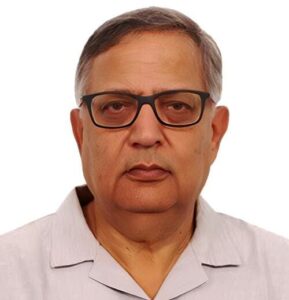
Brigadier Arun Sahgal, PhD is a retired Indian Army officer and a leading national security strategist. He is the Executive Director of the Forum for Strategic Initiative and a Distinguished Fellow at Manipal Academy of Higher Education (MAHE)’s School of Geopolitics. He served 36 years in the Indian Army, focusing on long-term strategy and military planning. He has been the head of the Centre for Strategic Studies and Simulation at the United Service Institution of India (USI), and a Senior Fellow at the Institute for Defence Studies and Analyses (IDSA). He was also a member of the National Task Force on Net Assessment and Simulation, of the Indian National Security Council (NSC), and continues to support them through consultancy assignments. He holds a PhD in Strategic Studies and conducts strategic gaming and simulation exercises.
Q1 – You have observed that India’s strategic autonomy depends on its ability to resist external pressures exerted by the United States and China. How should India manage its relations with the two major powers?
A1 – Conceptually strategic autonomy means freedom to choose policy options or directions without succumbing to external pressure/s. This freedom is a construct of the global order. Towards this bipolar or multipolar order provides greater room for diplomatic and policy manoeuvre. In the prevailing international system, strategic autonomy exercised by India can be described as “ advancing its interests by exploiting opportunities created by contradictions in the bipolar global order.
In so far as the US is concerned it remains a major economic, technological and military power, determined to maintain its global unipolarity and a major challenger to China’s economic, technological and military rise. Given the context of US power and influence, it remains an important strategic partner and regional balancer. It is in this context, India – US relations in post-Cold War world order were based upon maintaining strategic balance in Asia and more importantly from the Indian point view, provided potential to leverage India’s economic, technological and trade potential for common good.
In the Trump 2.0, this relationship is under stress, owing to its shifting priorities, resulting in diminishing salience. Reality is that whereas India continues to be seen as a partner of ‘convenience’ particularly in the context of broader China challenge it is no longer ‘central’ to Washington’s grand design of managing Asia. Nonetheless as per the recent NSS, the US has not given up completely on India. It still looks upon India as an important maritime security multiplier in the Indian Ocean, to counter growing Chinese expansionist designs. There are clear attempts to boost transactional defence relationships, even as there are frictions over trade and technology. Importantly, the US is contemplating major investments estimated at $67 billion over the next few years.
Three elements will define the future India – US relations. Nature of trade deal and the range of tariffs particularly 25% Russian oil cess. Even if cess is revoked the 25% remaining duties will need to be substantially reduced for a workable trade arrangement. Importantly, India too will have to work towards accommodating US trade interests. In so far as defence relations are concerned, relationships based purely on defence purchases will not be adequate, there has to be an early agreement on joint production of 414 engines and other programmes related to MRO and location of supply chains in India. India has emerged as a crucial cog in the supply chain of major US defence enterprises who have set up facilities in India. Partnership in critical technologies is another area which must see forward movement, for maintaining the momentum.
In security terms, India will continue its policy of multi alignment, maintaining ties with Quad, Russia (potentially involving naval cooperation in IOR), while simultaneously engaging with the US bilaterally. In geopolitical terms, India will not accept undue US influence or interference, in its neighbourhood, which is inimical to India’s core interests. Similarly, given the fact India has to deal with regional changes in a stand-alone mode, the degree of support to its Asia – Pacific contingencies will always be limited. In sum, the period of total concessions without reciprocal guarantees from the US is over. The relationship will be strictly transactional moving forward.
In so far as China is concerned it remains India’s legacy challenge. Boundary issues remain both a physical and psychological constraint to the relationship. Chinese frequent intrusions, force build up on the borders together with security, and economic and moves in the neighbourhood are seen as part of Chinese broader India containment strategy. These are not conducive to building trust in a relationship. Two major elements will define the relationship, boundary settlement and economic engagement on reciprocal basis.
On boundary issues post the Kazan Agreement, there has been reasonable progress. Special Representatives have met and agreed to set up a consultation mechanism between military commanders in central and Eastern sectors of the LAC, similar to one in Ladakh. A proposal has also been put forward (by the Chinese side) of undertaking border delimitation in less sensitive sectors as a confidence building step. India does not find this piecemeal approach useful and instead is pushing for comprehensive settlement. In short, while the border remains tranquil, none of the elements including de-induction or demarcation have been completed. Reality; a scenario of simmering tensions prevail, with propensity to boil over.
In terms of broader political and economic relations, India – US tensions over trade, service sector, and immigration politics are seen by the Chinese as a major rupture in relationship. In Chinese perception India, unlike other US strategic partners/allies is unlikely to bend, exacerbating tensions further. However the fact that even under the present period of strategic and economic stress, India continues to maintain steady growth, is seen as an opportunity that could lead to greater strategic and economic alignment, more favourable to China.
Seen in this context two Chinese approaches are visible, slow opening up to India investments and supply chain alignments, removing sanctions on some critical supplies, increasing bilateral trade and people to people contacts. High level contacts during SCO have been useful in breaking the ice. American intervention in Venezuela, and its geopolitical impact, growing centrality of BRICS even as US attempts to shape G20 to a European Club and undermine South – South cooperation are seen as developments requiring greater bilateral and RIC coordination.
Going forward, India’s China policy will be to continue seeking early settlement of boundary disputes, calibrated opening of economy together with consultations on broader geopolitical trends under South – South multilateral frameworks.
Q2 – Your work also addresses strategic stability and nuclear doctrine. Given recent regional tensions, what is the current most significant threat to the nuclear “status quo” and security in South Asia? How do you see the prospect of India’s relations with Pakistan?
A2 – India’s primary concern is over Pakistan’s nuclear policy designed primarily as a deterrent against India. There is a critical difference in approach, whereas Pakistan’s nuclear weapons are leveraged as instruments of operational and strategic coercion, to deny India space for conventional escalation. For India Nuclear weapons are a strategic deterrence, which in no way undermines its conventional options.
Second, matching India’s operational nuclear capability development it is undertaking qualitative and quantitative advancements (delivery means, survivability, MIRV, miniaturization, triad capability) of its nuclear systems. The ethos of its strategic doctrine is credible deterrence with a survivable second-strike capability, based on “full spectrum” capability. Aim is to maintain credible strategic balance vis a vis India.
A recent major disquieting development has been restructuring of Pakistan’s nuclear command and control, which India sees as a major source of instability. Pakistan’s existing command and control is a three-tier structure. At the helm is the Nuclear Command Authority (NCA) which is a combined political military organization headed by PM. Under it is the Strategic Plans Division (implementation, administration, policy support). Third tier is service specific ‘Strategic Force Commands’ holding respective service nuclear vectors.
Under the recently enacted 27th Constitutional Amendment, Pakistan has abolished the existing NCA and replaced it with the Army led National Strategic Command (NSC). This is to be led by Commander from the Army (appointed by the PM upon specific advice of the CDF), creating a complete military/Army centric structure removing politicians and relegating the role of other two services (Air Force and Navy) from nuclear decision-making.
This arrangement has serious repercussions.
- Nuclear decision-making has shifted from a joint civil-military, inter-service structure (NCA) to a highly centralized, Army-dominated model (NSC). This in the backdrop of the hybrid Pak governance model (dominated by Army) has serious repercussions for strategic stability.
- This consolidation reduces oversight by other services and civilian institutions, with critical implications for strategic authority and accountability in Pakistan’s use and management of nuclear weapons.
- Accentuates the risk of escalation based on mis-perception over red lines and existential threat, engulfing South Asia in nuclear conflagration.
India – Pakistan Relations
Post Op – Sindoor, there is serious deterioration in bilateral relations. Mood in Pakistani military and political hierarchy is on the upswing, largely driven by favourable US intervention during the May 2025 conflict leading to resurrection of ties, recent strategic partnership with Saudi Arabia, possibly in future with Bangladesh together with uplift in security and economic relations with PRC under CPEC. Credit for co-opting two strategic contenders China and US, in supporting Pakistan, politically, economically and militarily is being given to the management skills of Field Marshal Asif Munir
These developments have made Pakistan both assertive and uncompromising. It has begun to actively support Islamist cadres in Bangladesh, to create another disruptive front for India. In J&K it continues to support cross border terror, although infiltration has come down. More importantly, it has begun to blame all its troubles on is western borders (Baluchistan and KP) on India. In one of the track II meetings, it even suggested that it is willing to discuss terrorism, but must include terror in Baluchistan/KP, in addition to J&K.
In the present state of deteriorated relations there is little chance of meaningful move for reconciliation. India has adopted a policy of “conditional disengagement” following Op Sindoor. Hence there is no political consensus in India to seek any grand bargain. Mood in India is that relations will be defined by strict reciprocity, backed by continued strategic pressure and bilateralism. India stands firm “Terror and Talks cannot go together”. It will continue to use its strategic leverage of IWT as a “water for Peace” doctrine.
Furthermore, even though Asim Munir has consolidated near total power, India is unlikely to legitimize it through high level political engagement, preferring political and diplomatic channels instead. Trade and Transit, exchange of high commissioners, medical visas, religious pilgrimages are on the table, subject to change in hybrid politico-military mindset.
India is also conscious that Pakistan is becoming a pawn in China’s proxy India containment strategy, through CPEC, Mil to Mil cooperations, sale of advanced weapon systems and AI driven, space, cyber and EW engagement. These factors will also define bilateral relations moving forward.
Q3 – India’s Neighborhood Policy (NFP), officially launched in 2014, prioritized regional stability, economic connectivity, and people-to-people ties with neighbouring countries, under the framework of the “5S”: Samman (Respect), Samvad (Dialogue), Shanti (Peace), Samriddhi (Prosperity), and Sanskriti (Culture). Can we still consider the NFP as the cornerstone of Indian policy towards its neighbours? Or, as Indian Foreign Minister S Jaishankar recently stated, India’s neighborhood policy is now guided primarily by common sense, goodwill, and clear red lines on security? As in the words of S Jaishankar, “Good neighbours get help, bad neighbours face red lines.” How would you describe India’s current neighbourhood strategy? Also, in general terms, it seems there has been in the past years a lack of diplomatic initiative and deterioration in India’s relations with some of its neighbours, leading to a loss of trust or anti-Indian sentiments in smaller neighbouring countries. For what reason? Should India recalibrate its diplomacy towards countries such as Nepal, Bhutan, and Bangladesh?
A3 – There is no doubt India’s Neighbourhood First Policy is facing serious headwinds. We have had trouble in political management of almost all of them. Minister Jai Shankar’s remarks indicate this frustration.
India’s neighbours, comprise politically, economically and socially fragile states. Recent developments in the neighbourhood highlight major political churn in these countries as a consequence of youth-driven movements, economic fragility. Another important paradigm is that to overcome their own internal political and economic deficiencies, as well as to balance an allegedly “overbearing” India, South Asian states are prone to flirting with extra regional powers. As a result, to overcome dependence on India for trade, energy, and essential commodities, they tend to seek financial and developmental support from regional and distant powers, mainly China but also the US, turning them into regional stakeholders.
Furthermore, despite trade and socio-economic linkages with India, the majority of these states look up to external actors for meeting their development and economic needs. India’s persistent attempts at providing developmental assistance, project financing, essential services and goods, or even strategic materials and products, are largely taken for granted. Politics in these countries are marked by an anti-India discourse, which has a political fallout in India with
various interest groups taking stands in concert with their ethnic affiliations and other alignments across the border.
Undoubtedly NFP remains the cornerstone of our engagement, however there is a need to reappraise our approach, particularly as our present policies have been non endearing and have not borne the desired result of shaping an harmonious neighbourhood. Our political approach of sentimentality towards particular leadership, or episodic engagement will not do. Nor will the Redlines in terms of rewards and punishment work, particularly when they are difficult to implement or they impose huge political costs.India needs to reframe its NFP from an approach focused on governments and goodwill to one anchored in societies, delivery, and strategic realism.
Why is change necessary?
South Asia is marked by growing political fragmentation, frequent elections, military dominance in some states, protest politics, and increasing economic stress. This means that reliance on stable partner governments to project and protect your interests is no longer viable. At the same time, India’s security and economic interests remain deeply exposed to the developments next door.
The core challenge in the rapidly changing environment is the need for strategic adaption. This implies instead of leaning on political elites, engagement should shift to broader society. Some of the new elements in India’s tool kit could be:
- Build sustained engagement with youth groups, opposition parties, civil society, media, academia, and business leaders in these countries. Expand scholarships, training programmes, startup partnerships, and digital exchanges.
- Invest in long-term people-to-people relationships rather than crisis-driven outreach.
- Prioritise visible, everyday impact, by focusing on everyday projects in addition to large scale infrastructure. These could be related to health care skill development, digital connectivity and renewable energy etc.
- The strategic intent of such an engagement should be to ensure India remains relevant and trusted regardless of who is in power.
In addition there is a need for ‘strategic realism”. India can no longer assume automatic alignment based on history, geography, or culture. We have to accept that neighbours will hedge and maintain ties with multiple powers, including China. This requires not containing China but focussing on being the most reliable and practical partner rather than demanding loyalty. Some key steps that India can take are;
– Reinvigorating South Asian Association for Regional Cooperation (SAARC). This will provide a forum for discussion and also address common regional problems. In addition energise existing mini-laterals such as BIMSTEC or Indian Ocean Partnerships. These should not remain talking shops but focus on specific outcome based activities such as; energy grids, logistic corridors, disaster response, digital infrastructure etc. No doubt work is going on, but requires commitment and focus.
– In so far as China’s extending footprints are concerned, the need is to deal with this not by confronting China or pressure but through credible alternatives. Some of the steps could be;
- transparent financing, and sustainable debt models.
- local employment generation.
- regulatory compatibility.
- Partner with Japan, the EU, and Gulf states for co-financed projects.
- Leverage India’s strengths in digital governance, healthcare, education, etc..
Next accept and plan for ‘Instability’ as the ‘New Normal’. Political turbulence in South Asia is structural, not temporary. Towards this some of steps that India can take as regions stabilising anchor are;
- Maintain engagement across regime changes and political crises.
- Avoid public judgement or visible interference.
- Strengthen rapid-response mechanisms for humanitarian, economic, and security shocks, recent disaster response to Sri Lanka is an example.
- Institutionalise continuity in relationships beyond personalities.
Last and perhaps most critical is to invest in Narrative and Perception management. India often underperforms in shaping narratives despite substantial contributions. The need is to strengthen regional language outreach, engage local media, influencers, and opinion-makers. Communicate India’s actions proactively rather than defensively. Treat narrative space as a strategic domain, not an afterthought. Aim should be to build trust before crises emerge.
Q4 – How do you assess India’s global commitments to the Quad and BRICS?
A4 – The Quadrilateral Security Dialogue (Quad) and BRICS in a sense are symbols of India’s multi alignment strategy. In so far Quad is concerned it emerged as an answer to the deterioration in the Indo-Pacific security environment, driven by Chinese bellicosity and grey zone assertions. These geopolitical risks provided momentum for the resurgence of the Quad. The revival was driven by Trump 1.0’s Indo-Pacific policy, which viewed China as the main challenger. Although largely composed of US allies, India joined the Quad with the aim of closely aligning its economic and security policies with those of the US and its main allies, focusing on the challenge posed by China.
Experience of Quad thus far indicates the goal and mission of its members have often appeared ambiguous and divergent. These differences arise from distinct geopolitical challenges, unique domestic political systems, economic realities, and disparate visions of regional order.
India looks at Quad from two differing perspectives, one is addressing its soft security concerns, like mobilising resources for important initiatives like COVAX vaccine programme, integration with supply chains and partnership in ‘Maritime Domain Awareness’ and combat illegal fishing” etc.
Second in terms of security mitigation, primarily the looming China challenge. There is growing realization in New Delhi, India has a differing perspective from other three allied members. India’s operational priorities and strategic focus differs from the US and other Quad partners.
While the focus of the US and its allies is East Asia and Western Pacific centric, India’s challenges are in South Asia and the Indian Ocean. It is a region, although strategically significant, is not the area of primary security concern for either the US or its regional allies. Resultantly, India is left to deal with the multi-domain China challenge and its collusion with Pakistan, in roads in the Indian Ocean with at best limited support from the US and other Quad partners. This takes away India’s focus from Asia – Pacific portion of Indo – Pacific and reticence to any military context of Quad.
It is interesting to note that US NSS 2025, which otherwise downplays India’s role, seeks Indian partnership in the Quad cooperation framework for maritime security, critical minerals, etc.
Given the aforementioned perspective, India is likely to remain engaged with Quad on soft security terms particularly in conventional security space on terms it is comfortable with. This can going forward become a point of friction in terms of expectations and deliverables.
India’s role in BRICS reflects a strategic balancing act that aligns with its broader vision of a multipolar world order and multi alignment. As one of the founding members (Brazil, Russia, India, China and South Africa), India views the BRICS as a vital platform to advance the interests of the emerging economies while safeguarding its strategic autonomy.
Through the BRICS, India is attempting to leverage strategic advantages, including increased influence over global governance reform, alternative financial mechanisms and enhanced cooperation on critical issues such as energy security, technology and climate change. Membership of BRICS also provides India with a valuable opportunity to match China’s growing influence in the Global South while fostering closer economic and cultural ties with other emerging economies.
Importantly for India, engagement within the BRICS is not exclusive to India’s other alliances. India on one hand has successfully maintained strong bilateral relations with western partners while asserting its autonomy by deepening its relations with openly anti-western BRICS members like Russia and Iran.
The above approach is looked upon to safeguard its national interests without being constrained by traditional alignments. Its participation in both the BRICS and the Quad reflects a nuanced strategy of multi-alignment, positioning India as a bridge between western and non-western forums. This balancing act allows India to benefit from its security and economic relationship with Russia through cheap oil, trade and fighter jet engines whilst navigating its strategic position as central to the containment of China in the Indo-Pacific region, which also facilitates increasing security cooperation with the US.
Domestically, India’s participation in the BRICS aligns with narratives of self-reliance and anti-imperialism, which are deeply rooted in historical grievances of colonial exploitation. Public opinion and a growing nationalist sentiment also play a role in shaping India’s engagement with the BRICS, which is viewed as an assertion of the country’s rise on the global stage and a challenge to western institutional domination, particularly under Trump 2.0. In a pointed statement, India’s External Affairs Minister S Jaishankar highlighted the rationale behind India’s involvement within BRICS, stating, “Because you won’t let us into the G7 club”. This highlights India’s strategy to leverage the BRICS as an alternative platform. Having said this in the emerging Trumpian world order, it could become a millstone for India akin to Russian oil should Trump decide to ban Unit (BRICS Currency) or put unilateral tariffs on BRIC countries.
Q5 – You have argued that India needs a profound transformation in strategic-military affairs. What revolutionary military concept should be at the heart of India’s doctrinal review?
A5 – The Ukraine conflict and the May 2025 India–Pakistan crisis have highlighted the changing character of modern warfare. Military operations will no longer be confined to discrete domains of land, sea, and air, nor will they be conducted in a linear sequence progressing from ground manoeuvre to air superiority, etc. Future conflicts will unfold simultaneously across multiple domains with actions in cyber, space, and the electromagnetic spectrum shaping outcomes. This transformation reflects more than technological innovation. It symbolises a structural shift in how military power is generated, coordinated, and applied.
Precision strike systems, autonomous platforms, real-time intelligence fusion, and cyber operations have compressed decision cycles and expanded the battlespace far beyond physical frontlines.
For India, the challenge extends beyond technological modernization to the creation of an integrated defence ecosystem capable of operating under sustained multi-domain pressure, particularly in scenarios involving China–Pakistan collusion and an expanding maritime contest. There is thus a need for India to develop a calibrated roadmap focused on multi-domain integration, indigenous capability development, cyber-physical resilience, and the necessary organizational reforms. Importantly India’s long-term strategic advantage rests not on platform-centric modernization, but on the ability to translate technological adoption into coherent operational practice.
Some Conceptual and Doctrinal Thoughts:
India’s doctrinal approach needs to shift from linear conceptualisation based on single service planning to what can be termed as “Integrated Multi-Domain Deterrence and Warfighting” (IMDDW). Core Idea being, India must transcend from platform-centric, service-led warfare to effects-based, multi-domain operations where deterrence and combat power are generated by the simultaneous, coordinated employment of kinetic and non-kinetic capabilities across land, air, sea, cyber, space, electromagnetic, and cognitive domains—from peacetime competition to high-intensity war. This is not merely “jointness”; it is domain convergence for decisive effects.
Concepts that must be Central to Future Warfighting:
India’s Threat Environment is ‘Multi-Domain’
- China already integrates cyber, space, electronic warfare, information operations, and economic coercion as part of its warfighting doctrine.
- Pakistan practices sub-threshold conflict blending terrorism, information warfare, and nuclear signalling. Increasingly with China’s support and as lessons from May 2025 conflict it too is going in for multi domain integration. The clearest reference point is the creation of Chief of Defence Force and integrating all services under a single commander.
- In the unfolding scenario India cannot afford domain-by-domain responses.
IMDDW (Integrated Multi Domain Deterrence Warfare). The idea is to reframe deterrence as continuous, not episodic. Some important aspects of IMDDW are underlined below.
India’s existing posture relies upon nuclear deterrence at the top end Conventional punishment at the lower end. What is missing is a credible middle spectrum. IMDDW can fill this gap by enabling:
- Graduated, controllable escalation
- Cross-domain retaliation (e.g. cyber/space response to kinetic provocation)
- Denial-based deterrence rather than punishment alone
Above can be achieved by recognising future wars will be won by ‘Systems’, and not ‘Platforms’. This requires:
- Sensor–shooter integration
- Real-time ISR and decision superiority
- Network resilience and denial of adversary networks
- Data, networks, and decision cycles will be the primary manoeuvre space.
The key pillars of IMDDW Concept thus are:
Deterrence by Denial Across Domains:
- Make aggression fail operationally rather than punish after the fact.
- Border defence integrated with cyber, space, and air denial.
- Protect national critical infrastructure and military networks.
Effects-Based Operations (EBO)
- Target adversary systems, decision nodes, and cohesion, not just forces.
- Use precision, cyber, EW, and information tools to paralyse command structures.
- Reduce reliance on large-scale attrition warfare.
Integrated Command & Control
- Theatre Commands as multi-domain warfighting headquarters, not mere administrative constructs.
- Unified ISR, cyber, space, and EW under operational commanders.
- AI-enabled decision support systems.
Cognitive & Information Superiority
- Information warfare recognised as a “core combat function”.
- Strategic communication, perception management, and narrative dominance, are central to the success of future operations.
- Societal resilience as a component of military power.
Brigadier Arun Sahgal, PhD – Director at The Forum for Strategic Initiative, Distinguished Fellow at Manipal Academy of Higher Education (MAHE)’s School of Geopolitics.