



For decades, India has pursued the promise of high-income prosperity. Periodic growth surges have lifted millions out of poverty and transformed India into one of the world’s fastest-expanding major economies.

Yet beneath the headline numbers lies a sobering reality. India now risks settling into what economists call the “low middle-income trap,” the purgatory where countries grow rapidly for a time, then slow, stall and struggle to graduate into sustained affluence. Much of Southeast Asia and Latin America has remained caught in this zone for generations. Unless India rethinks its development model with urgency and ambition, it could join them.
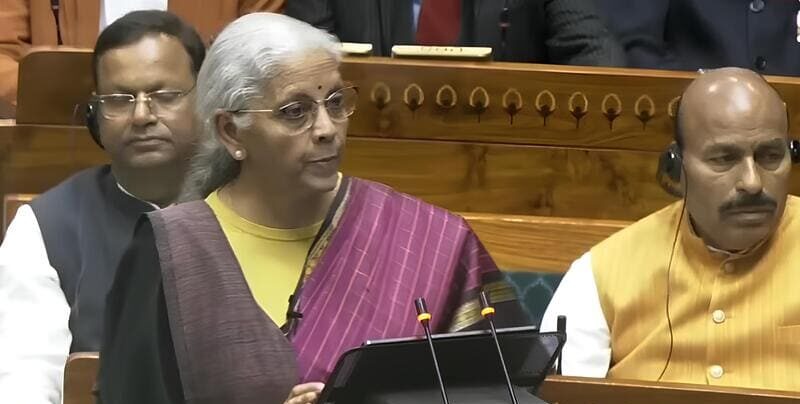
This year’s Union Budget reignited debate over whether India is investing enough in long-term growth, whether capital spending is crowding in private investment, and whether fiscal consolidation was being balanced against social priorities and employment creation. Such scrutiny is healthy. But the Budget moment should not be confined to arithmetic and scorecards. It is also an opportunity to ask a deeper question: are India’s public choices equipping the country to escape the middle-income plateau and graduate into sustained, high-productivity prosperity?
Budgets are statements of strategy as much as instruments of accounting. They reveal what a nation chooses to prioritise and what future it is attempting to build. At a juncture when India is poised to become the world’s third-largest economy in aggregate terms, the more consequential issue is whether growth is being translated into strong institutions and raising human capital. It is against this backdrop that the challenge of the low middle-income trap—and the centrality of state capacity to overcome it—demands renewed attention.
Need of the Hour – Sustainable Non-Agriculture Employment
As per the World Bank’s classification, a country is classified as a ‘high income country’ when its per capita income rises above $14,000. History suggests the first part of that journey is relatively easy – getting into the middle income category; but the second part is brutally hard. India’s experience reflects this pattern. Per capita incomes continue to edge upward, yet growth has repeatedly oscillated between spurts and slowdowns. These swings are not accidents of global cycles alone. They reflect deeper weaknesses, most notably the economy’s failure to create enough productive, non-agricultural jobs for a workforce that grows by millions each year.
East Asia’s success stories followed a recognisable script: labour moved swiftly from farms to factories, from informal activity to organised production, from low-productivity sectors to globally competitive manufacturing and services. India’s transition has been far less decisive. Agriculture still absorbs a disproportionately large share of workers despite contributing a shrinking fraction of output. Manufacturing’s share of GDP has remained stubbornly flat, and labour-intensive exports have never achieved the scale seen in South Korea, China or Vietnam. Formal employment remains scarce, and too many young Indians find that the fastest-growing major economy offers few stable footholds.
Official unemployment numbers mask the severity of this problem. Underemployment and informality dominate the labour market. Between 2014 and 2022, more than 220 million applicants chased barely 700,000 central government jobs—a stark illustration of how limited quality opportunities have become. Labour-force participation remains well below that of China and even Bangladesh, while women’s participation is distressingly low for a country with global ambitions. Millions of educated youth call themselves “self-employed” not because they have discovered entrepreneurial freedom, but because salaried work is unavailable. The danger is not only wasted potential, but a slow accumulation of frustration that can corrode social trust.
Why Building State Capacity is Essential
Policy debates often focus on logistics, labour regulations or the ease of doing business. These matter, but they are insufficient on their own. India increasingly confronts a more fundamental constraint: the limited capacity of the state itself. High-income societies are distinguished not merely by vibrant markets, but by governments that reliably deliver law and order, contract enforcement, quality schooling, basic healthcare, urban services and regulatory oversight. No private sector can substitute for these foundations. Without them, investment falters and productivity stalls.
India’s governance architecture remains overly centralised. Local governments, responsible for much frontline delivery, control barely three per cent of public expenditure and less than fifteen per cent of government employment—far below the shares seen in the United States or China. Municipalities and panchayats charged with sanitation, primary healthcare or urban planning are starved of staff, budgets and authority. At higher tiers, the premier administrative and police services are chronically understaffed and subject to frequent transfers that erode continuity and expertise. Regulatory bodies overseeing complex markets—from securities to telecommunications—operate with technical depth that lags global best practice.
The judiciary illustrates the economic cost of institutional weakness most vividly. Case backlogs run into the tens of millions, and civil disputes take years to resolve—far longer than in peer economies. Slow justice becomes slow investment: contracts are harder to enforce, risk premiums rise, and entrepreneurs hesitate before committing capital.
Social sectors show a similar mix of expansion and fragility. India has dramatically widened access to schooling, yet quality remains uneven, with surveys suggesting that roughly half of fifth-grade students cannot master basic reading or numeracy tasks expected two years earlier. Public spending on health remains stuck around 1 to 1.4 per cent of GDP, far below global norms, leaving households exposed to catastrophic medical bills. International comparisons make clear that escaping the middle-income trap requires not only faster growth, but heavier and smarter investment in human capital.
A Strategic Reset for India’s Next Growth Leap
What would a serious escape strategy look like? It would begin with strengthening the state: empowering local governments, stabilising official tenures, deepening technical capacity in regulators and courts, and relentlessly improving frontline delivery. It would involve a renewed employment push centred on labour-intensive, export-oriented manufacturing, faster urbanisation and more flexible factor markets so firms can scale. And it would require fiscal ambition—raising the tax-to-GDP ratio to finance sustained investment in education, health, infrastructure and institutional modernisation.
Above all, it would demand a moment of strategic discontinuity. India reinvented itself politically in 1947 and economically in 1991. Escaping the low middle-income trap will require a transformation of comparable magnitude—a shift away from incrementalism toward building public institutions that match the country’s aspirations.
As the Budget debate unfolds, the real test should not lie only in deficit numbers or headline allocations, but in whether India is assembling the institutional architecture of a high-income economy. Future Budgets will be judged less by short-term stimulus than by whether they deepen state capacity, expand fiscal space for health and education, accelerate urban and industrial transformation, and shorten the distance between policy intent and delivery. Escaping the middle-income trap is a generational project. But the choices made in this Budget season will shape whether India merely grows larger—or finally grows richer.
India stands at a crossroads. Without bold change, the risk is prolonged stagnation and a frustrated generation. With decisive reform, however, the country can convert its demographic scale, entrepreneurial energy and geopolitical weight into durable prosperity. The path forward runs not only through factories and trade corridors, but through courtrooms, classrooms, clinics and city halls. The window for action is narrowing. The moment is unmistakably India’s.
Author: Shishir Priyadarshi – President at the Chintan Research Foundation (CRF), New Delhi, and former Director of WTO.
(The opinions expressed in this article are solely those of the author and do not necessarily reflect the views of World Geostrategic Insights).
Image Credit: https://www.indiabudget.gov.in/ (Hon’ble Finance Minister Nirmala Sitharaman Presented Union Budget in the Parliament 2026-2027).