



By Sean Philip-Corbett Nottoli
The entirety of the security status quo of the Indo-Pacific region is rapidly changing. As the CCP continues its massive naval build-up and increasingly hostile tactics in the South China Sea, the need for greater cooperation and military buildup of America’s allies in the region has never been higher.

China has made incredible strides to grow its navy rapidly, having debuted two new classes of amphibious assault ships (the Type 076 and Type 075) this year alone. The CCP is projected to grow its fleet of 370 warships to over 400 by the end of this year.
So, the AUKUS agreement is more important than ever, especially in the context of alleged CCP plans to invade Taiwan by 2027.
The deal, which would not only involve a rotating presence of British and American Virginia and Astute-class nuclear stealth submarines in Perth, would also entail the sale of at least three Virginia-class submarines from the US to Australia. While these submarines would provide an excellent deterrent to China’s ambitious military expeditions, such as the surprise live-fire exercises in the Tasman Sea by the PLA Navy earlier this year, these vessels may arrive too late to deter the immediate threat. Indeed, the estimated first shipment of these craft to Australia would be sometime in 2032, and possibly as late as 2035..
Designing and building ships takes time, and it’s clear that the United States doesn’t have the current ship-building capabilities to spit out ships as quickly as the Chinese currently can. To increase pressure on Beijing and to at least stall, and hopefully ultimately deter it from invading Taiwan and starting a war in the Indo-Pacific, the US and its allies need to increase their military deployment and engagement in the region as quickly as possible. While it may not be possible to construct the three new stealth nuclear submarines promised to Australia before 2027, there is an alternative option. An option that could not only see an increased shift in the financial burden of keeping the peace in the region from the US to Australia but could serve to be an effective filling in the gap before the Virginia-class submarines are delivered.
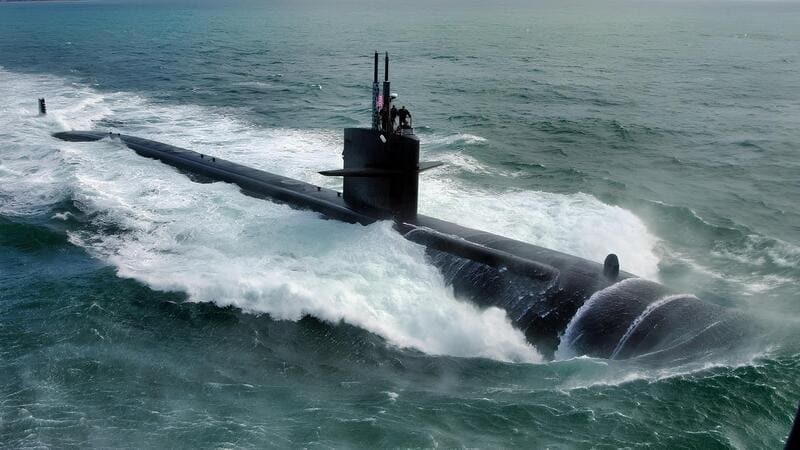
The LA-class, fast attack, stealth nuclear-powered submarine, first commissioned in 1976, is one of the largest classes of nuclear submarines the United States has ever built. Built by Newport News Shipbuilding and General Dynamics, the LA class was originally a multi-mission platform designed to take on the Soviet Union. The LA class is capable of anti-submarine warfare, anti-surface warfare, utilizing stealth to conduct intelligence operations, uses Tomahawk cruise missiles, and can even be used to ferry soldiers during special operations.
This multifaceted vessel, although originally designed and built in the 1970s, remains technologically decades ahead when compared to the submarines and ships in the arsenals of other navies in the Indo-Pacific. For the moment, the CCP has a significant gap in its anti-submarine warfare capabilities, and the LA class, combined with its still effective stealth and anti-surface capabilities, makes it a lethal threat to the PLA-Navy. It’s no secret that new Type 076 and Type 075 amphibious assault ships are being built specifically to be used for the openly planned invasion of Taiwan. With their hovercraft and general landing craft capabilities, coupled with their launch deck estimated by defense officials to be capable of launching massive amounts of fixed-wing drones, and even potentially fighter jets, many speculate these ships could serve as potential mother ships for the PLA Navy’s special operations.
Whether that be an invasion of Taiwan, an assault on the Philippines to enforce their 9-dash line policy, these ships will form a critical component of China’s naval and potential invasive capabilities throughout the region. Although formidable, for the moment, these ships are easy targets for the LA-class, and an increase in their presence in the Taiwanese Strait would be an effective deterrent for any of these vessels attempting to invade or blockade the island. While China is working to grow its anti-submarine warfare capabilities, the majority of its submarines run on diesel and electric, and it operates only 12 nuclear submarines compared to the United States’ 66.
While the CCP is working to close this gap and plans to increase its fleet to 80 submarines (a combination of nuclear, diesel, and electric) by 2035, the gap in capabilities exists now that the US and its Indo-Pacific allies can and should exploit. Currently, the US Navy operates approximately 28 LA-class subs, which the Navy plans to decommission in favor of the newer, more advanced Virginia-class subs. While the US Navy certainly should upgrade its fleet, production capabilities are currently extremely strained and struggle to produce one Virginia-class submarine a year. Given the CCP’s intention to possibly invade Taiwan in the near future, it’s not possible to produce these ships for the AUKUS deal quickly enough to deter this threat.
Instead of decommissioning the LA-class, the AUKUS deal with Australia should be expanded to include the sale of these subs to the land down under. Instead of wasting manpower and resources, sending these still effective warfighting machines to a mothball fleet, the United States should sell these craft to its Indo-Pacific allies, such as the Australians, to build up their desperately needed undersea warfare capabilities. The sale of LA-class subs to Australia falls perfectly in line with President Trump’s strategy for the region. The sale would not only help the US Navy recuperate funds but also shift more of the burden and cost-sharing for maintaining peace in the Indo-Pacific to our allies, as well as send a clear message to Beijing that the defense cooperation between the US and its allies is stronger than ever.
While these are older subs, and there are concerns over the life expectancy of their hulls, they are expected to be fully and safely operable until at least the mid-2030s. Instead of sending them to an early grave, the US should get the most utility out of them as possible and use them to fill the gaps in our allies’ security until the new Virginia-class subs can be safely delivered. As part of the expanded deal, the US can and should require that Australia use these submarines and other traditional forces to join the US and the UK in surveying and monitoring the Strait of Taiwan, as they recently did on September 16th.
The sale of these subs would be a great win for the US and the Trump Administration. Not only would it showcase American naval supremacy, sending a clear message that even antiquated American technology can throw a wrench in the CCP’s plans for territorial expansion, it would show Beijing and the world that US cooperation with its Indo-Pacific allies is increasing, rather than decreasing, as many are misled to believe. If peace is to be maintained in the Indo-Pacific region, the US and its allies need to use every tool at their disposal to send a clear signal to any would-be provocateur that hostilities and aggression in the region won’t be tolerated.
Author: Sean Philip-Corbett Nottoli – Expert in American and conservative politics with over a decade of experience in campaign management and consulting across the United States. He served as a director in Trump’s last presidential campaign. He has also worked for five years with civil society organizations to promote democracy around the world. He has published articles on a variety of global topics in various formats, ranging from security policy in the Baltic region to Russian military strategy and events on the Korean peninsula in China, Japan, and other regions. His research interests include global security issues, state sovereignty, and great power competition. He is currently a Visiting Fellow at the Danube Institute in Budapest, Hungary.
(The views expressed in this article belong only to the author and do not necessarily reflect the views of World Geostrategic Insights).