



With power comes a confident stride to shape the international system in its own image, to spearhead global and regional institutions that would proactively build the security and economic architectures of governance.
However, with power also comes an anxiety of peer competitors and “the rise of the rest” either resisting the offers that great powers consider cannot be refused or offering alternative offers. The anxiety of power is not merely external in origins and cannot be deduced to mere balance of power games or the indices of hard and soft power. Shifts in the political, social and economic landscape of the country also causes anxiety of how the country is viewed within and without.
Throughout most of the 20th century and the first quarter of the 21st century, the United States has been the pre-eminent power in the international system, despite a number of swansongs being sung over the “Great American Decline”. Through the security and economic architecture undergirding the global and regional systems, Washington has spearheaded most of them despite recent competition from Beijing. By matters of comparison, the United States still has the largest economy in the world and its military singularly and in concert with allies is the most formidable, with forward posturing and expeditionary capability like none. In terms of new technology innovation and deployments, it still houses most of the giant conglomerates shaping the future of artificial intelligence and machine learning. But, despite all these cumulative powers, anxiety is as inherent in great power, as in confidence.
For the United States that has dabbled with isolationist and interventionist streaks in its national character right from its early days to the Trump era, anxiety has had many sources. Having won World War II, along with its war-time allies and dropped two atomic bombs on Japan, the United States as the sole owner of nuclear weapons was anxious that other powers will eventually get its hands on the ultimate weapon. This anxiety not only shaped much of the post-War arms race but also arms control and disarmament efforts.
After the Communist camp won the Civil War against the US supported Kuomintang and China became the People’s Republic of China, and as the Korean peninsula went to war, a “Red” anxiety overwhelmed US foreign policy, national security and domestic politics. The fear that countries, one after another, were going to fall like “dominoes” on the lap of communism drove US containment strategy during the Cold War, leading to proxy wars from the jungles to Vietnam to the badlands of Afghanistan. Inside the United States, the era of “McCarthyism”, introduced the spectre of “Red Scare”, that put the fear among Americans that “communists could be lurking anywhere, using their positions as school teachers, college professors, labor organizers, artists, or journalists to aid the program of world Communist domination.”
As Japan became an economic competitor to the United States and almost came close to challenging its dominance, uneasiness defined the US-Japan relationship, despite being security allies. Then came the end of the Cold War prompting the American political scientist Francis Fukuyama, to propose his “End of History” thesis that liberal capitalism had triumphed. But, the anxiety of American power was far from seeing the end of history. Very early in the post-Cold War era, scholars started propounding the “unipolar illusion” and why new great powers will rise. Then, there were rogue states who did not align interests and values with the United States and who might have gotten their hands on fissile materials. Then came the terror attacks at the World Trade Center, the 9/11 moment, that shook the national psyche and fundamentally reshaped the US national security and foreign policy apparatus, in ways seen only after World War II. 20 years in Afghanistan, with another 5 years of military misadventure in Iraq, defined the contours of America’s “forever wars” and a complex chapter in US engagement with the Islamic world.
All this while, a country in the eastern hemisphere was metamorphosing to rise comprehensively, and become a real contender in the power battle, rewriting the grammar of great power relations in the 21st century. Drawing a boxing analogy, the stakes are always higher for the reigning champion trying to defend the title, compared to the contender, who has less to lose and more to gain with an upset win. Even when the match is a draw, there is more to lose for the champion in terms of status and position.
The 2008 financial crisis that started in the United States and caught the rest of the world was a body blow to America’s global status and proved a moment of reckoning giving enough ammunition to Beijing to call out the diminishing returns of the Washington model. Iconic American brands filed for bankruptcy and started a new discourse on income inequality in the United States. The “American Dream” was gasping for breath. The financial crisis had also sparked the Occupy Wall Street movement, starting in New York City, and inspiring similar movements across the world calling out economic inequality, corporate greed, and the influence of money in politics, fuelling the iconic “99% vs 1%” slogan.
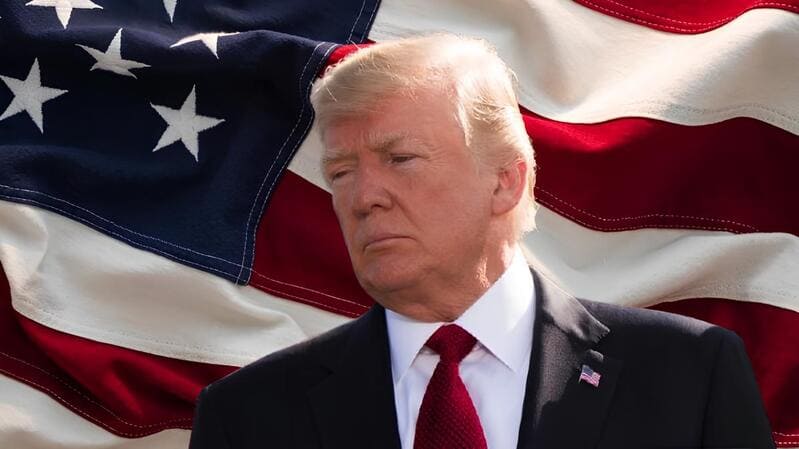
The Trump years have been unlike anything seen in modern American presidency, and has literally reshaped the checks and balances between the executive, legislature and the judiciary. From the “No Kings” protests spreading to almost 2600 rallies in 50 states, to the immigration raids by the Immigration and Customs Enforcement (ICE) agency and deployment of National Guards and the Capitol event of January 6, 2021, the prevalent political polarization has reached a crescendo. Indeed, there is a profound shift in the social contract of America that impacts not only the image of the United States, but also in how it views its engagement with the rest of the world, and more particularly with its European allies within the geopolitical West.
From President Trump’s speech at the United Nations General Assembly to Vice President J D Vance’s speech at the Munich Security Conference (MSC), there is a deeper tension between those who still see return of investments in a rules-based order, and those who see it as a waste of American resources. “The threat that I worry the most about vis-à-vis Europe is not Russia, it’s not China, it’s not any other external actor. And what I worry about is the threat from within, the retreat of Europe from some of its most fundamental values — values shared with the United States of America,” Vance remarked to the surprise of many in the audience at the MSC. In a telling comment on the state of affairs in the transatlantic alliance, Ursula von der Leyen said, “The West as we knew it no longer exists.”
Just as the “House always wins” in a casino, great powers build a system where the rest have incentives in playing by the rules of the house, but the house still benefits the most from the system and stays at the top of the food chain. But, there exists a palpable anxiety of the United States being taken for a ride by the rest of the world. The life of a great power is also a story of perennial anxiety born out external and internal forces, and the paradox of its power that is found deficient in completely shaping the world in its own image. As one of America’s most influential National Security Advisers Zbigniew Brzezinski remarked, “America may be uniquely powerful in its global scope,” but because of it, “its homeland is also uniquely insecure.“
Author: Monish Tourangbam – Senior Research Consultant at the Centre for Geopolitics and Strategic Studies, Chintan Research Foundation, New Delhi.
(The views expressed in this article belong only to the author and do not necessarily reflect the views of World Geostrategic Insights).