



By Yasir Masood
This analysis draws on a visit to Yangling in Shaanxi Province, one of China’s leading centers of agricultural innovation, to examine how Pakistan is gradually adopting aspects of China’s modernization to rejuvenate its agri sector. It also highlights how the Shanghai Cooperation Organization (SCO), traditionally focused on security under the Shanghai Spirit, is emerging as a platform for sustainable development and agricultural diplomacy.

While Pakistan has begun applying elements of China’s agricultural model, large-scale implementation remains limited. This piece outlines practical pathways to generate tangible gains for Pakistan’s agriculture under the second phase of the China-Pakistan Economic Corridor (CPEC), aligned with the SCO’s Agriculture Cooperation framework.
Pakistan and China, long-standing partners, are advancing their cooperation through the next chapter of the CPEC, a flagship Belt and Road Initiative (BRI) project now commonly hailed as CPEC 2.0. Prime Minister Shahbaz Sharif recently announced its formal launch during Chinese Foreign Minister Wang Yi’s visit to Islamabad, in the backdrop of the SCO Summit in Tianjin from August 31 to September 1, 2025.
The first phase of CPEC, initially expected to conclude by 2020, extended into a decade due to security and political challenges. Despite delays, it bridged critical infrastructure and energy gaps, underscoring both sides’ commitment to making it a transformative endeavor. The next stage will prioritize infrastructure, special economic zones, technology transfer, industrial parks, and regional connectivity to accelerate Pakistan’s economic growth, consistent with broader SCO goals and the BRI mandate.
During my recent visit as part of the delegation themed Watch China Together – A Journey to Harmony, the Yangling Agricultural High-Tech Industry Demonstration Zone, China’s national hub for innovation in arid and semi-arid agriculture, stood out. In October 2020, it became home to the SCO Agricultural Technology Exchange and Training Demonstration Base and launched the Silk Road Agricultural Education and Science and Technology Innovation Alliance, now bringing together 96 institutions from 18 countries. Pakistan is gradually adopting Yangling’s model, and Prime Minister Sharif’s 2024 visit paved the way for training 1,000 young Pakistani graduates at China’s leading agricultural institutions in advanced, climate-smart, technology-driven farming.
Yangling spans 135 square kilometers, hosting 110 nationally recognized experts, over 7,000 agricultural staff, and recruiting more than 100 doctoral-level researchers annually. The zone operates more than 90 high-level research platforms, has produced over 6,000 scientific achievements, and won more than 1,800 awards. It has trained and deployed over 300,000 professionals to arid regions, established 12 agricultural demonstration and industry parks in Central Asia, and since 2014 has organized dozens of exchange and training programs. These accomplishments underscore Yangling’s central role in advancing China’s sustainable agriculture, a model from which Pakistan can draw critical lessons.
To explore how Pakistan can benefit from Chinese agricultural development, it is important to note that agriculture is the country’s backbone, contributing about 21 percent to GDP, employing 43 percent of the labor force, and supporting 64 percent of the rural population. Of 79.6 million acres, 23.77 million acres (28 percent) are cultivated, sustained by the world’s largest canal irrigation system.
With four seasons, Pakistan ranks among the top 11 countries for fertile land and is a leading global producer: third in chickpeas, fourth in milk and mangoes, fifth in dates and sugarcane, sixth in apricots and citrus, seventh in wheat and onions, eighth in farm output, and eleventh in rice. Crops remain a vital source of foreign exchange, and adopting AI-driven precision farming could increase agriculture’s GDP share by 20 to 30 percent.
Yet productivity lags. Agricultural imports reached $8–9 billion in 2025, making them the second-largest import category. Climate disasters, inefficiency, water scarcity, outdated practices, and post-harvest losses of up to 40 percent weigh heavily on the sector. The State Bank of Pakistan projects weak growth for FY-25 and beyond. Despite available technologies such as artificial intelligence, the Internet of Things (IoT), and big data, most farmers rely on traditional methods, limiting yields and leaving them exposed to the devastating impacts of climate change.
CPEC 2.0 provides a clear pathway for agricultural modernization. China, home to the world’s largest agricultural market, employs satellites, drones, AI monitoring, high-yield seeds, and solar-powered irrigation to raise output by 20–30 percent. Pakistan’s wheat yield of 2.8 tons per hectare remains well below China’s 5.3 tons per hectare. By aligning with China’s Smart Agriculture Action Plan 2024–2028 through the SCO and BRI forums, Pakistan can modernize farming, improve storage, and shift from raw exports to a value-added agricultural economy while protecting farmland from urban conversion.
At Yangling’s international kiwifruit park, Gao Zhixiong, the park’s general manager, noted that Pakistan has strong potential for kiwis and melons by applying smart farming techniques. Muhammad Asif Noor, Secretary General of the SCO Friendship Forum from Islamabad, highlighted that China’s expertise in mechanization, seed technology, water management, and digital farming can help boost productivity, reduce poverty, and enhance food sustainability. Pakistan’s participation in the SCO summit reinforces regional cooperation and multilateral legitimacy. Challenges remain, including limited capacity, bureaucratic hurdles, and small-scale pilots, underscoring the need for targeted farmer training and credit for agri-tech adoption.
In practice, the first phase of CPEC’s agricultural cooperation has largely followed a B2B model, with Chinese firms partnering local companies to introduce technologies and contract-farming arrangements, while Pakistan has played a facilitative role through approvals and training visits for officials. These arrangements have yielded early benefits: farmers under contract farming are obtaining better prices, and some Chinese technologies are entering the domestic supply chain.
To scale from pilots to systemic change, Pakistan needs a stronger public backbone in research, regulation, market services, and finance. There are some success stories under CPEC agricultural cooperation, such as chili, cherry, and mango production, which have seen growth in Chinese markets. One of the good examples is the sesame area expansion and farmers’ interest due to investment by China Machinery and Engineering Company (CMEC) through contract farming,” noted Dr. Falak Naz, Director Coordination at the Pakistan Agriculture Research Council.
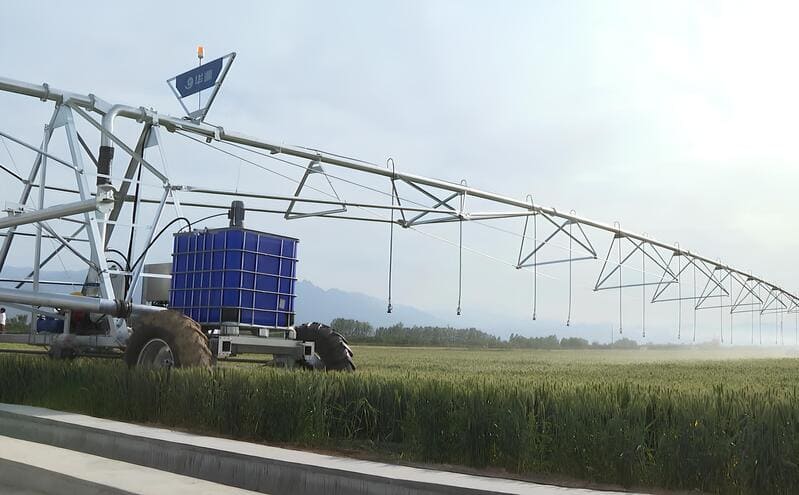
To fully realize the potential of Yangling-inspired agricultural modernization, Pakistan can expand cooperation with Chinese institutions through joint research and development in biotechnology, genomics, and crop improvement. Adoption of modern water-saving irrigation techniques, including drip and sprinkler systems alongside satellites, drones, AI monitoring, high-yield seeds, and solar-powered irrigation, can significantly enhance efficiency and yields. Complementing these technologies, targeted training for young graduates and extension officers can build local capacity in climate-smart, technology-driven farming. Effective extension services, supportive policies, and public-private partnerships will be essential to ensure innovations reach smallholders and farming communities nationwide.
Pakistan would also benefit from a demonstration zone like Yangling, where indigenous agricultural products can be cultivated using AI-driven technologies. Such a model could attract investment and joint ventures with Chinese entrepreneurs, helping expand Pakistan’s farming sector and diversify into value-added production. Dr. Naz emphasizes that “research, technology, training, and institutional reforms are crucial to translate Yangling’s lessons locally.”
The broader lesson from Yangling is that agricultural modernization succeeds only when pilot projects are scaled through strong institutions and long-term policy commitment. With CPEC 2.0 on the horizon, Pakistan has the opportunity to embed research, training, and digital innovation into its agricultural foundation. By aligning these efforts with SCO-driven regional cooperation, pilot initiatives can evolve into a nationwide agricultural modernization that raises yields, strengthens rural livelihoods, and enhances food and economic security.
Author: Dr. Yasir Masood – Pakistani political and strategic analyst, academic, and broadcast journalist specializing in strategic communication. He holds a PhD in International Relations with a focus on the Balochistan conflict. His work spans South Asian geopolitics, Pakistan’s foreign policy, U.S.-Pakistan relations, China’s Foreign Policy, and the China–Pakistan Economic Corridor (CPEC). He regularly provides commentary to leading global media outlets and think tanks.
(The views expressed in this article belong only to the author and do not necessarily reflect the views of World Geostrategic Insights).
Image Source: CGTN