



Following The Economist May 11 2023 leader “Is Chinese power about to peak?”, I argued in a China Daily Op-ed of 20 June (1) that ultra-gloomy perceptions of China’s economy and body politics were over-exaggerated and misplaced.
Now, with a sputtering economy, stalling domestic consumption, worsening demographics, persistent local government indebtedness, a housing-bubble overhang, youth joblessness, “China Threat” hostilities, and unprecedented global geo-economic disruptions, it’s no surprise that the “Peak China” mantra is returning in some quarters.
‘Why Peak China may finally have arrived’, esteemed author George Magnus at Oxford University’s China Centre argues in The Guardian of 11 August. (2) His 2018 book, Red Flags: Why Xi’s China Is in Jeopardy, (3) doubted the sustainability of President Xi Jinping’s “dirigiste” governance model.
Nevertheless, current odds notwithstanding, I remain of the view that the “Peak China” refrain remains largely overblown. There are ten good reasons why.
First, China has the world’s largest reservoir of technological manpower suited to the Digital Age of the Fourth and Fifth Industrial Revolutions. China has been producing more than 77,000 STEM (Science, Technology, Engineering, Mathematics) PhDs annually, outnumbering their U.S. counterparts more than three-to-one, according to George Town University’s Centre for Security and Emerging Technology. (4)
Second, following extensive research between 2018 and 2022 covering a total of 2.2 million peer-reviewed papers, the Australian Strategic Policy Institute (ASPI) finds that China leads in 37 of the 44 critical technologies which define the new era, including Artificial Materials and Manufacturing, Artificial Intelligence, Computing and Communications, Energy and Environment, Quantum, Biotechnology, Gene Technology, Vaccines, Sensing, Timing and Navigation, Defence, Space, Robotics and Transportation. (5)
Third, despite exclusion from the U.S. led International Space Station from the very start, China has built from scratch and has been operating its own Tiangong Space Station successfully. It has recovered soil samples from the far side of the moon, the world’s first such attempt, and seems on track to send its first astronauts to the moon by 2030. (6)
Fourth, against President Donald Trump’s no-holds-barred tariff war, China has found a powerful stranglehold on America’s “Achilles’ Heel”– China’s critical rare-earth dominance. Additionally, by pivoting to the Global South and Europe, China’s exports have registered substantial increases in recent months (7) with sufficient wind in the nation’s sail in face of global disruptions. This stands in stark contrast with the rest of the world.
Fifth, China remains, by far, the world’s largest trader and manufacturer. In particular, China dominates the world’s shipbuilding industry, making 53.3% of the world’s shipbuilding, compared with 0.1% by the United States, according to the Centre for Strategic and International Studies (8). The vast majority of the world’s consumer goods are made in China. Even manufactured elsewhere, many goods have China embedded in terms of materials, parts, components or logistics, as seven of the world’s top eleven container ports are in China, Hong Kong included.
Sixth, China has become the world’s most transportation-connected nation. Domestically, the country’s total high-speed railway mileage is projected this year to reach over 50,000km with revenue expected to surpass 1 trillion yuan (US$137 billion) (9), the length more than double the rest of the world combined (10). Globally, China’s Belt and Road Initiative (BRI) connects infrastructurally by sea, rail, or pipelines to more than 140 countries across the globe, cementing trade and diplomatic ties. Learning from experience, the BRI is now pivoting towards more “open and inclusive” (smaller, greener and more financially sustainable) projects. (11)
Seventh, albeit no match to the United States’ military sophistication and global reach, China has advanced its military by leaps and bounds. It is more than capable of defending its national interests in the Asia-Pacific. China now possesses the world’s largest maritime fighting force, operating 234 warships to the U.S. Navy’s 219. (12) It has been developing intercontinental hypersonic weaponry (13) and Ultra Long-range Sixth Generation Fighter Jets (14).
Eighth, the BRICS Group of nations (Brazil, Russia, India, China and South Africa) has gained five new Members and eight Partner Members. The enlarged BRICS Group represents half of the world population and 41% of the global economy. (15) The Regional Comprehensive Economic Partnership (RCEP) consisting of all ASEAN Members and their main trading partners, including China, is the world’s largest Free Trade Area, representing 30% of world population and 30% of global GDP. (16) The Shanghai Cooperation Organization (SCO) founded by Russia and China have likewise expanded to include a host of Eurasian nations. Through these close partnerships, China has been expanding its economic and geopolitical gravitas in the Global South, which is set to play an increasingly influential role in world affairs. (17)
Ninth, China has been fielding more peacekeeping personnel for United Nations operations than all the other UN Security Council permanent members combined. (18) China has also taken on various leadership roles in UN agencies such as the Food and Agricultural Organization (FAO). (19)
Tenth, debunking deep-seated misconceptions about China’s governance model, New-York based Edelman Trust Barometer 2025 Global Report continues to rank China top in terms of people’s trust in their respective country’s government, business, media, and NGOs. (20) This supports findings of the Harvard Kennedy School Ash Centre 2020 Report on Chinese Communist Party (CCP)’s Resilience with its unique centrally-directed but people-based governance. (21)
China’s remarkable rise remains being targeted as an “existential threat” to America’s global dominance, now an entrenched bipartisan consensus. This hardly squares with a “Peak China” narrative. All in all, notwithstanding unprecedented challenges (and opportunities) “not seen in a hundred years” in the words of President Xi, the “Peak China” refrain remains over-exaggerated.
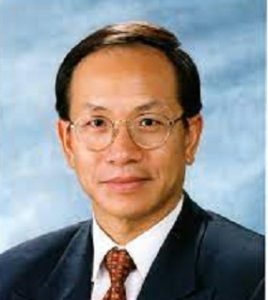
Author: Andrew KP Leung, SBS, FRSA – International and Independent China Strategist. Chairman and CEO at Andrew Leung International Consultants and Investments Limited. He previously served as director general of social welfare and Hong Kong’s official representative for the United Kingdom, Eastern Europe, Russia, Norway, and Switzerland. He has been an Elected Member of the Royal Society for Asian Affairs and of the Governing Council of the King’s College London (2004-10); a Think-tank Research Fellow at Zhuhai Campus (2017-20); an Advisory Board member at the European Centre for e-Commerce and Internet Law, Vienna, and a Visiting professor at the London Metropolitan University Business School.
(The views expressed in this article belong only to the author and do not necessarily reflect the views of World Geostrategic Insights).
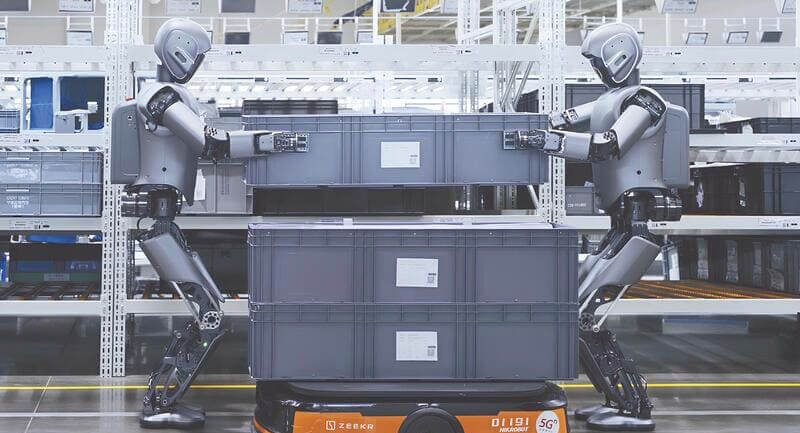
Image Source: Global Times/UBTECH (Two UBTECH Walker S1 industrial humanoid robots move containers in a factory on March 2, 2025.