



By Shishir Priyadarshi
In recent times, the discourse in diplomacy and international relations in general has taken a coarse, abrasive tone. From blistering state-media indictments to personal insults from serving diplomats and political advisers, the language used in diplomacy seems to be deteriorating—and with it, the norms that once governed respectful international engagement.

A glaring example of this shift is the deepening rift between China and Japan. Japanese Prime Minister Sanae Takaichi said in parliament that a Chinese military blockade around Taiwan could be a “survival-threatening situation” for Japan—a statement largely considered as a departure from her predecessors’ more cautious framing. Her statement, however, was in the context of Japan amending a national law in 2014 which allowed the island nation to re-interpret its policy of “collective self-defense”.
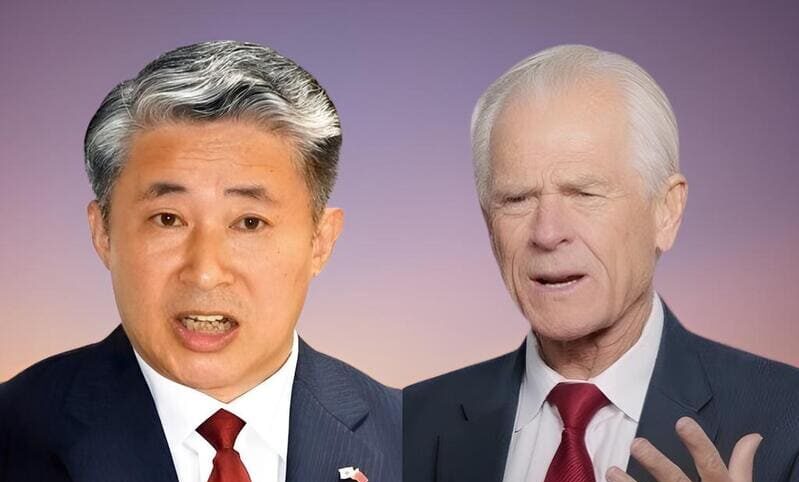
Beijing reacted strongly, with forceful rhetorical barrage much in line with its new “wolfwarrior” form of diplomacy. In a now-deleted post on the social media platform ‘X’, Xue Jin, China’s Consul General in Osaka, quipped rather undiplomatically that “the dirty neck that sticks itself in must be cut off”. Note that the ‘neck’ he was referring to was that of the Prime Minister of the country where he was serving as a diplomat. As if in coordination, the Chinese embassy in Tokyo posted on its social media a reminder that it had not renounced using force to take Taiwan, and warned that any intervention by Japan would be seen as an “act of aggression” to which China would “resolutely counterattack”.
Defending Xue, The Chinese foreign ministry too lodged strongly worded protests, accusing Takaichi of violating the ‘One-China principle’ which Japan officially adheres to. Calling Takaichi’s statement “wrongful and dangerous”, Lin Jian, a Chinese foreign ministry spokesperson, ‘urged’ Japan to “stop sending any wrong signals to Taiwan independence separatist forces”, thus completely whitewashing the Chinese diplomat’s undiplomatic remarks.
With no intention of toning down the rhetoric, Chinese state-controlled media added fuel to the fire. The Global Times warned that Japan’s remarks had “inflicted fundamental damage,” while commentary in Xinhua accused Tokyo of “militaristic adventurism”, predicting “crushing defeat” should Japan dare to interfere militarily in Taiwan.
To back up its rhetoric, the Chinese Coast Guard stepped up its activity in the vicinity of the ‘disputed’ Senkaku/Diaoyou islands, and China has issued travel advisories to its tourists and students in Japan. The increasingly personal and incendiary nature of these exchanges signals a worrying shift—diplomacy is no longer just about managing interests, but also about wielding rhetoric as a weapon.
The rhetoric isn’t confined to East Asia. In the United States, senior Trump advisor Peter Navarro has launched a series of blistering attacks on India—a nation long seen as a key strategic partner for the US. What’s even more alarming, the Navarro rants came while both the nations were negotiating a trade deal.
Referring to India as the “Maharajah of tariffs,” Navarro claimed that its high import duties hurt American jobs. In a threatening tone, he ‘warned’ that if India doesn’t change its course (read as sides with the US), “it lays down with Russia and China, and that won’t end well for India.” He accused India of being a “Kremlin laundromat,” suggesting that New Delhi profits from buying cheap Russian crude, refining it, and reaping huge margins. Navarro has also framed the Russia-Ukraine war as “Modi’s war” for India’s continued purchase of Russian oil. These are not the polite, carefully worded, protocol-friendly ‘criticisms’ or differences of opinion that was the norm in diplomatic exchanges—they are personal, provocative, and laden with moral judgment.
Perhaps even more troubling, Navarro made a caste-laden comment, alleging that in India, the ‘Brahmins’ were profiteering from these energy trades “at the expense of the Indian people.” Such rhetoric mixes economic critique with culturally insensitive and divisive framing—and it hasn’t gone unchallenged. Former MP Shashi Tharoor called Navarro’s language “extremely offensive” for targeting India through both its trade policies and its social structure.
These examples reflect a broader trend: the degradation of diplomatic norms. Historically, even serious disagreements were couched in restrained, strategic language. Public insults, if and when they happened, were often regretted or retracted. Today, the bar for civility seems to be lowering. It is rather unfortunate because:
Strategic trust erodes faster: When national leaders or high-level advisors resort to coarse personal attacks rather than sticking to diplomatic niceties, it becomes harder to build or rebuild trust. Escalatory rhetoric raises the stakes—not just in words, but in actions.
Domestic polarisation seeps into foreign policy: Navarro’s jabs at India are not just about tariffs; they are also playing to a domestic audience that appreciates confrontational, “America First” posturing. It could also be interpreted as the US attempting to meddle in India’s social equations. Similarly, China’s strident media coverage appeals to domestic nationalist sentiment, reinforcing internal legitimacy even as it escalates external tensions.
The risk of miscalculation increases: When rhetoric sharpens, the room for misreading each other’s intentions shrinks. Provocative language is more likely to create defensive or aggressive responses, turning diplomatic rows into real geopolitical flashpoints.
Diplomacy becomes transactional and performative: In this environment, foreign policy debates risk being reduced to soundbites and posturing, rather than serious engagement on issues—weakening the traditional role of diplomacy as a space for constructive negotiations and finding a common ground.
We are witnessing a worrying shift in global discourse—one where diplomacy increasingly resembles a political battleground, and where “deal-making” is edged by belligerent soundbites. The Takaichi–Beijing row and Navarro’s volleys against India illustrate how state actors and political advisers are weaponizing language, not just to influence policy, but to provoke, to shame, and to pressurize.
In a world as fractured as today’s, normative powers such as China and the US need to talk and act more responsibly, and neither try to bully smaller states nor weaponise diplomacy. Because their actions seem to have gone largely unchallenged for fear of further reprisals, they have tried to set a “new normal” through such strong-arm tactics. This does not bode well for the global order and there is always the danger of further deterioration in the standards of diplomacy.
If global order is to be sustained, there is a pressing need to reclaim a higher standard of speech and return to diplomacy as it is meant to be: one rooted in respect, decorum, and strategic clarity. It must be realised that words and references in diplomacy shape perceptions, fuel trust, and, ultimately, determine whether conflict is avoided or invited. They should not be weaponized and certainly not be allowed to become facilitators to collateral damage.
Author: Shishir Priyadarshi – President at the Chintan Research Foundation (CRF), New Delhi.
(The opinions expressed in this article are solely those of the author and do not necessarily reflect the views of World Geostrategic Insights).
Image: Xue Jin and Peter Navarro.