



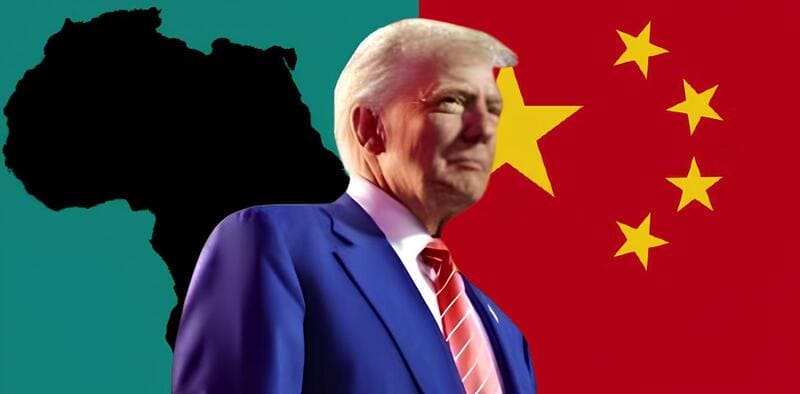
The adjustments to United States policy and structure towards Africa under the Trump 2.0 administration, based on the principle of ‘America first’, demonstrate a strong personal style and radical policies, manifested in several characteristics.

The Trump 2.0 administration denies the “African legacy” of previous presidencies and emphasises the uniqueness of its approach to Africa, attempting to raise Africans’ expectations of the new US presidency.
The United States of America is constantly seeking to transcend colonial domination — being one of the few powers never to have had any possessions on the continent — in order to win the trust and goodwill of African countries. This is intended to counter the People’s Republic of China’s collaboration with Africa in building a collective identity within the Global South.
Trump’s reform of traditional aid agencies for Africa aligns with African countries’ demands for equal investment partnerships and resistance to foreign aid interference in their internal affairs. For example, at the Powering Africa Summit (6–7 March 2025), which attracted widespread attention from African states, US Secretary of Energy Chris Wright announced the promotion of comprehensive energy cooperation in Africa. He stressed that the US government had no intention of telling African countries how to run their energy systems, describing such an approach as ‘absurd, paternalistic and neo-colonial’. This response accurately reflected African countries’ demands for energy development and their anti-colonial attitudes.
In order to win the support of domestic voters, Trump strongly criticised the idealistic, corrupt and wasteful humanitarian aid of the past, bringing policy towards Africa back in line with the mindset of core voters who oppose waste. A 2019 survey by the Pew Research Center (a US-based research centre that provides information on social issues, public opinion, and demographic trends in the US and worldwide) showed that the majority of Americans supported the promotion of foreign economic aid. However, further analysis in 2023 revealed that the majority believed aid both helped and harmed developing countries and that the government should prioritise domestic security spending over aid whose destination was unclear.
Public opinion towards foreign economic aid has clearly shifted in a negative direction, despite the fact that sub-Saharan Africa is the region to which the United States has offered the most aid. Due to their emphasis on Africa for strategic and propaganda purposes, yet their disregard for the region in practice, the United States has long been trapped in a dilemma of high aid costs, poor results and widespread corruption in its projects once they reach their destination.
Therefore, upon returning to power, Trump appealed to domestic public sentiment by reducing the scope of trade and military presence in Africa. In his public speeches, he repeatedly labelled Africa “an area severely affected by aid corruption” and criticised the previous administration for spending an enormous $520 million on green research support in Africa. This was in stark contrast to the White House’s traditional practice of cancelling climate and green knowledge funding for Africa, and it fuelled public sentiment in favour of cutting foreign aid and focusing on domestic issues.
In restructuring US aid behaviour in Africa, reforming pro-Africa institutions lies at the heart of a bipartisan struggle in the US. Trump’s initiative to abolish traditional pro-Africa institutions aims to remove obstacles posed by political opponents who wish to see them expand. On his Truth Social platform, Trump wrote, ‘The United States Agency for International Development is driving the radical left crazy, and there is nothing they can do about it because the way the money has been spent, largely fraudulently, is totally inexplicable.’ This move has revealed divisions within the elite consensus on foreign aid issues in the United States and concerns about excessive ‘ideological’ expansion.
According to news released from the personal account of U.S. Secretary of State Marco Rubio on the X platform, 83% of projects that forced USAID to dissolve and were not in line with U.S. interests have been suspended. The remaining 17% will be managed by the State Department. This has led to the purging of “radical left” external expansion institutions. With a focus on trade and investment, the Trump administration continued to implement a one-stop service for trade and economic cooperation with Africa, integrating 15 official agencies from the 1.0 period.
The aim was to abolish the strategic aid system to Africa represented by USAID completely. This will be achieved by enhancing the functions and powers of the International Development Finance Corporation, which was established by the US government. The US International Development Finance Corporation, the US Trade and Development Agency and the Export-Import Bank of China will also be created to implement policies towards Africa. Ultimately, a new policy instrument will be established that is more efficient and loyal, focusing on investment and financing to serve the US government’s interests and ideas in Africa, as well as the competition and expansion of power among the major powers in Africa.
Trump 2.0’s Africa policy is strengthening the impact and prospects of Africa’s autonomy and resilience. Trump’s series of manoeuvres are interpreted differently by the various social strata in Africa: some express disappointment and concern, while others have a more dialectical view and partially approve. Notably, most African politicians and scholars have adopted an attitude of independent reflection, noting that the United States is cutting aid while simultaneously imposing tariffs as a warning.
Although Trump has initiated a major policy shift towards Africa, there has been no strong reaction on the African continent. For example, in response to Trump’s ‘performance’, which advocates equality on the surface but, in reality, translates into dramatically suppressing African needs, South African President Cyril Ramaphosa issued a statement saying that the country ‘will not be intimidated’. Regarding the minerals of most concern to Trump, the South African Minister of Mineral Resources and Energy, Samson Gwede Mantashe, said that African countries should implement retaliatory measures on these minerals to safeguard their rights. This autonomous response reflects Africa’s increasingly mature and independent political consciousness in the context of the rise of the Global South.
Trump’s defence of trade will exacerbate the inherent contradictions in US policy towards Africa. Indeed, despite opposition from federal courts and Congress, the Trump 2.0 administration has reorganised traditional aid agencies for Africa, causing many cooperation projects to stagnate and undermining the United States’ structural influence on the continent. Trump has sought to develop specific relationships with key African countries to minimise costs, but he has also employed a short-term cash-out strategy. Cash-out is a feature that allows you to collect your winnings before the event you bet on has ended. This means you give up part of your potential overall winnings, but you secure a guaranteed amount that may be higher or lower than the amount you bet.
For example, by exploiting the close ties between the United States and South Africa, relations with this important commercial and knowledge hub in Africa have been damaged, and the United States has lost its important strategic gateway to Africa.
This has eliminated Washington’s unique influence and strategic credibility, resulting in contradictory policies and irreparable damage to relations with Africa.
The People’s Republic of China now faces opportunities and challenges in Africa. Although the United States’ withdrawal from the continent has created opportunities, it has also increased the risk of direct confrontation with the US and its partners, for example through malicious exclusion and competition in sectors such as energy, minerals, and infrastructure. By leveraging the United States’ contempt and smear campaigns against Africa, the People’s Republic of China can strengthen Sino-African relations further, supporting Africa’s status and promoting the development of a supportive China-Africa community.
However, Washington intends to engage in convergent competition with the People’s Republic of China in Africa, exploiting its soft power advantages such as setting standards and reviewing product life cycles. For instance, the United States has continued the global procurement partnership signed by its Trade and Development Agency with Africa, infiltrating local legislative systems for procurement and setting project or product standards that favour US companies such as Blackstone Africa. This has also increased hidden risks for Chinese companies in African tenders.
The Trump administration’s ‘New Strategy for Africa’ initiated a realignment of relations between the United States and Africa in a context of strategic competition between major powers. Version 2.0 will continue this primary objective, prioritising the interests of the US administration and private sector in Africa. The new strategy will reshape the United States’ strategic role in Africa, transforming the continent from an idealistic periphery into a key area of competition between major powers, in an attempt to curb the growing dominance and influence of the People’s Republic of China.
However, the assertive stance of the Trump 2.0 administration is actually weakening political and economic ties between the United States and Africa, raising doubts about the ability of trade and investment relations to strengthen the relationship between the two sides. This could cause countries of limited strategic value to Washington to lose confidence and turn to emerging powers such as the People’s Republic of China, Russia or the Gulf states, which would further undermine the foundations of Washington’s relations with the African continent.
Regarding the People’s Republic of China, the Ministerial Meeting of Coordinators for the Implementation of the Outcomes of the Forum on China-Africa Cooperation (FOCAC) took place in Changsha, Hunan, on 11 June. Chinese President Xi Jinping and his counterpart Denis Sassou Nguesso of the Republic of Congo (Brazzaville) sent letters to the meeting, expressing their heartfelt congratulations on its convening. In his letter, President Xi Jinping emphasised China’s commitment to implementing zero tariff measures for all tariff lines for products from the 53 African countries that have diplomatic relations with China. This will be achieved through negotiating and signing economic partnership agreements to promote joint development, while ensuring greater convenience for exports from less developed African countries to the PRC. The meeting produced the Changsha Declaration on China-Africa Cooperation for Maintaining Solidarity and Cooperation in the Global South, demonstrating the PRC’s and Africa’s firm determination and strong desire to promote solidarity and cooperation in the Global South. From 12 to 15 June, the fourth China-Africa Economic and Trade Expo was subsequently held in Changsha.
Strategic mutual trust and high-level planning for in-depth cooperation between China and Africa demonstrate the high level of political consensus and determination to pursue common development. Following the success of the Beijing Summit of the Forum on China-Africa Cooperation from 4 to 6 September 2024, relations between the parties reached another significant milestone in June of this year, with cooperation reaching a new level.
However, unilateralism and protectionism are on the rise globally, the politicisation of economic issues is intensifying, and the global market is at risk of artificial fragmentation.
Developed countries, in particular, are failing to fulfil their international responsibilities and clearly lack the will and capacity to provide international public goods. In April this year, the Trump 2.0 administration launched a tariff war that indiscriminately targeted numerous countries, including 51 African states. This unilateralism has a serious impact on Africa’s economic development and poses a severe test to African countries’ determination to build an open global economy.
Against this backdrop, the PRC’s announcement to eliminate all customs duties on products from the 53 African countries with which it has diplomatic relations is a significant development. Building on last year’s elimination of customs duties for 33 of the least developed African countries, the PRC’s current extension to all African countries with which it has diplomatic relations opens up new opportunities for cooperation between the Middle Kingdom and the Black Continent. This policy offers African countries an unparalleled opportunity to benefit from China’s vast market.
Experience has shown that China’s ongoing opening-up policy has created favourable conditions for exporting African products to China, driving continued growth in trade between the PRC and Africa. In 2024, trade between Beijing and Africa reached $295.6 billion, marking a 4.8% year-on-year increase and setting a new record for the fourth consecutive year. The PRC has been Africa’s largest trading partner for sixteen consecutive years.
Notably, the expansion of Chinese imports from Africa has optimised the structure of bilateral trade and embodied the concept of cooperation based on righteousness and common interests. These opening-up measures have strengthened the resilience and vitality of the domestic economic cycle and given strong impetus to the high-quality development of the international cycle, fully demonstrating Beijing’s commitment as a responsible major country.
On 5 September 2024, during the opening ceremony of the Forum on China-Africa Cooperation (FOCAC) in Beijing, President Xi Jinping proposed elevating bilateral relations with all African countries with which the People’s Republic of China has diplomatic relations to the level of strategic partnership, and positioning China-Africa relations as a community capable of withstanding any weather and environmental conditions. The 2024 Beijing Declaration emphasised that mutual cooperation is a historic mission.
Last June’s meeting of coordinators in Changsha provided a clearer answer to how China and Africa are working together to promote modernisation within a more favourable external environment. The related declaration stated that both sides call on the international community to uphold the principles of extensive consultation, joint contribution, and shared benefits, and to adhere to true multilateralism. It also calls for the joint opposition of all forms of unilateralism and protectionism, and for the safeguarding of the international system and the multilateral trading system, both with the United Nations and the World Trade Organization at their respective cores. The declaration further calls for the promotion of economic globalization in a more open, inclusive, beneficial, and balanced direction, and for the creation of a more favorable trade, investment, and financial environment for the Global South.
The signing of the Changsha Declaration symbolises the high level of mutual political trust and strategic coordination in China–Africa relations against the backdrop of rapid changes over the past century, breathing new life into the friendship, solidarity and cooperation between the People’s Republic of China and Africa.
In the face of international power imbalances and the dominance of a single set of rules, China and Africa are collaborating to promote reforms to the global governance system, strengthen strategic coordination within multilateral mechanisms such as the UN, overcome development inequalities and institutional barriers, reshape a fairer and more reasonable international order, and give developing countries a stronger voice and greater opportunities for development. Conversely, China and Africa are committed to enhancing the quality and efficiency of their cooperation through higher standards and concrete measures to ensure the sustained success of their collaborative efforts.
In recent years, China and Africa have continuously innovated in the content and models of cooperation to address new challenges. In his aforementioned congratulatory letter, President Xi Jinping emphasised China’s commitment to working with Africa to fully implement the Ten Partnership Actions, strengthening cooperation in key areas such as green industries, e-commerce and payments, technology, and artificial intelligence, deepening cooperation in security, finance, and the rule of law, and promoting the high-quality development of China-Africa cooperation.
Green industries and artificial intelligence are set to become the new pillars of China-Africa cooperation. The PRC will fully support Africa’s green transformation, strengthening cooperation in areas such as clean energy and the circular economy. At the same time, the PRC and Africa will accelerate the development of a partnership for the advancement of information technology, helping Africa to seize the opportunities presented by the Fourth Industrial Revolution through technology transfer, capacity building, and infrastructure investment.
On 11 June, the Chinese Ministry of Foreign Affairs published the Implementation List of the Outcomes of the China-Africa Cooperation Forum Beijing Summit. This document reveals that China has signed 22 protocols on agricultural product exports with 18 African countries, with over 2,400 food companies from 53 African nations now registered in Beijing. The PRC is supporting the development of African small and medium-sized enterprises, having provided 2.08 billion renminbi in loans to enterprises in 19 sectors across Africa. This has benefited around 350 small and medium-sized enterprises and created approximately 4,500 jobs.
From the conclusion of the 2024 Beijing Summit to the convening of the Coordinators’ Meeting in 2025, China and Africa accelerated the implementation of the cooperation outcomes with a sense of urgency, fully demonstrating the distinctive characteristics of their cooperation: pragmatism, efficiency, and the principle that actions speak louder than words.
This radically reshapes the practical paradigm of South-South cooperation, demonstrating the key role of China-Africa collaboration in the Global South landscape. President Xi Jinping noted that China and Africa’s joint efforts to promote modernisation will effectively advance solidarity and cooperation within the Global South, opening up brighter prospects for world peace and development. This important statement demonstrates China’s ongoing commitment to addressing global needs. Adopting a global and historical perspective in planning China-Africa cooperation means promoting mutual relations comprehensively within the broader framework of South-South cooperation and the transformation of the global governance system.
The Changsha Declaration also stated that, through jointly constructing a China-Africa community with a shared future, the two sides will set an example of solidarity, cooperation and independent development among Global South countries, and support inclusive and beneficial economic globalisation.
In terms of spatial extension, Africa accounts for 20.2% of the world’s land area and the PRC for 6.44%, totalling 26.64%. By the end of 2025, Africa’s population is expected to reach around 1.6 billion, while China’s population is expected to reach around 1.5 billion, accounting for 37.9% of the global population. In terms of the number of countries, the PRC and Africa together account for 55 UN member states, representing 28% of the total.
Given the Central African region’s vast geographical scale, population size and number of countries, China-Africa solidarity and cooperation will radically reshape the practical paradigm of South-South cooperation. This will provide a solid material foundation and institutional support for the Global South’s vision to unite and strengthen itself.
From the perspective of China-Africa cooperation and solidarity in relation to cooperation in the Global South, the shared pursuit of modernisation by China and Africa will undoubtedly usher in a new chapter in the Global South’s modernisation.
Against the backdrop of the remarkable rise of the Global South, the joint efforts of China and Africa to promote modernisation align with the Global South’s historical pursuit of peace, development, and cooperation. This will undoubtedly further strengthen the Global South’s power and enable it to play a more significant role on the international stage. The systematic progress of China and Africa’s RP in all-round modernisation-focused cooperation has set an example of Global South solidarity and cooperation. This will undoubtedly deepen and consolidate South-South cooperation focused on achieving modernisation, ushering in a new era of renewal. In this context, the Global South is expected to stabilise peace, drive open development, strengthen global governance and promote mutual learning between civilisations, thus playing a key role in building a community with a shared future for humanity.
Author: Giancarlo Elia Valori – Honorable de l’Académie des Sciences de l’Institut de France, Honorary Professor at the Peking University.
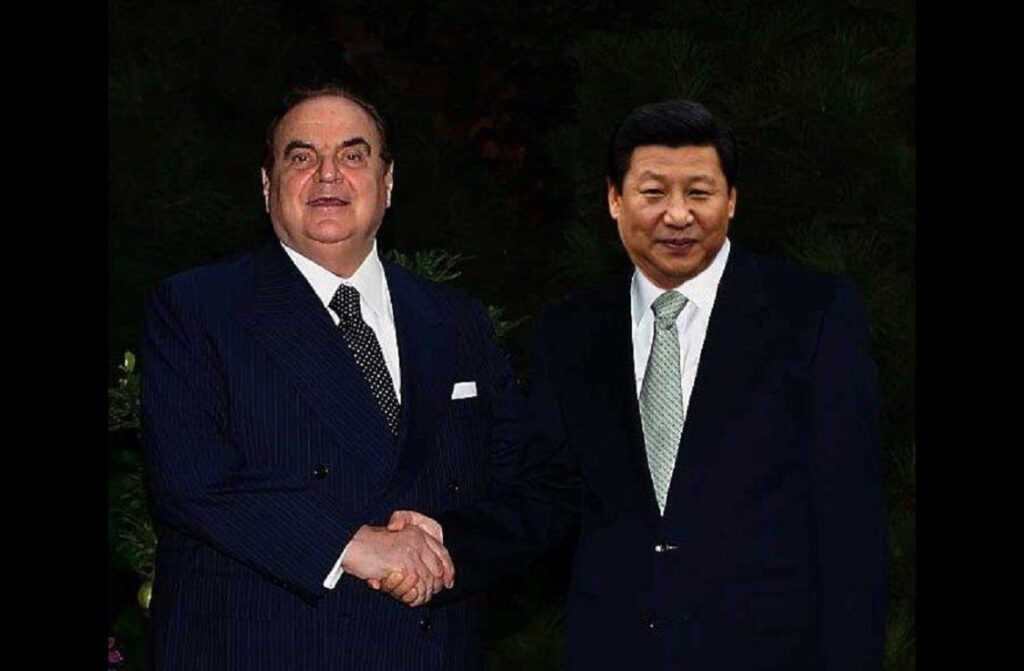
Giancarlo Elia Valori is a highly regarded Italian manager, playing a leading role in fostering dialogue and cooperation between countries. He is currently President of the Foundation for International Studies and Geopolitics.
(The opinions expressed in this article are solely those of the author and do not necessarily reflect the views of World Geostrategic Insights).
Note: This article, like all articles published on World Geostrategic Insights, cannot be republished without the written permission of the editor of World Geostrategic Insights.