



China’s recent decision to introduce special port dues on U.S.-linked vessels from October 2025 has been read by some as a direct escalation in its trade tensions with Washington.

Yet this development is better understood as a sign of how global trade politics are evolving rather than as a simple exchange of retaliatory measures. At its core, the issue exposes the limits of U.S. protectionism, the vulnerabilities of its shipping and manufacturing sectors, and the growing weight of China’s maritime economy in a shifting global order.
The United States’ decision earlier this year to apply new fees on Chinese vessels under Section 301 of its Trade Act was framed as a defense of national interests. In practice, it marked another attempt to use domestic law to manage global economic competition. The move targeted China’s shipbuilding and maritime industries—sectors in which Beijing has steadily built global leadership. The U.S., once a shipbuilding powerhouse, now produces only a fraction of the world’s commercial vessels. Most of its shipyards have shifted to military production, and its merchant fleet continues to age. Against that backdrop, Washington’s new measures appear less about fair competition and more about insulating declining industries from external success.
China’s decision to impose port dues on U.S.-affiliated vessels therefore emerges as a measured regulatory adjustment rather than a retaliatory strike. The policy applies in China’s own ports, following domestic law, and is phased gradually over several years. Unlike the American measures that sought to penalize Chinese-built vessels worldwide, China’s response is territorially limited and transparently implemented. In doing so, Beijing underscores its commitment to lawful reciprocity rather than confrontation.
The broader issue here is the resurgence of protectionism under the banner of national security. The U.S. has increasingly blurred the line between legitimate competition and economic containment. The use of trade restrictions, investment screening, and technology export bans has reshaped the global economy into a field of selective access. The maritime sector, once governed by stable international norms, has now been drawn into this wider contest. Yet such measures rarely succeed in reversing industrial decline. They may delay adjustment, but they cannot substitute for structural competitiveness.
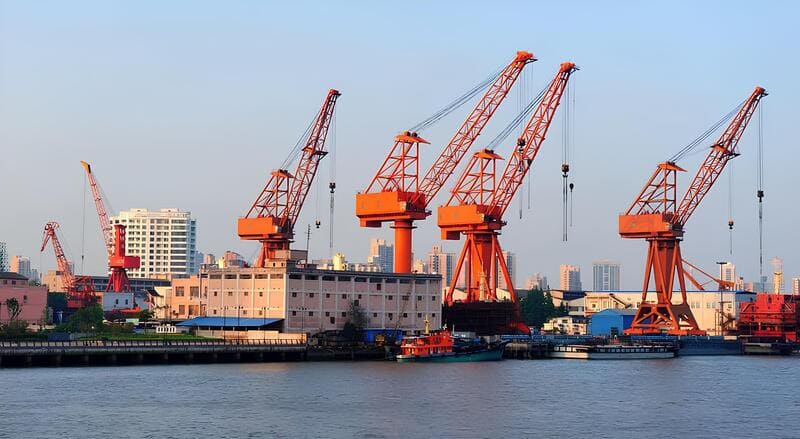
China, in contrast, has built strength through continuity and scale. It now commands more than 40 percent of global shipbuilding capacity, operates some of the busiest ports, and maintains the world’s largest merchant fleet by tonnage. Chinese companies have invested deeply in port logistics networks across Asia, Africa, and Europe, creating an integrated ecosystem that supports global trade. This maritime foundation has become a pillar of China’s economic resilience, enabling it to navigate disruptions that have unsettled others.
The new U.S. measures are unlikely to change that reality. American shipping companies may try to bypass the Chinese port dues by routing through third countries, but such arrangements will carry their own costs and inefficiencies. Many of the region’s trade corridors—from the South China Sea to the Indian Ocean—remain economically linked to Chinese infrastructure and logistics chains. Attempts to isolate or redirect trade away from Chinese ports may prove impractical in an interconnected maritime economy.
For global commerce, the real risk lies not in the fees themselves but in the precedent of using domestic trade laws to influence international shipping. When major economies resort to unilateral tools, they erode confidence in the predictability of the global trading system. The maritime industry, which depends on long-term contracts, insurance, and stable port access, suffers from uncertainty more than from tariffs. This uncertainty discourages investment, increases transport costs, and ultimately burdens consumers worldwide.
What China’s move demonstrates is an alternative approach, one grounded in legality and restraint. By setting clear parameters, limiting the frequency of dues, and providing a phased implementation timeline, Beijing has signaled that it values stability even amid policy friction. The decision also leaves the door open for adjustment if negotiations with Washington resume. Whether this maritime confrontation deepens or cools will depend largely on whether the U.S. is willing to re-engage through established trade mechanisms rather than unilateral action.
The future of this dispute will not be determined by port dues alone. It will hinge on whether both sides can balance competition with cooperation in managing global shipping networks. The U.S. can still choose to view China’s maritime success as an opportunity for interdependence rather than a threat. For its part, China’s confidence in its maritime capacity gives it the flexibility to remain open to dialogue. A stable and negotiated outcome would benefit not only the two powers but also the global economy that depends on the smooth movement of goods across their ports.
The significance of China’s port dues lies not in the amount charged but in what they represent but a calm assertion of rights amid turbulence. As global trade redefines itself through protectionism and industrial realignment, China’s response reminds the world that power can be exercised with restraint. The seas remain vast enough for competition, but the future of maritime order depends on cooperation.
Author: Muhammad Asif Noor – Founder Friends of BRI Forum, Advisor to Pakistan Research Center, Hebei Normal University.
(The views expressed in this article belong only to the author and do not necessarily reflect the views of World Geostrategic Insights).