



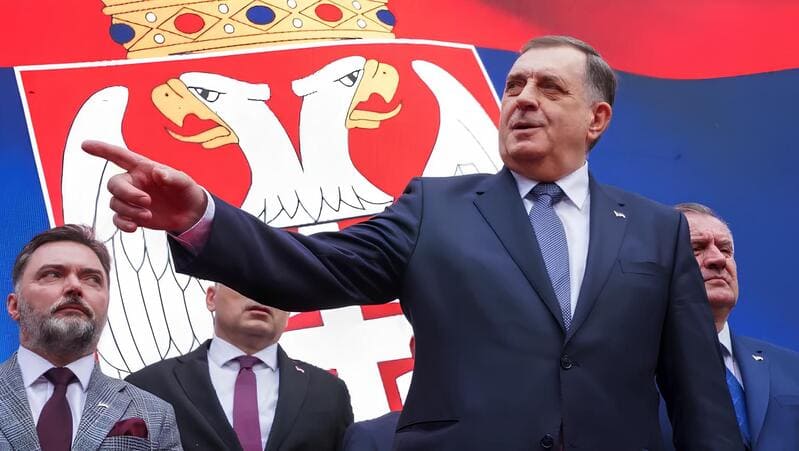
World Geostrategic Insights interview with Michael J. Murphy on the internal and external threats to the political stability and security of Bosnia and Herzegovina.
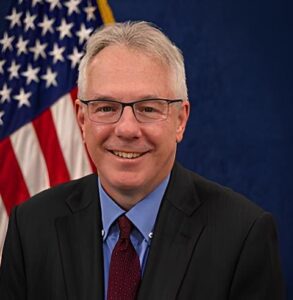
Michael J. Murphy is a retired American Ambassador with over 34 years of experience in U.S. foreign policy and international relations. His career has focused primarily on European and Eurasian regions. From February 2022, until the end of his mandate in February 2025, he served as US Ambassador to Bosnia and Herzegovina, where he actively monitored political processes and supported the country’s Euro-Atlantic integration. Previously, from 2018 to 2021, he served as Deputy Assistant Secretary of State for European and Eurasian Affairs, overseeing European security, conventional arms control, and Arctic security. He also served as Deputy Chief of Mission at U.S. Embassies in Kosovo and Botswana. Earlier in his career, he was the Political Counselor at the U.S. Embassy in Sarajevo from 2006 to 2009, and held positions in Washington D.C., including Chief of Staff to the Assistant Secretary of State for European and Eurasian Affairs.
Q1 – During your time as US Ambassador in Sarajevo, you stated that the political climate in Bosnia and Herzegovina (BiH) was perhaps the worst since the war, with rising nationalism and corruption. What do you see as the most critical threat to the country’s stability right now?
A1 -The biggest threat facing BiH right now remains the country’s ethnonationalism, which is most manifest in BiH’s three leading ethnonationalist political parties, the Alliance of Independent Social Democrats (SNSD), which is led by Milorad Dodik, the Croatian Democratic Union of BiH (HDZ BiH), which is led by Dragan Covic, and the Party of Democratic Action (SDA), which is led by Bakir Izetbegovic.
Mr. Dodik and his pursuit of de facto, if not de jure, independence for Republika Srpska (RS), remains the most serious threat. I know that Mr. Dodik was removed from the office of RS President after his criminal conviction, and that the ruling coalition he leads in the Republika Srpska National Assembly (RSNA) recently repealed several laws and conclusions which had undermined the Dayton Peace Agreement (DPA) and BiH’s constitutional order, but the rhetoric of Mr. Dodik and his allies over the last several months does not suggest they have abandoned their destructive agenda. Indeed, there were anti-Dayton and constitutional conclusions that the RSNA did not repeal. Though many of these, like those the RSNA did repeal, were voided by the BiH Constitutional Court, the symbolic power of the RSNA’s repeals would have had greater meaning if it had included all anti-Dayton and unconstitutional laws and conclusions.
I would like to make one more quick point. The international community needs to remain thoughtfully engaged in BiH. I know some diplomats dismiss the ethnonationalist rhetoric coming from the RS or elsewhere as unimportant and argue that only actions, not words, matter. That is not just a mistake, it is naïve, as even a cursory examination of BiH’s history makes clear. Ethnonationalist rhetoric often involves peddling disinformation or outright lies, such as claims that competencies were “stolen” from the RS. It is often bigoted, and it infuses into the body politic dangerous ideas that make political compromise almost impossible. This kind of rhetoric tears at the fabric of BiH society, not least because it can provoke equally horrible rhetoric or worse from others. This is not a recipe for stability.
There have also been increased calls for the creation of a third Croat entity. These are calls for the further territorial division of BiH, which is a dangerous idea. The creation of a third entity would undermine the DPA and the state of BiH. As one American analyst aptly remarked, a third entity would “revive the political geography of the 1990s” that plunged the region and BiH into war. That said, there are issues that impact BiH’s Croat population that need to be addressed. For example, HDZ BiH and other Croat political parties want to address issues associated with the election of the BiH Presidency. This requires constitutional reform, which must take into consideration the Sejdic-Finci group of rulings by the European Court of Human Rights (ECHR). The United States and its European partners have made several efforts over the years to facilitate constitutional reform, most recently in 2021-2022. These efforts have always foundered because political parties, including HDZ BiH, have been unwilling to compromise. I saw this in Sarajevo in 2022, when the final round of U.S.-EU facilitated constitutional reform talks failed. Constitutional reform negotiations can only succeed with give and take. They will continue to fail if parties continue to approach them with all take and no give.
The pursuit of a “unitary state” or “majority rule” also threatens BiH’s future. The lessons of the country’s history going back well before the breakup of Yugoslavia underscore the importance of ensuring Bosniaks, Croats, and Serbs have a say in governance. I recognize that some people reject the concept of “constituent peoples” but it is part of BiH’s history. On November 26, 1943, in Mrkonjic Grad, the first session of ZAVNOBiH declared that “Bosnia and Herzegovina is neither Serb, nor Croat, nor Muslim, but at the same time Serb, Mulsim, and Croat.” This does not mean there cannot be changes to BiH’s constitution to ensure those who do not identify as one of BiH’s three constituent peoples have the same rights to run for elective office enjoyed by someone who identifies as either Bosniak, Croat or Serb. This was the underlying issue of the ECHR’s Sejdic-Finci group rulings I mentioned earlier. Indeed, there have to be changes. Brussels requires BiH to implement the ECHR rulings as part of its EU accession process, but constitutional change must take into consideration, and ultimately will be limited by, BiH’s political and societal realities. An honest assessment of BiH’s history and today’s political realities means accepting the concept of constituent peoples.
Finally, a quick word about corruption. It remains a serious threat to BiH’s democracy, economic prosperity, and its future inside Euro-Atlantic institutions. Corruption is pervasive, and it has a terrible impact on the lives of BiH’s citizens. You find corruption in the Federation and the Republika Srpska, and it has its tentacles in every political party in BiH. You find it in all levels of government, from the state, to entities, to cantons, to municipalities, and in all branches of government. The damage caused by corruption to BiH’s economy is one of the biggest drivers of migration from BiH. Today, the best demographers estimate that no more than 2.9 million people live in BiH, and the number is likely much lower. The international community can speak out about corruption, provide technical assistance to those drafting legal frameworks for combatting corruption, and provide training and development to rule of law officials, but ultimately local actors are responsible for combatting corruption. There have been some successes, but not enough.
Q2 – You consistently advocated for BiH’s Euro-Atlantic integration. In light of ongoing political roadblocks and the specific challenges posed by leaders like Milorad Dodik, do you believe full EU and NATO membership is a realistic goal in the near future?
A2 – The United States’ strategic interest in BiH is straightforward: the stability and security of BiH is a prerequisite for stability and security in the Western Balkans. This, in turn, is critical to European security and stability, which is essential to American security, as the last 100 years of history have taught us. With all this in mind, for the last 30 years the United States has supported BiH’s territorial integrity, sovereignty, and multiethnic character. Over the long-term, this means anchoring BiH firmly within the Euro-Atlantic community of nations, in other words it means supporting BiH’s aspirations to join NATO and the EU. It would be a mistake for the United States to change this policy, something I am increasingly concerned is happening or will happen.
Whatever the future direction of U.S. policy, it is ultimately the responsibility of BiH’s political leaders to take the steps necessary to advance the country’s NATO and EU aspirations. The international community cannot do it for them. This requires political leaders to focus on BiH’s long-term interests as well as on the needs of the people they claim to represent. It requires them to work together to build consensus and compromise in order to implement the reforms necessary to join NATO and the EU. This means reforms that meet NATO and EU standards. NATO and the EU do not do BiH or themselves any favors if they lower the bar for BiH just to tick a box and claim “progress.” Unfortunately, the country’s political leaders have focused their time and energy on their own narrow political and financial interests, and they have pursued agendas aimed at dividing the country rather than bringing it together to secure its Euro-Atlantic future. Unless this changes, I think it is unrealistic to expect BiH to secure membership in NATO or the EU in the near future.
Q3 – As Deputy Assistant Secretary of State for European & Eurasian Affairs, you oversaw European security and Arctic policy. How has the geopolitical landscape in Europe shifted since Russia’s full-scale invasion of Ukraine, and what implications does this have for the Western Balkans?
A3 – Russia’s further invasion of Ukraine in February 2022 had a dramatic impact on the geopolitical landscape. It shocked the West, but frankly, it shouldn’t have. Both the U.S. and Europe failed to grasp the dangers posed to them by Russia after 2007, the year Vladimir Putin laid out clearly his world view and intentions at the Munich Security Conference. From that point forward, Russia became more aggressive in the Western Balkans, seeking to advance its interests at the expense of U.S. and European interests. Russia’s main goal has been to prevent the countries of the region from joining the West by keeping the region unstable and outside NATO and the EU. This has manifested itself in the Western Balkans in several ways since 2007. Let me provide just a few examples.
First, Russia has supported ethnonationalist political leaders and policies that are destructive to the region. In BiH’s case, this has meant Russian support for Milorad Dodik, who has sought to undermine the Dayton Peace Agreement, BiH, and BiH institutions. No European official has met more times with Vladimir Putin since 2022 than Mr. Dodik. In 2024, authorities uncovered evidence that Russia had established a camp in Republika Srpska (RS) at which individuals were trained to disrupt elections in Moldova. It is hard to believe that the former President of the RS, Mr. Dodik, or Sinisa Karan, who was the RS Minister of Interior in 2024, were unaware of the Russian camp. Second, Russia was implicated in the 2016 coup attempt in Montenegro, which was aimed at preventing the country from joining NATO. Thankfully, the coup failed. Third, Russia supported troll factories in North Macedonia, which, among other things, sought to undermine implementation of the Prespa Agreement and block North Macedonia’s NATO and EU path.
There is no reason to expect Russia’s malign influence in the Western Balkans to end. The United States and Europe need to work together to combat it to safeguard their interests in the region.
Q4 – What role are Russia, Turkey, Hungary, and Serbia playing in influencing Bosnia and Herzegovina’s domestic politics and geopolitical direction?
A4 – As I have already mentioned, I think Russia is playing an unhelpful role in BiH. Its influence there is malign and at odds with the interests of the citizens of BiH, who want to see their country integrated into the Euro-Atlantic community of nations, and who want a peaceful, prosperous, and democratic future for themselves, their children, and grandchildren.
In my view, Hungary’s geopolitical orientation is more towards the East than the West, or at least that seems to be the case for its leadership, if not its citizens. Hungary’s President, Victor Orban, has close ties with Mr. Dodik, and Hungarian engagement in BiH has often been seen as offering support for RS policies that undermine the Dayton Peace Agreement and are unconstitutional. I think Turkey has played an important and constructive role in BiH. While serving as the U.S. Ambassador in BiH, I worked closely with my Turkish counterparts to protect the DPA and support BiH’s integration into Euro-Atlantic institutions. Even though we did not always agree, I had great respect for my Turkish colleagues. Turkey also plays an important role in EUFOR to which it consistently has been a top troop contributor, and of course, Turkey plays an important role in BiH as a NATO ally.
Serbia often claims it supports the Dayton Peace Agreement (DPA) and BiH’s territorial integrity, but not all of its rhetoric and actions are consistent with these claims. Take the June 2024 All-Serb Assembly, for example, which took place in Belgrade. The conclusions adopted at the All-Serb Assembly as they related to the DPA and BiH were rooted in legal disinformation and riddled with error. They did not constitute a defense of the DPA, as some claimed at the time, but were a deliberate attack on the DPA and BiH state institutions. This went well beyond the provision for special relations between the RS and Serbia provided for in the DPA.
Q5 – What is the situation regarding the first Individualized Tailored Partnership Program (ITPP) agreed between NATO and Bosnia and Herzegovina in October 2025, and how does it respond to the country’s changing security needs?
A5 – NATO’s Individually Tailored Partnership Programs (ITPP) replaced Individual Partnership Action Plans (IPAP) in 2021 when the Alliance agreed on the “One Partner, One Plan” concept, though the Alliance has phased in ITPPs over the last several years. In the case of BiH, the ITPP approved in October 2025 provides a framework for NATO-BiH cooperation for the next three years. It is based upon the priorities set in BiH’s Reform Program. The Reform Program is essentially BiH’s Annual National Program, the document NATO aspirant countries use to outline defense and security reforms that will bring them closer to NATO and ultimately into the Alliance.
There are well-known political challenges associated with BiH’s NATO aspirations, notably the objections of the country’s Serb politicians, even though NATO membership is enshrined in a 2005 law as a BiH foreign policy goal. This will need to be resolved before BiH can join the Alliance, but right now, the most important step BiH can take to advance its NATO aspirations is to implement the reforms outlined in the country’s Reform Program. Unfortunately, BiH’s record on defense reform over the last eight years has not been very good. The BiH Ministry of Defense needs to stay out of politics and focus on its core mission, and the people who staff it, from the ministry and deputy ministers on down, need to be committed to working together in an apolitical manner on defense reform. The latest comments from the Minister of Defense attacking an American political analyst is a good example of the kind of irresponsible and counterproductive behavior that distracts the ministry from its mission. NATO is not going to “fast track” BiH’s membership. BiH has to prove that it meets NATO’s standards and can contribute to broader Alliance security. That will only happen if BiH gets serious about defense reform.
Michael J. Murphy – Retired American diplomat who served as the U.S. Ambassador to Bosnia and Herzegovina from February 2022 until February 2025.
Image Source: AP (Bosnian Serb leader Milorad Dodik).