



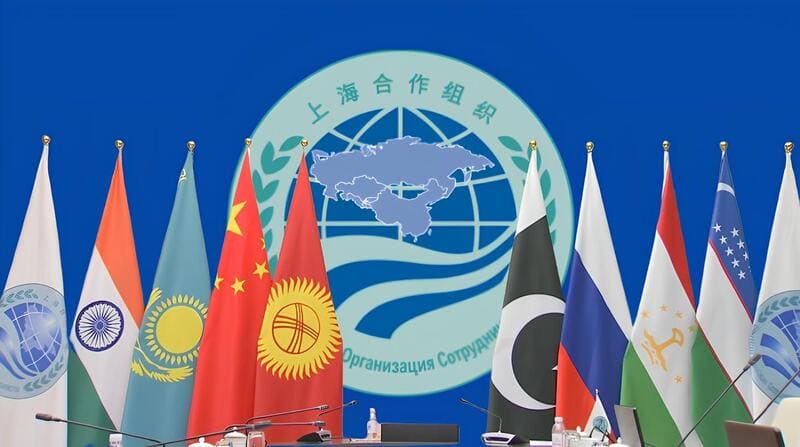
As the world navigates a complex geopolitical landscape with rise of wars, conflict and proxy tensions, the Shanghai Cooperation Organization (SCO) and its foundational ethos, the Shanghai Spirit, emerge as vital instruments for fostering stability and collaboration at the global scale.
Defined by mutual trust, equality, and respect for sovereignty, the Shanghai Spirit offers a framework to address the challenges of a multipolar world. With the SCO’s 25th Heads of State Summit scheduled for August 31 to September 1 in Tianjin, China, under China’s presidency, this moment underscores the organization’s growing relevance in shaping global dynamics.
The SCO, now encompassing 10 member states and representing nearly 40% of the global population and 25% of world GDP, according to 2025 International Monetary Fund data, is a formidable force. Its members, including China, Russia, India, Pakistan, and Central Asian nations, alongside dialogue partners like Saudi Arabia and Turkey, reflect a diverse coalition. The Tianjin Summit, the largest in SCO history with leaders from over 20 countries and heads of 10 international organizations, aims to advance collective security, economic integration, and cultural exchange—core pillars of the Shanghai Spirit.
The Shanghai Spirit’s commitment to non-interference resonates in a world skeptical of external interventions. Despite bilateral tensions, India and Pakistan find common ground within the SCO, with both endorsing initiatives like the 2025 SCO Development Strategy to 2035, which focuses on sustainable growth and security. Intra-SCO trade reached $850 billion in 2025, up 15% from 2024, driven by initiatives like the SCO Interbank Consortium, demonstrating the organization’s ability to foster economic ties amid diversity.
Security remains central to the SCO’s mission. The Regional Anti-Terrorist Structure (RATS) neutralized 1,300 terrorist threats in 2025, a 20% improvement from the prior year, according to SCO Secretariat reports. The Peace Mission 2025 exercises in Kyrgyzstan, involving 12,000 troops from nine member states, showcased robust collective defense capabilities. These efforts counter perceptions of the SCO as a Sino-Russian bloc, highlighting its broader role in addressing cyberterrorism and regional stability.
Economically, the Shanghai Spirit promotes inclusivity. The SCO’s 2025 agenda emphasizes green development, with $60 billion committed to renewable energy projects by 2030. China, holding 42% of global solar capacity, leads this push, while Uzbekistan’s 1.2-gigawatt solar plant, partly funded by the SCO Development Bank, exemplifies cooperative progress. This model contrasts with the competitive economic strategies of Western alliances, offering a vision of equitable growth.
Cultural exchange, a vital expression of the Shanghai Spirit, counters global polarization. The SCO Youth Cultural Festival, launching in Tianjin in 2025, will offer 5,000 scholarships for joint academic programs, promoting collaboration in science and culture.
The July 2025 Inter-Civilizational Dialogue saw 300 delegates commit $10 million to heritage preservation in Pakistan and Tajikistan, strengthening people-to-people ties. The 2nd SCO Television Festival in Shaanxi in April 2025 reached 10 million viewers, celebrating diverse identities. As Pakistan’s Foreign Minister Ishaq Dar noted at the festival, the Shanghai Spirit “builds bridges where others see divides.” In an era of cultural clashes, these initiatives foster mutual understanding, reinforcing the SCO’s role as a platform for dialogue.
The Shanghai Spirit’s relevance shines in today’s fractured geopolitics. With global trade barriers rising by 7% in 2024, per UNCTAD, and unilateral sanctions straining developing economies, the SCO’s commitment to multilateralism offers an alternative. The draft Tianjin Declaration, set for adoption at the summit, condemns “coercive measures,” with 80% of members endorsing a fairer global order.
China’s presidency hosted over 100 events, from the June 2025 SCO Global Mayors Dialogue to the July 2025 Political Parties Forum, fostering governance-sharing platforms. Belarus’s 2024 accession, supported by $500 million in Chinese trade agreements, expanded the SCO’s reach, embodying the spirit’s inclusivity. As the Tianjin Summit approaches, the Shanghai Spirit stands as a steady guide for the SCO’s delegates.
Shanghai Sprit offers a framework for cooperation that transcends ideological divides. By prioritizing security, trade, sustainability, and cultural ties, China’s presidency has breathed new life into this ethos, positioning the SCO as a counterbalance to Western-dominated institutions.
In a world grappling with climate crises, economic disparities, and technological competition, the Shanghai Spirit offers a path forward. Representing 60% of the Global South’s population, per UN 2025 estimates, the SCO aligns with aspirations for a multipolar order. Its expansion, with Belarus and Iran as full members, underscores its appeal as an alternative to Western frameworks.
The Shanghai Spirit is not without flaws. Internal contradictions and external pressures persist. Yet, its emphasis on mutual respect and cooperation provides a counterpoint to zero-sum geopolitics. As the Tianjin Summit approaches, the SCO stands poised to redefine regional and global cooperation, offering a model of inclusive multilateralism that resonates in a fragmented world. For nations navigating great power rivalries, the Shanghai Spirit remains a beacon of agency and collaboration.
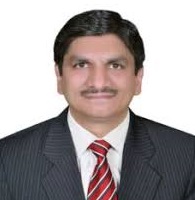
Author: Muhammad Asif Noor – Secretary General Pakistan-Shanghai Cooperation Organisation Friendship Forum.
(The views expressed in this article belong only to the author and do not necessarily reflect the views of World Geostrategic Insights).