



By Marriam Kousar
Greenland’s emergence as the epicenter of great power rivalry have highlighted the intensifying race for dominance and capturing critical resources in the 21st Century.

The swiftly melting ice of the Arctic Ocean has unobstructed access to relatively short maritime routes for reaching Europe and Middle East along with access to its extensive natural resources. Recent prominence of Greenland as a geo-strategic asset, stems from both its strategic military location as it is located within the GIUK Gap that represents a critical choke-point in monitoring Russian submarines in the North Atlantic and its vast natural resource wealth.
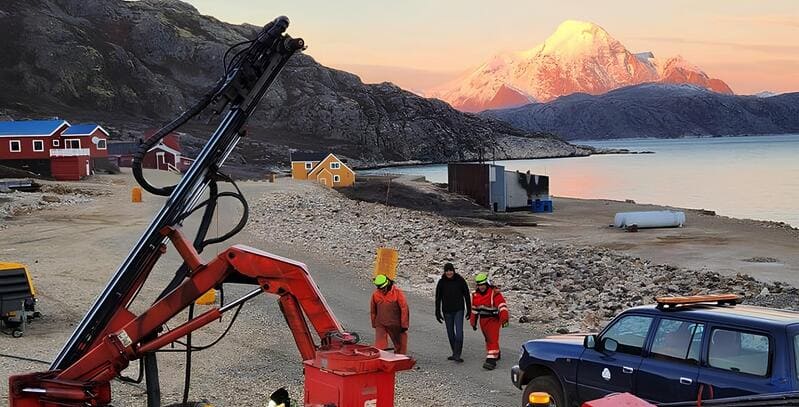
The U.S. operates its northernmost base on the island (Pituffik Space Base) primarily to aid in missile early warning and space surveillance. From an economic and natural resource perspective, Greenland holds large and largely untapped deposits of mineral resources. Some of these rare earth elements (REEs) have worldwide significance, such as iron ore, zinc, copper, gold, graphite and most important of all uranium. These are necessary for producing everything from electric vehicles to wind turbines to advanced military technology.
Climate change is leading to the accelerated melting of Greenland’s ice caps, enabling easier accessibility of the aforementioned mineral and hydrocarbon deposits and thus increasing the level of international competition for acquiring and dominating future supply chains associated with those resources.
This changing international geopolitical landscape has led the U.S. to adopt a more aggressive approach to its strategy and foreign policy toward Greenland than ever before, explicitly during current Trump’s administration.
Trump’s many repeated attempts to purchase Greenland express this urgency to strengthen their influence. The U.S. is clearly approaching Greenland from a national security perspective and asserts that Russia and China have military vessels in the waters surrounding Greenland and, therefore, it is within its interests to counter the regional domination of its primary adversaries.
As said by Trump during his meeting, “If we don’t do it, Russia or China will take over Greenland. And we’re not going to have Russia or China as a neighbour”, the U.S. also wishes to establish strong critical mineral supply chains for both its defense industries and to support the growth of its green technologies as it is concerned about its dependence on China for processing the majority of its rare earth elements (REEs). Access to Greenland’s resources will help reduce this dependency and provide resiliency to these two sectors of the U.S. economy.
To compete for its own regional foothold, China has adopted economic diplomatic and scientific approaches to both engage in the region and build economic ties. Having declared itself ‘Near-Arctic State’, has further focused on developing its Polar Silk Road, as part of its larger global infrastructure project; the Belt and Road Initiative (BRI).
A strategy to build new shipping routes and investments into the region’s infrastructure and is developing a long-term strategy to be a major participant in Greenland. The primary motives for China in the Arctic are to access newly developed, shorter sea routes to Europe and to access vast untapped natural resources. For China, the Arctic is a long-term strategic investment, and they intend to gain influence through economic diplomacy as they continue to pursue opportunities in other parts of the world. China is currently facing difficulties with the development of the Polar Silk Road as a commercial shipping route due to adverse weather conditions and the presence of floating ice. These efforts by China to invest in Greenland’s infrastructure, including building airports and developing mining resources, have been thwarted by the pressure of the U.S. and Danish governments.
The Arctic has become more polarized due to the full-scale invasion of Ukraine by Russia in 2022. With increasing diplomatic isolation and heavy Western sanctions following their invasion of Ukraine, Moscow has turned to deepening and expanding its no limits strategic partnership with Beijing. But there are subtle ties with respect to this transformation.
Moscow has traditionally been cautious about Beijing’s ambitions regarding the Arctic and has viewed the (and their associated) territorial claims as an extension of Russia’s national power; therefore, Moscow has not been willing to provide China with access to these territorial assets.
However, because of events that occurred after 2022, Russia was compelled to grant China access to and influence over the Arctic. As a result, the two countries have achieved greater collaboration. This economic cooperation is being supplemented by military coordination through joint air and naval patrols of the vicinity surrounding the Alaskan coastline. Consequently, this alliance between the two countries constitutes a reconfiguration of geopolitical power in the Arctic, raising security challenges for the United States and its NATO allies.
The geopolitical competition for Greenland encapsulates the emergence of a new world order formed mainly by competition for resources. It is evident from the Venezuela and Greenland case that the great powers now utilize the economic aspirations and governance voids of strategically located smaller states for their benefit.
The recent global security shift provides Pakistan a chance to alter its weak periphery nation image to a global focal point for the world’s most significant supply chains and trade route. According to some sources, Pakistan has untapped mineral wealth estimated at $6 trillion USD worth, including large deposits of lithium, cobalt, nickel, chromite, zircon, copper, and rare earth metals; it can be situated squarely at the centre of this great power competition. Whereas Greenland was insulated from outside influences by the Western security architecture, Pakistan, with its long-standing tradition of non-alignment and extensive economic relationships with China, is entering a very different arena of competition.
During this defining moment in U.S.-Pakistan relations, the two countries have grown away from a relationship focusing predominantly on security and counter-terrorism toward one defined primarily by ‘mineral diplomacy’ in 2025, as demonstrated by the change in tariff rates on Pakistani exports from 29 pc to 19 pc, now the lowest rate in South Asia. Pakistan now has an opportunity to utilize its natural resources to help reduce its dependence on foreign assistance and re-establish itself within the community of nations as a critical resource partner. At the same time, Pakistan is obliged to continue its long-established economic partnership with China, its persistent international supporter.
Through its China-Pakistan Economic Corridor (CPEC), China has provided the funding for critical infrastructure throughout Pakistan; as an approach to economic statecraft, this has become deeply resonant and has roots in the relationship between China and Pakistan, differently from what has occurred in Greenland. Pakistan will become a model for how China can implement its strategy in Greenland by showing how it can be used to fill the voids created by traditional powers using the tools of economic Statecraft. CPEC is the southern hemisphere’s counterpart to the Polar Silk Road, providing $62 billion of investment without passing through the Malacca Strait. It uses Gwadar’s port facility as an alternative means of transporting energy resources from South Asia and Middle East and also provides China a southern route to gain influence and enhance access to domination of Asia’s maritime powers, access to southern geopolitics and creating the possibility to continue its maritime development efforts through projects within the Trans-Arctic areas which are currently facing significant Western security hurdles.
However, this growing American interest has created a dilemma for Pakistan; it finds itself caught in the middle of two competing global powers and must use its hedging strategies to position itself to maximise its strategic autonomy. On the other hand, Pakistan’s ultimate success will not be determined by the resources buried beneath its soil.
Although Balochistan is the richest province of all of Pakistan in terms of mineral resources, it has, and continues to suffer from, a long history of insurgency-related violence and violence directed against Chinese nationals and workers employed in the province. Outdated laws, inconsistent provincial regulatory structures, and a lack of an effective governance framework creates a substantial amount of uncertainty for foreign investors. Thus, there are two strategic conditions that must be met for Pakistan to achieve its full potential: One, the country must have the political will to implement crucial reforms to resolve its historical never-ending issues associated with security, governance, and regulatory uncertainty and two, the country must possess diplomatic expertise to develop and execute a successful foreign policy.
Author: Marriam Kousar – Master’s student in Public Policy at the University of Management and Technology, Pakistan. She holds a bachelor’s degree in Public Administration and has received several academic awards, including the Dean Merit Award. She is an experienced researcher in the fields of global governance, international relations, and public policy.
(The views expressed in this article belong to the author and do not necessarily reflect the views of World Geostrategic Insights).
Image Source: EPM_Greenland