



Part III of the Special Series GLOBAL ALLIANCE AND POWER STRUCTURE: a collaboration between WGI.WORLD (World Geostrategic Insights) and CGPS (Center for Global Peace and Security).
By Sunny Lee – Founder and President at CGPS (Center for Global Peace and Security), and Director at IKUPD (Institute for Korea-U.S. Political Development), Washington DC.
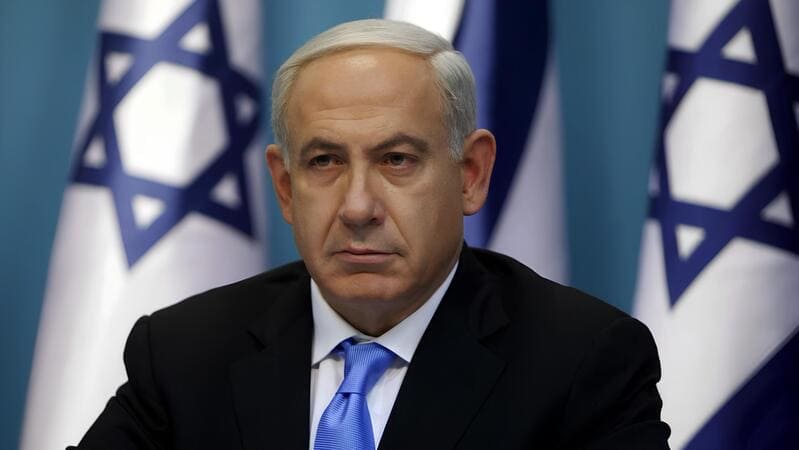
On September 5, 2025, Israeli Prime Minister Benjamin Netanyahu declared that Israel would take control of all areas of the Gaza Strip after indirect talks with Hamas on a ceasefire and hostage release agreement failed. Serial attacks on Gaza City followed, while thousands of people in Tel Aviv protested against Netanyahu’s plan to intensify the war in Gaza, demanding an immediate ceasefire and the release of hostages.

Netanyahu insists on the elimination of Hamas and the occupation of the Gaza Strip, probably as a turning point for further territorial expansion aimed at securing full control of East Jerusalem, the West Bank, and the Golan Heights. This is a chauvinistic ambition that aims to recover the areas of ancient Israel, but also parts of Lebanon, Jordan, Syria, Egypt, Iraq, and even Saudi Arabia.
However, Netanyahu’s strategy to reshape the power structure in the Middle East seriously affects not only Israel’s national identity but also regional security. France, the United Kingdom, Canada, and Australia have strongly criticized Israel. Germany has suspended arms exports to Israel, which is rapidly isolating itself from the international community. The UN has warned Israel to end these inhumane attacks on Gaza. Amidst a complete lack of humanitarian aid and food supplies, the OHCHR has denounced the brutal destruction and massacre perpetrated by Israel since the beginning of the attacks on Gaza.
Following the bloody Hamas attack on Israel, on October 7, 2023, Israel’s massive retaliation has caused over 100,000 casualties in Gaza. Ninety percent of the million inhabitants of Gaza City have lost their homes and become refugees. Many people have starved to death, and innocent children are suffering from malnutrition in refugee camps. Eighty-three percent of Palestinian casualties in the war between Israel and Hamas are civilians and 17% are military. Israel deliberately destroys hospitals and public buildings to expel Palestinians, accelerating the exodus.
The international community has suggested a “two-state solution” based on the exchange of territory. Israel should return the occupied territories to Gaza, while Palestine should recognize Israel as a country. As a result, Hamas has offered to cease attacks against Israel and release hostages if Israel withdraws its military troops from Gaza and releases Palestinian prisoners. However, Israel insists on the disarmament of Hamas and annexation of Gaza.
Israel’s Territorial Recovery and Chauvinistic Challenge
On March 4, 2025, in Cairo, Egypt, Arab League (AL) Secretary General Ahmed Aboul Gheit announced that “Gaza 2030 is now an Arab plan.” Arab leaders approved the plan to rebuild the war-torn Gaza Strip, presented by Egyptian President Abdel Fattah el-Sisi and approved at an emergency summit that will allow residents to remain in the territory. Prominent participants included the Emir of Qatar, the Vice President of the United Arab Emirates, and the Foreign Minister of Saudi Arabia, the richest and most powerful country in the Middle East. In addition, UN Secretary-General Antonios Guterres strongly supported the initiative led by Arab countries and promised that the UN would cooperate fully. European Council President António Costa also assured that the EU was fully committed to the reconstruction of Gaza and ready to provide concrete support for the plan.
“Gaza 2030” is a five-year plan with a budget of $53 billion financed by various international sources, including the UN and foreign and private sector investments. In addition, the plan has received unanimous approval from the Arab League, which comprises 22 countries. Initially, after cleaning the streets, 200,000 temporary homes will be built and damaged buildings will be restored. The next stages involve the construction of 400,000 permanent homes and the reopening of Gaza’s seaport and international airport. In the final stage, a longer reconstruction phase will focus on rebuilding essential infrastructure. Egypt and Jordan will also train Palestinian security forces with the deployment of international peacekeeping forces. As for the practical process, Arab leaders will not allow Israel’s military occupation of the Gaza Strip and will cooperate to help Palestine.
“Gaza 2030” is a sort of counterproposal to Trump’s controversial “Middle East Riviera” project, which calls for the displacement of Gaza’s 2.3 million residents and the redevelopment of the territory under US control. Emphasizing the fundamental difference with Trump’s plan, Aboul Gheit reiterated that the Arab position is opposed to the displacement of people, whether voluntary or forced. The international community will give greater support to “Gaza 2030” for regional peace and resilience, unless Israel ends its military attacks and the United States withdraws the Riviera project.
Nevertheless, Netanyahu insists that the Jewish people were not occupiers in their own land and signed the UNHRC and UNRWA withdrawal document in support of Palestine with humanitarian aid. Such a chauvinistic response ultimately led to the suspension of Israel’s UN membership, while gaining greater recognition for the Palestinian state. However, even if Israel were to conquer Gaza, it would be very difficult to govern the area without the control or interference of the United States or the Arab League. At that point, Israel’s chauvinistic challenge to territorial expansion, represented by “Greater Israel,” would be hindered and blocked in Gaza, with no possibility of continuing toward East Jerusalem, the West Bank, and the Golan Heights. A goal such as the recovery of ancient Israel would end up proving to be a mocking legend. If not only Arab countries but also the international community severed diplomatic relations with Israel, the United States would gladly abandon the Riviera Project and instead strengthen the strategic balance with Saudi Arabia, the United Arab Emirates, and Qatar, which present much more advantageous economic interests as key allies.
Palestine’s National Destiny
On November 21, 2024, the International Criminal Court (ICC) issued an arrest warrant for Netanyahu for alleged war crimes committed during the Gaza war. He is the fourth head of state wanted by the ICC, after Putin in Russia, Al-Bashir in Sudan, and Gaddafi in Libya. The Israeli people themselves could push him into prison, otherwise he could be the first politician arrested by the ICC for inhumane war crimes.
Italian Defense Minister Guido Crosetto has severely condemned Netanyahu and his cabinet for losing their reason and humanity in Gaza, reflecting a widespread opinion around the world. Netanyahu’s persistence in the Gaza war is prompting some Western countries to officially recognize Palestine as a country, with the aim of pressuring Israel to end its assault on Gaza, limit the construction of new Jewish settlements in the occupied West Bank, and revive the commitment made by the PLO in its 1988 declaration. As of March 2025, the State of Palestine has been already recognized as a sovereign state by 147 of the 193 member states of the United Nations, or just over 76% of all UN members.
The recognition of the Palestinian state represents a strong message of condemnation from the international community regarding the criminal actions of the Netanyahu government in Gaza, which have brought anti-Semitism back into vogue. The international community is prompting reflection on what kind of pressure could actually lead to end the war between Israel and Hamas and ensure peace and security in the region. Indeed, the Middle East is the world’s economic center, a symbol of oil, trade, investment, and construction. Military conflicts and environmental insecurity will shake the international community with damaging consequences. For example, the 1980-1988 Iran-Iraq war paralyzed the world economy with the oil shock. If Israel continues to attack Gaza and expands the war throughout the Middle East, a future oil shock could affect the entire world.
As a first measure of pressure, there is the suspension of trade agreements and arms exports. Israel is heavily dependent on the United States for its defense capabilities and economic and financial resources. Military supplies also come directly and indirectly from other countries. As an example, not only Germany but also Slovenia has suspended all trade with Israel in weapons that could be used in Gaza.
Other countries would be more transparent about exports of specific parts to a global supply chain that Israel can access, such as those for F-35 jets, and would be willing to block them. In addition, Spanish Prime Minister Pedro Sanchez has called on the EU to suspend its trade agreement with Israel for violating human rights and democratic principles. This would be possible if 15 of the 27 EU members agree. Any EU sanctions would severely cripple the Israeli economic system.
Second, it is pressuring the US position to persuade Israel that a “two-state solution” guarantees its future and prosperity. The US has long supported a “two-state solution” as a fundamental policy, and Trump is a transactional leader based on national interests who prefers a strategic balance for the US in the Middle East. For example, the US once supported Iraq and maintained an alliance with Iran, which eventually became an enemy country. Despite Netanyahu’s longstanding opposition to the “two-state solution,” Trump may take a firm stance in favor of a peaceful resolution, as American public opinion is rapidly changing its attitude toward Israel. This would also reflect on MAGA supporters in his foreign policy, who have questioned American support for Israel and called for an end to US aid.
Third, it is promoting an oil embargo against Israel and its supporters. Israel has granted exploration licenses for natural gas fields off its coast to a consortium of oil companies, including British Petroleum (BP) and SOCAR of Azerbaijan. Israel imports three-quarters of its crude oil from Azerbaijan, Kazakhstan, and Gabon as a member of OPEC, in order to refine the oil to fuel the military weapons of its fighter jets, tanks, and bulldozers. For example, the Organization of Arab Petroleum Exporting Countries (OAPEC), which is a part of OPEC, implemented an embargo against the United States and other countries in 1973. The embargo was implemented as a retaliatory measure against support for Israel in the Arab-Israeli wars. It proved immediately effective, prompting the Nixon administration to engage in shuttle diplomacy between Israel, Egypt, and Syria. Nevertheless, in early 1974, the United States imposed disengagement agreements, and subsequently, the lifting of the oil embargo affected the world economy.
Fourth, as a last resort, it is suspending Israel’s membership in the UN. This solution has been advocated by the UN Special Rapporteur on human rights in the Palestinian territories. Although it requires the consent of the General Assembly and the recommendation of the Security Council, as the best solution, it can isolate Israel from the international community. Israel’s national identity has been severely compromised as a democratic country, waging an inhumane war with a chauvinistic strategy to expand its territory and undermine regional security.
On September 24, 2024, the 79th session of the United Nations General Assembly adopted a non-binding resolution drafted by the Palestinians with 124 votes in favor, calling on Israel to end its illegal presence in the Occupied Palestinian Territories within 12 months. The resolution was based on testimony from the International Court of Justice, the highest court of the United Nations, that Israel was illegally occupying East Jerusalem, the West Bank, and the Gaza Strip in violation of international law and must therefore evacuate.
Terrorist Groups and the Middle East Alliance
The war between Israel and Hamas also involved three Shiite terrorist groups: Hamas, Hezbollah, and the Houthis, supported by Iran, which maintain a slogan of drastic anti-Americanism and anti-Judaism. They attack Israel only because it is the only Jewish country against the Islamic countries of the Middle East. Israel responded militarily against these groups in Gaza, Lebanon, and Yemen, eventually attacking Iranian nuclear facilities and military bases, thus expanding the war. Furthermore, Netanyahu’s ambition to create a “Greater Israel” has led to a series of air strikes on Syria to totally conquer the Golan Heights, with the pretext that Iran has military weapons to attack Israel. In particular, Israel would greatly fear a nuclear attack by Iran, despite the fact that it possesses nuclear weapons with advanced military technology. If Iran were to succeed in producing a nuclear bomb that could be loaded onto a long-range missile, its first target would undoubtedly be Israel.
Even if Israel were to succeed in eradicating Hamas, Hezbollah, and the Houthis, Iran, as a regional military power, would be willing to support new terrorist groups in support of Palestine until Israel is completely defeated. Unless a “two-state solution” brings peace and security to the Middle East, the conflict between Israel, Palestine, and Iran will never end. After the Iranian Revolution in 1979, Iran severed diplomatic relations with the US due to anti-Americanism and its alliance with Israel. Iran has deployed military troops on the border with Israel via Iraq and Syria, which far exceed Israel in terms of military capability and size, thanks to territorial priority and population, as well as oil revenues. Furthermore, since Israel attacked Gaza, most international public opinion has sided with Palestine, and Israel’s isolation is worsening.
Hamas is a militant Palestinian nationalist and Islamist movement based in the West Bank and Gaza Strip. Founded in 1987, it has primarily focused on establishing an independent Islamic state in the historic territory of Palestine. However, since the outbreak of war between Israel and Hamas, Israel has killed senior Hamas officials and key Hezbollah leaders, who joined the war shortly after Hamas’ attack on Israel. Hamas officials in Yemen and Iran have also been targeted by Israeli military strikes.
On September 9, 2025, Israel conducted a surgical strike against Hamas leaders as they gathered in the small Persian Gulf state of Qatar to negotiate an end to the war in Gaza and the return of Israeli hostages. This sparked a diplomatic crisis with Qatar, a US ally that hosts American troops and has played a key role as a mediator between Israel and Hamas. Calling for more aggressive punishment, this prompted many countries to expel Israel from the inner circle of the international community with much tougher sanctions and a diplomatic break.
Hezbollah in Lebanon grew out of Shiite militias that were considered the most heavily armed non-state military forces in the world. It was formed with Iran’s support to resist Israel after its invasion of southern Lebanon in 1982, during the 1975-1990 Lebanese civil war. Hezbollah is a political and military group that has engaged in a series of violent conflicts with Israel in relation to its ally, Hamas. It maintains strong support from Iran and opposes Israel’s right to exist in the Middle East. The conflict with Israel further intensified in September 2024, when Hezbollah was severely weakened by an Israeli ground invasion of southern Lebanon. Many of Hezbollah’s military and political leaders, as well as Hassan Nasrallah, who led Hezbollah as a Shiite cleric, were killed.
Nevertheless, Hezbollah is the most powerful terrorist group in the Middle East thanks to substantial popular support as a resistance force against Israel. Such strong support has triggered the resurgence of Hezbollah with Iran’s military backing to demolish Israel’s Judaism and Zionism.
The Houthis in Yemen emerged in the 1990s. The Houthis are an armed political and religious group representing Yemen’s Shiite Muslim minority, the Zaidis. They claim to be the axis of resistance led by Iran against Israel, the United States, and Western countries, alongside Hamas and Hezbollah. The war between Israel and Hamas has given rise to a new type of conflict, in which Iranian-backed Houthi rebels have deliberately attacked commercial ships in the Red Sea and the Gulf of Aden.
Initially, the Houthis began launching drones and missiles toward Israel, but most of them were intercepted. However, since the Houthis hijacked a commercial ship in the Red Sea on November 19, 2023, they have launched dozens of missiles and drones at commercial ships, sunk or seized vessels, and killed crew members. The Houthis have made it clear that they are only attacking ships connected to Israel or bound for or coming from there. The US has conducted a series of retaliatory strikes against Houthi base camps after US commercial and military ships were attacked. In addition, Israel bombed Yemen’s capital, Sana’a, killing Prime Minister Ahmed al-Rahawi and other Houthi officials on August 30, 2025. Nevertheless, Houthi officials have publicly announced that Israel’s attacks will never stop them from continuing to support Gaza, “regardless of the sacrifices.”
Israel’s Future and Power Game
Israel’s recent attacks in Qatar could prompt retaliatory attacks by terrorist groups linked to Iran. With an unexpected response, the US may also reconsider its position as Israel’s ally, given that Trump signed a mega economic-security package worth $1.2 trillion with Qatar and $700 billion with Saudi Arabia in May 2025. Trump criticizes Israel’s attack on the headquarters of Hamas in Qatar, a close ally of the United States, and then rushes to sign a defense cooperation agreement with Qatar. This means that the United States is tired of Israel’s consuming war, which damages its economic interests in the Middle East. To end the war, Trump may prefer a strategy of moderation towards Israel, much like Germany, as he focuses more on national interests with many Islamic countries. Israel may find itself in trouble as an isolated country not only in the Middle East but also in global society.
On August 17, 2025, hundreds of thousands of Israeli protesters gathered in Tel Aviv to demand an end to the war and the release of hostages. Meanwhile, Palestinian residents took their children to the streets of Gaza City to protest against Israel’s massive attacks. They made a desperate appeal to the international community to stop the war and prohibit forced displacements, waving flags with the words “Stop the massacre, Gaza is dying.”
These protests against the war are gaining sympathy around the world, with many saying that a “two-state solution” should be implemented to end such an inhumane war as soon as possible. Moreover, this has been the persistent goal of the international community since Israel and Palestine agreed on the framework of the Oslo I Accord in 1993. Nevertheless, Netanyahu insists that he will not stop the war until he has completely eradicated Hamas. Ironically, this raises against him not only the Israeli and Palestinian people, but also the international community, which is pushing for drastic sanctions against Israel at the UN.
Netanyahu could be the loser in the power game in the Middle East, while Palestine would be the ultimate winner, reasserting its national identity and achieving rapid reconstruction. In turn, the United States could reap great economic benefits by improving relations with Islamic countries.
Author: Sunny Lee – Founder and President at CGPS (Center for Global Peace and Security), and Director at IKUPD (Institute for Korea – U.S. Political Development), Washington DC. Sunny Lee is the author of 115 academic books in politics (original English and in German, French, Russian, Polish, Dutch, Italian, Spanish, and Portuguese). She is a bestseller writer not only in politics but also in literature on Amazon. Her recent book is titled: “The Influence on Humankind’s Peace through Korean Reunification: Creating new paradigm in social science by interdisciplinary research.”
(The opinions expressed in this article are solely those of the author and do not necessarily reflect the views of World Geostrategic Insights).