



By Ajay Kumar Das
Saudi Arabia and Pakistan, as a response to Israel’s September 2025 strike on Qatar, signed a mutual defence pact stating that any attack on one country is an attack on both.

A senior Saudi official appeared to imply that the agreement included Pakistan’s nuclear safeguards. Meanwhile, a security analyst stationed in Islamabad pointed out that the National Command Authority of Pakistan, which is in charge of Pakistan’s atomic weapons, has not commented on this agreement. Nonetheless, he was confident that Pakistan could counter Israel without nuclear weapons as a deterrence. Pakistan has stated that its nuclear weapons are intended solely as a deterrence against India, and that its missiles are designed to strike any location in eastern India.
Nuclear Umbrella and Deterrence Dynamics
Lack of clarity regarding the nuclear component of this security agreement creates a unique form of deterrence that may be somewhat beneficial to both Pakistan and Saudi Arabia. Even if collaboration is purposefully opaque, this agreement may contribute towards development of kinds of formalised military and intelligence-sharing frameworks that increase likelihood of nuclear cooperation in the long run. Discouragement of assaults on third-party allies is a component of extended deterrence, one example being NATO alliance. But given that Pakistan’s stockpile is very limited, there is no proof that it would physically transfer nuclear weapons to Saudi Arabia.
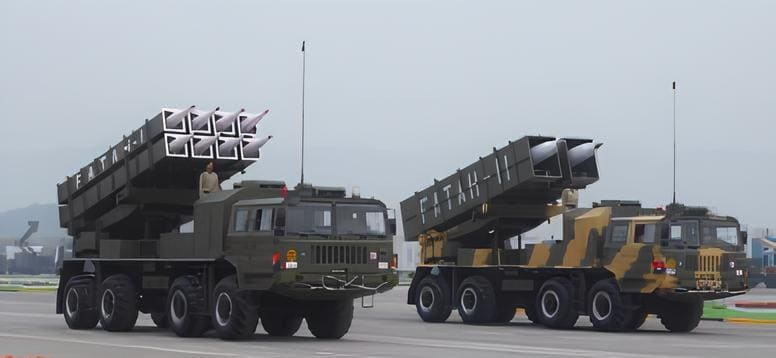
According to a top White House official last year, Pakistan is developing long-range ballistic missile technology that may enable it to attack targets outside of South Asia. But Pakistan disputed that. With a potential range of 1,700 miles, Pakistan’s Shaheen-3 ballistic missile is thought to be capable of carrying both conventional and nuclear warheads, allowing it to reach Israel. It’s not possible for Pakistan to project power beyond 2,600 miles to Saudi Arabia. It is doubtful that Pakistan could offer a nuclear umbrella because Shaheen-3 can only travel 1,700 miles and cannot cover majority of the kingdom’s threats.
Arrival of Islamic NATO?
According to a South Asia expert, Saudi Arabia’s membership through a formal institutionalised alliance poses new difficulties for India, while Pakistan has fortified its ties with other nations like China, US, Turkey, and Arab Gulf states. In his words, this defence pact is a “game changer”. The notion of creating an Islamic or Arab NATO would force Israel and US to prepare for a scenario in which regional strikes would result in a conventional or nuclear response – not from Iran, but from nations with close links to the US. Other Arab nations could join Saudi Arabia’s defence alliance, according to Pakistan.
Sky News claimed that this pact has given a serious diplomatic and security blow to India. This agreement has the potential to alter the Middle East’s trajectory because Pakistan’s 170 warheads provide a deterrent that might eventually spread to other nations, creating an Islamic NATO that could change the course of history. Long-standing US concerns and policy efforts to prevent Pakistan from having missiles that could reach Israel will undoubtedly suffer if this pact leads to testing of longer-range systems or placement of Pakistani assets on Saudi Arabia’s territory.
But instead of committing each party to take military action in every situation, defence cooperation agreements, particularly between asymmetrical partners, frequently serve to signal unity and prevent common dangers. The Saudi-Pakistan defence pact’s text implies that its main objective is to deter aggressors by demonstrating solidarity. It doesn’t imply that Saudi Arabia and Pakistan are obligated to strike any enemy comprehensively at any time. Pakistan already established comparable formal partnerships with the US via SEATO/CENTO. Saudi Arabia isn’t enlisting to fight in Kashmir, and Pakistan isn’t providing it with a secret ‘nuclear button.’
Impact on India / Israel
All future Indian military operations against Pakistan could now be seen as attacks on Saudi Arabia under the new defence pact. But one could exaggerate the implications for India. However, Pakistan lacks economic strength, and other nations regard it more for its position than for its inherent qualities. This agreement is probably going to make Saudis and possibly other Gulf governments more involved in any future India-Pakistan conflicts.
Ahmed Aboudouh, senior researcher at Emirate Policy Centre and associate fellow at Chatham House, says this pact is more about communicating intent than it is about making military commitments. Larger geopolitical ramifications could result from a pact for India. India doesn’t have to worry about defence impact, as Mr. Aboudouh pointed out. According to Indian analysts, this move would strengthen India’s security alliance with Israel, with whom it already collaborates on modern weapons and information.
For Israel the accord presents ambiguities and hazards. Pakistan is openly anti-Israel and rhetorically presents itself as an Arab state’s nuclear shield. Meanwhile, Saudi Arabia has made normalisation contingent on advancements in Palestinian arena and is still investigating covert avenues with Israel. This pact incorporates Pakistan and its nuclear uncertainty into Israel’s official security calculation for the Gulf.
Reality of Deficient Air-Power
Moving away from what has been reported till now, the impact of the mutual defence pact between Pakistan and Saudi Arabia will largely remain ineffective at the operational level due to limitations in air-power projection capabilities of both nations. Saudi Arabia is not a major land, naval or air-power capable country and mostly all of its military assets are brought from US, France and Britain which are major allies of India. It mostly has around 279 units of modern strike assets. Pakistan has around 247 strike aircrafts. Whereas India has approximately 523 units of modern aircrafts. India therefore matches the air-power capabilities of both Pakistan and Saudi Arabia combined.
As far as the hype of Pakistan’s Shaheen-3 capabilities are concerned, it suffers from technical glitches more often as recently in July 2025 it crashed in Dera Bugti district in Balochistan, shortly after it was launched, deviating from its intended course. This episode seemed to be a recurrence of previous crashes. Previous Shaheen-3 tests, including those in 2023, have reportedly also led to mishaps close to important military or nuclear facilities. Thus operational dependability of Pakistan’s most advanced missile is seriously called into doubt by this trend of technical issues. Further India and Israel possess advanced missile defence systems to tackle ballistic missile threats which were demonstrated during India’s ‘Operation Sindoor’ and Israel-Iran conflicts in June 2025.
Conclusion
The Saudi Arabia-Pakistan mutual defence agreement seems to be more of Saudi Arabia’s requirement against Israel/Iran rather than Pakistan’s requirement against India. Pakistan and Saudi Arabia are well aware of India’s air-defence and missile-power reach and contemporary wars involving distant geographies are fought more with precision standoff kinetic strike capabilities rather than emphasis on land or naval aggression, which in this case also strengthens due to the fact that Pakistan doesn’t even have any capable navy to defend itself. It could be thus concluded that the Saudi Arabia and Pakistan deficiencies in air-power will diminish the value of such a defence treaty in the long run.
Author: Ajay Kumar Das – Master’s degree in International Relations, Security and Strategy from Jindal Global University, Haryana, India. His research interests span air and space power studies, maritime security, and missile technologies. He holds a Bachelor’s degree in Chemical Engineering from SRM University in Chennai, India, and has also completed advanced specialization courses in Flight Mechanics and Propulsion, Missile Science, Autonomous Aerospace Systems, and Digitalization in Aeronautics and Space Research.
(The opinions expressed in this article are solely those of the author and do not necessarily reflect the views of World Geostrategic Insights).