



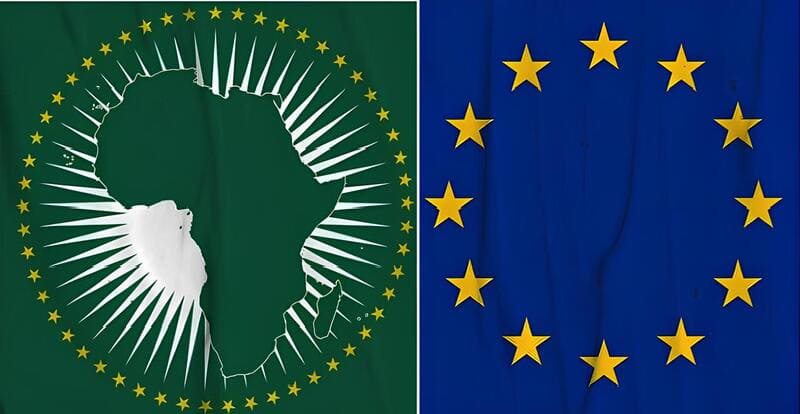
The marginalisation of the European Union and European countries in Africa is a recent phenomenon. On this resource-rich continent, which is experiencing rapid population growth, major powers are competing for the most advantageous cooperation opportunities.

Relations between the EU and some Mediterranean African countries and, consequently, the countries of the Maghreb and sub-Saharan Africa (Sahel region) reveal complex geopolitical and diplomatic changes. What are the root causes of the rift between the EU and some African countries? What mistakes has the EU made? What impact have these mistakes had on their interactions? In today’s rapidly changing and crisis-ridden world, what geopolitical and diplomatic adjustments are needed to overcome these rifts and revitalize cooperation?
According to Omar al-Bah—professor at the Paris Center for Diplomacy and Strategic Studies, and advisor to the United Nations and the African Union—the three main mistakes made by the EU in Africa and their impact on bilateral diplomatic and strategic relations are: the EU-backed NATO intervention in Libya; the EU’s ambiguity on the Sahara issue; and the EU’s double standards; and the issue of African traditions that Westerners would like to erase in the name of “modernizing” morality.
NATO’s bombing of Libya exceeded the scope of the authorization granted by UN Security Council Resolution 1973 (March 17, 2011). This resolution only provided for a no-fly zone and did not authorize the use of force against Libya. However, Western countries used this authorization to claim to international public opinion that NATO had a UN mandate to overthrow the Libyan regime, target Gaddafi, and destroy Libya. All this appeared to be in support of the “pro-democracy” rebels who advocated a “modern and progressive” Libya. However, since 2011, Libya has been plagued by civil war and has no unified and universally accepted government leadership. In 2020, Libya remained divided into three distinct regions hostile to each other.
This tripartite division means that there are three governments: a) Government of National Unity in Tripoli: led by Prime Minister Abdul Hamid Dbeibah; controls the capital and the west of the country; supported by the international community and Turkey; b) Benghazi/Eastern Government: led by Prime Minister Osama Hammad, supported by the parliament (House of Representatives) based in Tobruk and controlled by General Khalifa Haftar and his Libyan National Army; c) High Council of State: an advisory body based in Tripoli which, although not an independent executive government, plays a crucial role in political negotiations and opposes the Tobruk parliament. In addition, there are gray areas dominated by armed militias: forces with intrinsic terrorist characteristics that advocate a theocratic state in Libya.
This situation seriously undermines the process of national reconstruction, disrupts inclusive and sustainable national dialogue, hinders the holding of regular elections, and prevents structural reforms aimed at promoting a high-quality recovery from the crisis and achieving post-war national revitalization.
The resulting mistake lies in the fact that Western countries chose an ideologically motivated and seemingly benevolent interventionist path: the use of force against a sovereign state in the context of the “Arab Spring,” ignoring the reservations raised by the African Union. The AU had clearly advocated a peaceful resolution of the crisis through African-led mediation mechanisms.
The failure of the West and the EU to propose a clear post-war solution was a fundamental mistake, going beyond a mere violation of Articles 2(3) and 4 of the UN Charter. Most voices in support of the intervention invoked the so-called “responsibility to protect,” considering it a tool to undermine both Libya’s sovereignty and the principle of non-interference in internal affairs.
In fact, both macroeconomically and microeconomically, Libya’s situation under Gaddafi was far better than it is today. On the other hand, the National Transitional Council, which came to power after the Supreme Leader, has never managed to clarify the final destination of Libyan financial assets frozen and confiscated globally. These assets, mainly located in the United States and the EU, are estimated to be worth between $100 billion and $160 billion.
The collapse of Libya also had a negative impact on the pan-African monetary integration process promoted by the AU, significantly hampering the launch of a single African currency (the Eco for the Economic Community of West African States), which has been postponed to 2027 due to economic and political obstacles. While some initiatives link long-term monetary integration to the AU’s Agenda 2063, the date of 2027 remains the current target for West Africa.
In fact, the AU initially relied heavily on substantial financial support from Libya to initiate the monetary unification process within the framework of the African Continental Free Trade Area (AfCFTA). The AfCFTA is the world’s largest free trade agreement in terms of the number of countries involved, and has been in force since January 1, 2021. Promoted by the AU, it aims to create a single market for 54 states (except Eritrea), eliminating 90% of customs duties to increase intra-African trade, industrialize the continent, and facilitate the movement of goods and services. This is in line with Canadian economist Robert Mundell’s theory on optimal currency areas and their positive impact on labor mobility, as well as with the general vision of the 38th AU Summit of Heads of State and Government held in Addis Ababa in February 2025.
The second mistake concerns the EU’s ambiguous position on the Sahrawi Arab Democratic Republic. It has been and continues to be a strategic game based on the so-called balance between the Kingdom of Morocco, the aforementioned SADR, and the People’s Democratic Republic of Algeria.
Complex and subtle changes of position are common in EU foreign policy. On October 4, 2024, the European Court of Justice issued three rulings requiring member states to ensure respect for the rights of goods and services originating in the RADS in the implementation of two trade agreements signed with the Kingdom of Morocco. On the same day, the French Ministry of Europe and Foreign Affairs issued a statement reiterating the fundamental principles of French foreign policy in the Maghreb region. France stated that it never comments on court rulings, but at the same time reiterated that the French president and government always give priority to the “special strategic partnership” between France and Morocco beyond the EU.
This diplomatic position, parallel to the rulings of the European Court of Justice, has created significant tension between the EU’s rule of law and French national interests at the diplomatic, economic, financial, and even strategic and historical levels (at the time of direct colonialism, the current RADS was Spanish Sahara). The contradiction has not only failed to appease the emotions of the parties involved in the Maghreb region, but it has also failed to substantially clarify Brussels’ true position on this sensitive issue. To strengthen its credibility and coordinate its diplomatic and strategic positions, the EU should have shown greater consistency.
Meanwhile, the EU finds itself caught between two principles on the RADS issue: on the one hand, Algeria’s support for the right to self-determination of the people of RADS; on the other, Morocco’s claim to sovereignty over certain territories of the RADS (a member of the former Organization of African Unity since 1982 and now a member of the AU) based on the principle of the inviolability of borders. Morocco proposes to grant autonomy to the region within what Rabat considers to be its “natural borders,” emphasizing their historical and geographical priority. The somewhat biased position of the UN Security Council towards the Moroccan approach could offer the EU an opportunity to redefine its diplomatic position.
The third mistake has to do with the EU’s double standards in the name of democracy, the rule of law, morality, good governance, and human rights. In most countries in the Maghreb and sub-Saharan Africa, the EU, like other Western actors, often favors appealing to these ideological concepts to justify its intervention in the internal affairs of African countries, imposing sanctions or conditions. This discourse often takes on a condescending and ‘civil’ tone, aiming to weaken disobedient regimes and elites, thereby facilitating the creation of proxies and safeguarding its own strategic interests. This practice has sparked widespread criticism of the EU’s double standards in Africa.
Although the EU has repeatedly emphasized its firm commitment to these values, stating that its goal is to support “universal values” such as peace, security, stability, the rule of law, morality, good governance, the fight against corruption, human rights, and so on, the rift between the EU and Africa persists.
The rift is particularly pronounced in the Sahel region. Security interventions by the EU and the international community, such as i) the EU’s Task Force Takuba since 2021 (an instrument devised by Macron to involve Europe in the Sahel, where French forces are struggling to maintain stability in the territory; and it should also be noted that, despite initially declaring themselves in favor of the French initiative, not all eleven countries that signed the declaration of accession have sent operational units to the field, while one of them, Germany, has twice rejected the French request); ii) the G5 Sahel (an intergovernmental cooperation framework established in 2014 by Burkina Faso, Chad, Mali, Mauritania, and Niger to address common security and development challenges) and iii) the United Nations Multidimensional Integrated Stabilization Mission in Mali, have failed to completely eradicate terrorism and transnational crime. Even with the withdrawal of foreign troops, these threats persist. While French and European soldiers have managed to halt the advance of jihadist forces in some areas, the failure to achieve a decisive objective has further exacerbated misunderstandings between France, the EU, and the Association of Sahel States, pushing the latter towards Moscow, Beijing, and the BRICS system. This geopolitical shift poses an extremely difficult diplomatic challenge for the EU and France.
It should also be noted that the EU’s Frontex anti-migrant patrol mechanism (the European Border and Coast Guard Agency based in Warsaw) and its diplomatic and strategic pressure on Maghreb transit countries and African countries of departure have further exacerbated tensions between the EU and Africa. The Mediterranean and Atlantic sea routes have become channels for illegal immigration, causing thousands of deaths each year. This not only triggers friction between the southern coastal countries of the EU and the northern destination countries, but also exacerbates conflicts with the Maghreb and Africa as a whole.
Many Africans believe that the EU exploits Africa’s natural resources while refusing to provide legal channels for African migration. At the same time, the EU faces pressure from the rise of far-right anti-immigrant nationalism, which exploits demographic changes, welfare abuses, and the “demographic replacement theory” to create panic and portray migration as a threat. This rhetoric is often exaggerated in the context of a complex and interdependent reality.
Another mistake is the Western discourse on gender and its different forms, which has met with strong resistance from traditional, religious, and cultural values in Africa and the Global South. This underscores the importance of respecting identity and customs in international relations in order to preserve the diversity of countries and nation states.
The EU is well known as an important strategic partner for Africa, and vice versa. However, frequent rifts in relations reflect the EU’s failure to adapt its foreign policy to changes in African elites, public opinion, and the multipolar international system. These geopolitical fault lines should prompt both sides to rethink their multi-layered models of interaction based on mutual respect.
Africa supports the principles of equality among states, respect for sovereignty, and non-interference in internal affairs, while avoiding the replacement of one hegemony with another, thus maintaining true strategic autonomy. Indeed, only by preserving non-alignment, resilience, and initiative can Africa more effectively promote global agendas, such as the reorganization of the global economic and financial system and the reform of the United Nations Security Council based on the Ezulwini Consensus, i.e., the AU’s common position adopted in 2005 for the reform of the United Nations Security Council, aimed at correcting the historical injustice of Africa’s lack of representation: it calls for at least two permanent seats (with veto power) and five non-permanent seats for Africa, leaving the rest unchanged.
In this process, the EU remains an indispensable partner for Africa. The Maghreb, sub-Saharan Africa, the EU, and other major powers have a responsibility to build a new system of international relations that is more peaceful, orderly, just, and mutually beneficial through dialogue and mutual trust, and to promote the establishment of a new, inclusive world order based not on politically correct rhetoric, but on mutual respect, common interests, and international law as a lasting guarantee for global peace, security, and stability.
However, apart from the fine words of the EU, representing countries that have always exploited Africa, it is the BRICS countries that are gaining the most credibility in the eyes of the countries of that continent.
Cooperation between the BRICS countries and Africa is rapidly strengthening. Egypt and Ethiopia have also become full members, while Nigeria, Uganda (associated states) and Algeria and Senegal (candidate states) have joined. This represents the rise of the ‘global South’, which aims to promote geopolitical multipolarity, trade de-dollarization, and infrastructure development, thereby significantly strengthening Africa’s influence in the international political and economic landscape.
As a result, the BRICS countries and the AU are forming an interconnected model, focusing on multilateral negotiating platforms to promote economic decolonization, energy cooperation, and local currency agreements. The common goal is to focus on reforming global governance institutions and promoting the representation of developing countries in international affairs.
In terms of infrastructure and development, the BRICS countries have committed to assisting the African continent in developing resources and upgrading infrastructure. Through their partnership with Africa, the BRICS countries are strengthening solidarity in the ‘Global South’ and working to build a more equitable international order.
Since the 2024 expansion, Africa now has two more full member states (the aforementioned Egypt and Ethiopia): the accession of these countries strengthens the strategic influence of the BRICS in North-East Africa.
On digital currency and de-dollarization, India has proposed discussing the integration of central bank digital currencies at the 2026 BRICS summit to simplify trade agreements between Africa and other member states and reduce dependence on the US dollar.
With regard to joint military exercises in January 2026, the first Peace Will 2026 exercise, led by the People’s Republic of China, was held in the waters off the Republic of South Africa, marking a step forward in security cooperation.
The main areas of cooperation are: infrastructure financing: the New Development Bank continues to provide loans to African countries, having approved over $30 billion for infrastructure and sustainable development projects starting in 2023.
On agriculture and food security, the goal of cooperation is to share agricultural technologies to improve productivity and eradicate poverty on the African continent.
For energy cooperation, China and Russia are promoting several large-scale projects in Africa, such as the El-Dabaa nuclear power plant in Egypt and the construction of several solar energy networks.
The BRICS countries have offered Africa an alternative to Western-dominated systems such as the IMF or the World Bank. African countries are using the BRICS platform to promote the development of the African Continental Free Trade Area (AfCFTA) and seek greater representation and autonomy in global governance, apart from the platitudes of the EU and Westerners, who, as soon as Africa tries to solve its own problems, intervene to establish zones of influence, exploitation, and division: the case of Libya, with which we opened this article, is emblematic.
Author: Giancarlo Elia Valori – Honorable de l’Académie des Sciences de l’Institut de France, Honorary Professor at the Peking University. Giancarlo Elia Valori is a highly regarded Italian manager, playing a leading role in fostering dialogue and cooperation between countries. He is currently President of the Foundation for International Studies and Geopolitics.
(The opinions expressed in this article are solely those of the author and do not necessarily reflect the views of World Geostrategic Insights).
Note: This article, like all articles published on World Geostrategic Insights, cannot be republished without the written permission of the editor of World Geostrategic Insights.