



By Mauricio Diagama Durán
In recent years, albeit quietly, changes have been taking place in the economic and political life of the world, which are not minor, and which are breaking with the apparent straight line of globalisation.
Now, taking a preliminary look at some of these changes, which are evident in the resurgence of extreme right or left-wing governments and their nationalist and protectionist discourses and practices in many countries on different continents, one could say the following:
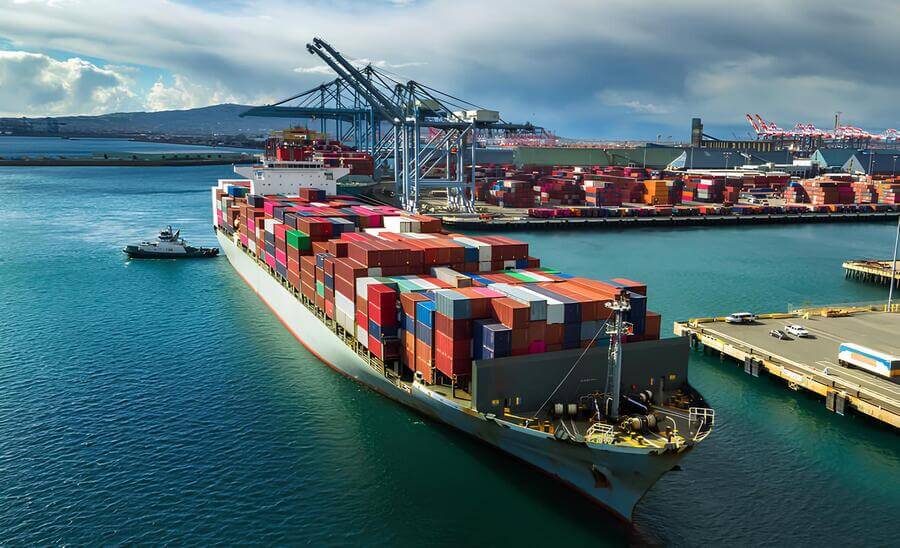
1. So far, there is no evidence that capitalism as an economic system is in crisis or that it is going to end as the dominant system; but it is clear that there is a shift in that international trade, once again, is ceasing to be the main instrument of integration between nations, and is becoming a space for confrontation between regional powers or countries.
And while the world economy has been transformed, as markets are now more than ever global or regional, multinationals dominate almost every arena, major investors are from everywhere, people move from their places of origin to pursue better economic opportunities in other countries, and technological developments are increasingly present in all business processes and operations, at the same time there seems to be a sense of wanting to return to the past, i.e. to life organised according to the local or national geography of the 20th century or even the late 19th century.
This is happening because, at the same time, there are great economic and political efforts on the part of medium-sized rural entrepreneurs and large industrialists in different countries and regions of the world to reverse these processes. From people who are dissatisfied because their international competition demands higher quality standards or better efforts to maintain their conquered markets, to immensely rich people who believe that they do not earn enough in this less secure space than the national one, are promoting the end of globalisation and the return to nationalism. Not to mention many industrial and government unions, which have been losing power as their membership has been shrinking.
Moreover, there are politicians, academics and consultants who feel that they have suffered because their audiences have shrunk and their ideas, knowledge and behaviour have been questioned by their peers in the global space.
Finally, the forgotten, disconnected and remote communities on many continents, who do not share in the economic benefits of technology, the availability of better and higher quality goods and services, and the employment and business opportunities arising from more open markets.
2. On the other hand, while there are still three different types of state, depending on the participation of the state apparatus in the economy or the economic relations with other countries, the way in which each country is organising itself internally to face this new economic reality and how it is relating to other countries has changed.
First there is the scheme of the liberal state, which, despite its enormous state size, promotes autonomous business development, private investment and free markets, but which is based on a powerful internal market and relies on international trade for its growth. Well, that same state is today seeking to reduce the number of institutions and public employees, although it remains powerful in economic intervention. And it is also aiming to focus its economy more on its domestic actors, on many exports and very few imports. In other words, it is trying to return to 19th century European mercantilism, but now commanded from the United States.
A second scheme is that of countries where the economic domination is total, or almost total, of the state apparatus, and where there is a controlled process of opening up to the world, especially with regard to exports, imports and investments. In other words, the model of free international trade, directed from a central state and administered by a political party that concentrates everything, but now combined with sectors where pure capitalism is accepted and promoted, reaches high levels of wealth. Here what is being sought is to expand its international markets, its international trade, its capital flows and its technology towards the rest of the world, but without major political openings, as in the case of China.
And a third scheme, widely present, whose main characteristic is the combination of few large but very powerful companies, with many private, small and medium-sized organisations, and with a huge, interventionist, regulatory and sometimes entrepreneurial state apparatus. Here international trade relations are key to their development, so each country is seeking to accommodate itself between the above two forces, and its own domestic aspirations, while its main challenge is to respond to the policies promoted by some of its own economic actors, while still reaping the benefits of international relations.
Well, based on these three schemes, the current problem for each country’s national community is once again how to reorganise its national economy, because while many opted for free trade in the 20th century, today there are great powers trying to return to the old practices based on extreme protectionism, extreme nationalism, the search for jobs tied to inward-looking development models, and therefore the dismantling of the decisions that underpinned economic globalisation. Which, among other issues, could run counter to modern technology, which is so strongly associated with the free movement of ideas, knowledge, people, things and capital.
3. The change promoted by today’s accelerated and massive technological development has turned technology itself into an independent, powerful world with its own dynamics, but with unclear rules and, therefore, overflowing in its use and consequences, then it is not clear how protectionist and nationalist models will respond to these new productive, economic and commercial dynamics.
It is clear that there are new economic fields and benefits derived from this process, such as those generated by digital business, E-business or E- commerce, robotics, telemedicine, production without human intervention, artificial intelligence or electronic data management, which have replaced many processes based on physical human-to-human contact, while electronic transactions continue to grow at extraordinary speeds, changing the spatial and human relationships between buyers, sellers, suppliers and financiers, but also between employers, employees and citizens worldwide.
In that case, only information technology, for example, has also dispersed knowledge among ordinary people, but at the same time, it has allowed misinformation to become a serious threat. Or that cybercrime is rampant worldwide.
And this process is accompanied by new political and social spaces, sustained by social networks, the internet, the cloud or virtual space, which are based on another reality, on relativised truth and the generation of new human interactions.
4. Another major change taking place in the world is associated with political life, especially liberal democracy.
Today, classical liberal democracy, based on the separation of powers, free elections, professional politicians, precise rules regulating duties and rights in each society, and supported by relatively independent institutions, is migrating towards more authoritarian models without precise rules, but clearly supported by electoral processes and citizen support, where political parties, spaces for public debate, the media, universities and centres of study and thought are also threatened in their autonomy.
In this case, economic powers and the powers of force are most often used to impose decisions, to the detriment of the liberal rule of law, while a positivist discourse that only employs the exclusionary categories of friend or foe to describe relations with others is being imposed. Thus, citizens’ rights are being limited while persecution and verbal and media violence are commonplace and where it is natural to promote physical aggression to produce immediate results. In such a scenario, war or terrorism is central to such models of political action.
And this is happening while businessmen or people from outside the traditional political environment are gaining access to the leadership of state apparatuses, in open competition with politicians and rather for their own interests.
It is clear then that this authoritarian response, which is also nationalist, protectionist and focused on national spaces, is provoking another type of society, one that resembles that which existed in Europe at the end of the 19th century.
On the other hand, in the case of countries with non-liberal models of democracy, but with forms of state capitalism or combined with some private intervention, these schemes follow the line of the all-controlling state and therefore where such freedoms do not exist. Here the pursuit of liberal democracy produces the same crisis, but with different characteristics.
Therefore, neither liberal democracy nor state totalitarianism today are equal to those of the 19th or 20th century, but there is a great effort to move society towards those times.
5. Finally, in the international order, while there are still two clear approaches and two ways for countries to act – one based on the use of force, threats and economic and political bullying, the other trying to maintain the use of the tools of cooperation, international trade and direct dialogue – it is also clear that there is a crisis of the global system that emerged from the end of the Second World War.
In this field, while some powerful countries are disregarding international institutions – which they themselves were created to try to avoid wars -, international law, treaties between countries, and thus the rules of war, humanitarian law and the accumulated knowledge of humanity vis-à-vis the universal rights of different peoples and communities, the rest of the world is subject to direct aggression, blackmail, the use of ever more sophisticated weapons supported by state-of-the-art technology and direct and unilateral sanctions, accompanied by violence.
In such a situation, many countries are seeking to preserve these same rules and institutions, or even improve them, but without sufficient power to enforce them and without anything other than the will of the parties that once enthusiastically embraced them after the disaster of the two world wars.
6. This panorama shows that these changes are not minor, and that there is a tendency to seek the dismantling of the politics of globalisation, and therefore that in many arenas there is a struggle against it. Businessmen, political unions, remote communities and academics who oppose globalisation are gaining space in their national spaces and are pushing for decisions that oppose it.
Only the consequences of this change are worrying for humanity, for while the evidence shows that international trade, globalisation and technology are nevertheless taking their course and can bring greater welfare, we are also seeing new forces affecting peaceful relations between societies by resorting to extreme protectionism, authoritarianism and nationalism as appropriate forms of solution.
This kind of change is therefore leading to the resurgence and emergence of new wars, where their number, volume and dimensions are frightening, and where the new growth of military structures coupled with technological development can lead to global catastrophe. In this scenario, the rule of law, which has become less important, over-concentrated wealth and humanitarian crises are becoming increasingly common.
And all this may result in new economic and trade policies, internal and external, based on colonialism and political, racial, religious, economic and social segregation, such as have not been evident in the world for a long time.
And even to the detriment of values such as equity, solidarity in the fight against poverty, the pursuit of inequalities, tackling environmental problems, addressing basic diseases and education issues, as well as the differences between people, cities, regions and social groups.
The question then remains as to whether what is happening is in fact the consequence of the way in which globalisation was administered and whether the fact that there are many fighting against it would indicate, in a dramatic way, that the benefits of international free trade as a global economic policy did not reach everyone equally and rather deepened economic and social inequalities.
Mauricio Diagama Durán – Professor at the Escuela Superior de Guerra on geopolitics and Colombian foreign policy. Researcher and professor at several universities in Colombia and abroad. Public administrator, specialist in international business and master in national security and defense.
(The opinions expressed in this article are solely those of the author and do not necessarily reflect the views of World Geostrategic Insights).