



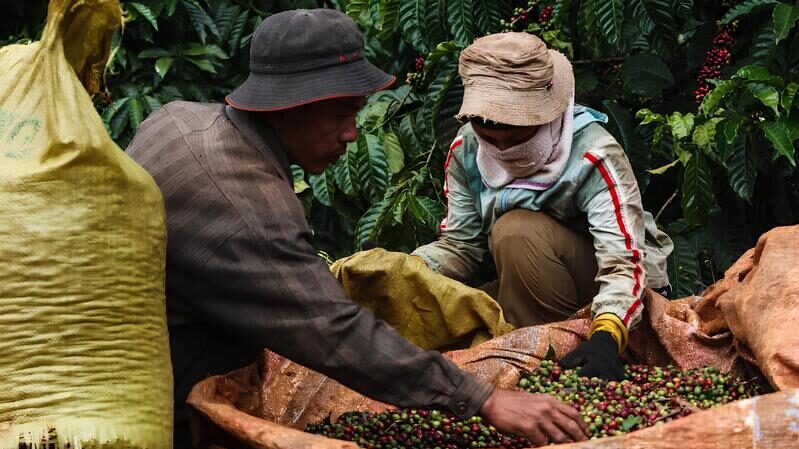
A small gesture stems from big business. When we go to the bar, or prepare a mocha or Neapolitan coffee at home, we don’t realize what lies behind and “before” that pleasant cup of coffee we enjoy.

It is estimated that the global specialty or premium coffee market will reach $28.81 billion by the end of 2025 and is expected to reach $32.19 billion in 2026, then grow further to $87.1 billion by 2035, with a compound annual growth rate of 11.7% from 2026 to 2035.
With the number of consumers who prefer high-quality coffee on the rise, the market is growing at a surprisingly rapid pace. These coffees are scientifically grown and processed, offering a variety of aromas and preparation methods. Specialty coffee refers to beans that score above 80/100. It promotes quality, sustainability, and traceability. Artisanal coffee shops and premium products, along with the growing global coffee culture, have created a successful market for this product. The desire for coffee is growing every day, as is its creative drive in the industry.
Approximately 57% of consumers drink specialty coffee every week, indicating strong market demand; the main market constraint is that over 50% of consumers are concerned about the high cost of specialty coffee; the emerging trend is that 35% of specialty coffee lovers prefer medium roast coffee.
The regional leader in consumption is North America, which accounts for over 51% of the global specialty coffee market. The 18-24 age group accounts for approximately 32.4% of specialty coffee consumption; those in their thirties and younger consume approximately 89% of specialty coffee, compared to 53% of older adults.
The specialty coffee market has suffered a sharp decline due to COVID-19 lockdowns and restrictions that have led to the closure of cafes, restaurants, and other establishments that normally offer coffee services. In addition, consumer spending has been partly attributed to the economic situation, and the supply of high-quality coffee beans has also been affected by supply chain disruptions during regional conflicts. Furthermore, the spread of remote working policies has led to a reduction in demand for coffee, with a negative impact on the sector. Therefore, at the most critical moment of the global crisis, all these developments contributed to the deterioration of the specialty coffee market.
The current specialty coffee market is showing trends such as increased use of sustainably sourced materials, high demand for plant-based milk alternatives, and increased online coffee sales. Probably the most significant trend today revolves around sustainability, with customers insisting on coffee made from organic beans and eco-friendly packaging. Coffee machines are adopting eco-friendly and eco-compatible farming practices to meet this demand. This is therefore changing the landscape, forcing brands to go beyond simply offering high-quality products and to include eco-sustainability as an added value.
According to data from the International Coffee Organization (Organisation Internationale du Café – Organización Internacional del Café – Organização Internacional do Café), global coffee consumption is expected to grow by 2.2%, with non-producing countries leading the growth. Specialty coffee accounts for about 5% of the total coffee market in India, demonstrating its rapid popularity in urban areas.
Based on type, the global market can be divided into three grades: 80-84.99; 85-89; and 90-100.
Grade 80-84.99: This grade is considered fair because the beans do not offer much in terms of flavor and aroma. Many of these beans are grown in regions with less favorable climates or with slight processing defects. They can be used occasionally for coffee blends. However, they will still be of lower quality than specialty coffee, but the price is suitable for regular, everyday coffee blends.
Grade 85-89.99: Beans in this category include high-quality coffee beans whose flavor profile has been improved thanks to advances in processing systems and agricultural practices. Most beans have consistent organoleptic characteristics, making them popular with specialty coffee roasters and consumers. This category applies to single-origin coffees and includes them in the most expensive blends.
Grade 90-100: These coffee beans are considered the best because they belong to the category of so-called specialty coffees. These beans are grown under strict conditions, carefully processed, and have unique aromatic characteristics, making them highly sought after by many coffee lovers. They are generally very expensive and can be found in the best coffee shops or at the most expensive distributors.
Based on application, the global market can be divided into residential and commercial.
Home: The domestic sector is showing a growing interest in products known as “specialty coffee,” as many people want to enjoy quality coffee at home. The adoption of high-end coffee machines and accessories is so high that most people have learned to make their own coffee, often using single-origin beans or a type of artisanal blend. This aspect of the market is characterized by a growing coffee culture, its accessibility, and the demand for customization.
Commercial: The commercial segment includes cafes, lounges, and restaurants, as well as other businesses that offer specialty coffee to the public. To meet the coffee quality standards demanded by the competitive market, these types of businesses are now investing in high-quality coffee grinders and coffee machines and hiring skilled baristas. The consumer market in this segment is expanding, with people who describe themselves as specialty coffee lovers seeking to enjoy different coffee styles and flavors outside their own area.
It is likely that more and more consumers will be attentive to coffee quality and seek beans with diverse aromas, ethical sourcing, and sustainability. This demand for higher quality roasted coffee is contributing to the expansion of the specialty coffee sector and shifting consumption patterns toward a focus on improving product quality and traceability. The growth of global coffee culture continues to fuel the rising popularity of specialty coffees.
In the United States, 65% of coffee consumers prefer specialty coffee to standard blends, demonstrating a shift towards high-quality coffee. Ethiopia’s coffee production is expected to increase by 8% thanks to the adoption of high-yield coffee varieties and improved cultivation techniques.
Younger generations have also become part of the global coffee culture, resulting in more demanding and complex preferences, from single-origin coffees to the latest brewing techniques. Some consumers are also looking for higher quality coffee. That is why people are turning to refined, artisanal coffee. In turn, specialty coffee companies (a type of coffee that is carefully prepared from the highest quality raw materials) are beginning to offer diverse experiences and flavors, encouraging further market growth.
High production costs have limited market growth and restricted the supply of specialty coffees. Due to higher levels of sourcing, processing, and control, the specialty coffee market has higher production costs than conventional coffee. This puts pressure on both producers and consumers, as it requires specific regions and environmentally friendly farms. These high costs limit consumption and availability, thus limiting the potential for expansion of the market as a whole.
Severe droughts and unpredictable rainfall in Brazil and Vietnam have caused a 12% surge in specialty coffee prices, negatively impacting supply. Tariffs on Brazilian coffee exports to the United States have led to a 70% drop in commodity volume, affecting the global specialty coffee supply chain.
The exploration and discovery of coffee culture has also fostered the development of e-commerce and subscription services, particularly by reaching customers in the comfort of their own homes and offering them high-quality coffee, allowing them to customize their coffee according to their tastes and preferences. For example, consumers in most parts of the world can access and order delicious coffee on websites, and the coffee they want will be shipped and delivered to them according to their requests. This model focuses exclusively on end consumers who appreciate different qualities and varieties of coffee, thus promoting market expansion through new channels.
Niche products are becoming increasingly popular and account for 2-3% of specialty coffee imports in high-end markets such as Japan and Europe.
Thanks to the entry of international chains, for example, specialty coffee is expected to account for 18% of the overall growth of the Indian coffee market.
Global warming is one of the main factors affecting the specialty coffee market, due to the scarce and unstable supply of high-quality coffee in the main growing regions. Coffee production is risky due to unpredictable rainfall, high temperatures, and the presence of pests on the plantation. Coffee is at risk, which means that supply may be scarce. Due to all these factors, the production of specialty brands is becoming increasingly expensive and it is more difficult to source the cultivated products. Therefore, market growth and stability are negatively affected.
Due to restructuring, Starbucks has closed 1% of its stores in the United States, raising concerns about employee relations. Rising production costs and labor shortages have impacted 15-20% of global coffee shipments, creating uncertainty in distribution.
The specialty coffee market is a much larger sector, mainly due to its strong coffee culture, higher disposable income, and consumer preference for mid- to high-end products. For example, the US specialty coffee market is the most advanced in this segment, with its specialty coffee shops, roasters, and a relatively large network of coffee enthusiasts. The United States boasts one of the world’s widest variations in coffee preparation and consumption, which in turn attracts the interest of tourists and coffee lovers from around the world. Undoubtedly, this North American influence contributes to the growing availability of specialty coffees in the region.
Europe plays a significant role in the specialty coffee market, thanks to its rich coffee tradition, appreciation for quality products, and recent increase in specialty coffee shops and roasters. Italy, the United Kingdom, and Germany, for example, are at the forefront of promoting artisanal strategies in coffee and other products. There has also been a net increase in specialty coffee from ethical farms and single-origin beans, as more consumers seek personalized options. This shift in coffee consumption patterns makes Europe an important contributor to the global specialty coffee market.
Youth centers in several countries have fueled growing demand for ready-to-drink coffee in Japan, the Republic of Korea (South), and the People’s Republic of China, securing Asia’s place in the Asian specialty coffee market. Of course, dozens of other Asian coffee-producing countries, such as Indonesia and especially Vietnam, are producing more and more specialty coffees. Asian consumers are also placing greater emphasis on coffee quality and novelty, which in turn encourages the development of specialty coffee shops and home brewing, especially among the younger generation. From this perspective, Asia is not only becoming a specialty coffee factory, but also a rapidly expanding market.
The development of the specialty coffee market is largely influenced by the major players in the industry, who are driving new developments in terms of sourcing, sustainability, and premium products. Both large brand companies and small regional roasters are focusing on ethical practices and exotic flavors to meet the needs of consumers who value quality and transparency. Through discreet advertising, loyalty strategies, and specialty coffee shops, these players are enhancing the coffee consumption experience, contributing to market growth and customer loyalty.
The world’s top ten coffee producers (2023 data): Brazil 3,405,267 tons, Vietnam 1,956,782 tons, Indonesia 760,192 tons, Colombia 680,858 tons, Ethiopia 559,400 tons, Honduras 384,361 tons, Uganda 384,000 tons, Peru 369,551 tons, India 332,848 tons, Central African Republic 316,108 tons.
The largest coffee companies in the world: Nescafé (founded in 1938, Switzerland), Starbucks Coffee Company (founded in 1971: United States of America), McCafé [McDonald’s] (founded in 1993: United States of America), Keurig Dr Pepper-KDP (founded in 2018: United States), JDE Peet’s Coffee and Tea (founded in 2015, Netherlands), Green Mountain Coffee Roasters [JAB Holding Company] (founded in 1981: United States), Tim Hortons (founded in 1964, Canada), Lavazza (founded in 1895, Italy), Dunkin’ Donuts (founded in 1950: United States), Folgers (founded in 1850: United States), Dutch Bros. Coffee (founded in 1992: United States), Maxwell House [Kraft Heinz] (founded in 1892: United States), Costa Coffee (founded in 1971, United Kingdom), Caribou Coffee (founded in 1992: United States), Gloria Jeans Coffee (founded in 1979: Australia), Death Wish Coffee (founded in 2012: United States).
Author: Giancarlo Elia Valori – Honorable de l’Académie des Sciences de l’Institut de France, Honorary Professor at the Peking University, and President of the Foundation for International Studies and Geopolitics. He plays a leading role in fostering dialogue and cooperation between countries.
(The opinions expressed in this article are solely those of the author and do not necessarily reflect the views of World Geostrategic Insights).
Note: This article, like all articles published on World Geostrategic Insights, cannot be republished without the written permission of the editor of World Geostrategic Insights.