



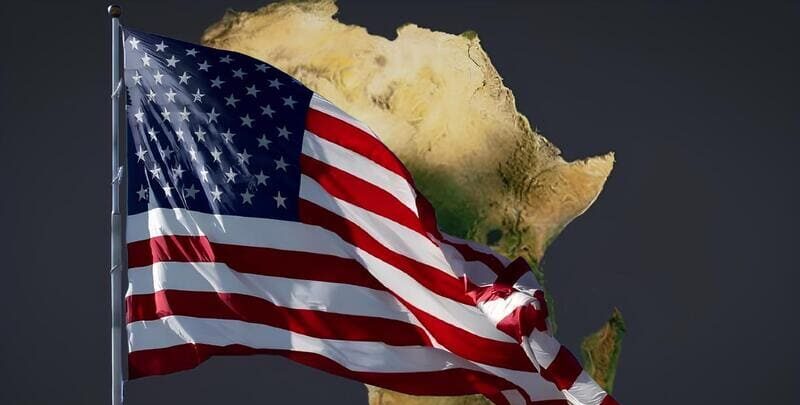
World Geostrategic Insights interview with Thomas Wuchte on the necessity for the United States to develop a strategic foresight in security planning for Africa, moving beyond a history in which American priorities have often overlooked the complexities of the continent.

Thomas Wuchte is the founder of the Center for Multilateral Leadership, based in Washington, DC. He recently led an Intergovernmental Organization – the International Institute for Justice and the Rule of Law (IIJ). Prior to that, he led efforts against violent extremism for the 57 participating States in the Organization for Security and Co-operation in Europe (OSCE) in Vienna, Austria.
Introductory note: These questions were under development when the new US National Security Strategy (NSS) started to take shape, along with its subsequent publication. The current administration’s much-awaited NSS landed in early December (2025). Since its release, it has been clear this strategy makes a radical departure from those before it – serving as a good example of the challenge of developing strategic foresight (1) which complements past administrations. After 20+ years focused on the Global War on Terrorism (GWOT), the new strategy resurrects concepts such as the Monroe Doctrine (2), ends direct criticism of the war in and around Ukraine, focuses on a perceived need for change in Europe, and says too little about Africa. How will this affect long-term engagement and particularly Africa where much of the GWOT is focused?
Q1 – Africa, and specifically the Sahel, is a region about which few Americans care, and it is peer competitors who often provide the frameworks of institutional support. Does this matter in the fight against terrorism?
A1 – What is the utility of improving strategic foresight in and around security planning in Africa? This question caused the author pause when a recent perceptive remark by President Trump considered whether Lesotho matters, and if anyone knows where it is located. Such a view relates to emerging challenges in Africa, which are considered by many in America to be second-tier concerns. The hard truth after 20+ years: implementing GWOT or other initiatives in Africa is not a foreign policy priority for constituents in middle America.
Each misstep by any US Administration underestimating the importance of Africa will have overlapping effects, as like-minded leaders try to balance and predict future challenges stemming from Russia, China and perhaps others. Each point at which we thought we could have a strategic pause and get back to the basics of a force structure appropriate to our regional presences, we have been drawn in to chasing the latest terrorist threat (now add drug cartels) at the expense of building coherent and consistent national security.
The seemingly endless GWOT has had difficulty finding an end state, which has limited each successive leadership from expanding the definition of transnational but non-traditional security challenges such as climate fragility and forced migration. Is there a better way that we can empower a whole-of-government process that combines defense preparedness and international development with the US State Department? If there isn’t, we are simply adding to the conditions which enable terrorist groups – and now drug cartels to thrive.
Ungoverned territory, in countries with sometimes weaker rule of law and democracy, provide ideal conditions for terrorist influence. Strategic foresight should allow us to make a nuanced argument for focusing US national security initiatives on the Sahel region and on Africa generally. A forward-looking view allows us to invest more of our resources to address the systemic causes of fragility in the Sahel. A region where terrorist groups aligned with al Qaeda and the Islamic State are free to operate without interference. Despite millions and millions of dollars’ worth of funding, perhaps billions and billions, Burkina Faso, Niger and Mali have found more coalescence with mercenary contractors from Russia’s former Wagner Group, now operating as Africa Corps (3). These coup leaders are more worried about maintaining power and protecting their regimes from being overthrown than incorporating the rule of law and humanitarian lessons. We have spent 20+ years trying to deliver economic and security capacity-building. Poor strategic foresight created these losses of investment; our forces were too thin and dispersed to engage in a reasonable partnership – especially with Russia and China.
Q2 – Maintaining strategic foresight with Africa: Despite the overwhelming hope that the rule of law and humanitarian approaches would be better received in Africa, has our (lack of) strategic foresight left the international order without direction for Africa?
A2 – Our lack of strategic foresight has resulted in a disaggregated international order, with countries such as North Korea and Iran, along with Russia and China, forming a new nexus of partnership. All four states are working collaboratively in ways few could have expected 20 years ago in the aftermath of 9/11. Our lack of strategic foresight contributed to Russia’s invasion of Ukraine and has given China a green light that an invasion of Taiwan would receive the same tepid response.
We have no international regional power base, such as NATO, in Northeast Asia. USAFRICOM, as so named, is not even located in Africa. NATO has attempted to rise to the task of meeting threats along all its borders; however, it has managed only to add a few new members and spend some additional money on its own defense. The only significant and somewhat unexpected (perhaps) positive change was the collapse of the Assad regime in Syria in 2024. It is possible to point to the US’ actions as contributing to the collapse; the stronger force has been the relentless and strategic efforts by the Israeli Defense Forces which have cleared out insurgencies in Lebanon, southern Syria and surrounding areas.
Whether one appreciates authoritarian regimes or dictators – the writer here does not – it is clear having the same leadership for 10/15/20 years provides strategic continuity. One could point a finger at the Biden administration for not having had the foresight to predict the surprise attack in Israel on October 7, 2023, or its inability to handle the US withdrawal from Afghanistan. The honest answer, however, is that these deficits predated the Biden administration or even the first Trump administration; they were evident already in the Obama administration. One could argue these deficits, and the accompanying global/national security threats, all were launched through the post-9/11 military operations under the Bush administration.
These are not individual failures of our leaders at the top, but rather systemic failures of the entire decision-making process which lacks a long-term view – with US Defense and State Department personnel changing our long-term foresight and not always linking with previous administrations. Too often, strategic efforts change with the political winds and try to adjust to new and evolving threats without any real, durable continuity. Institutional memory should remain after administrations change, which is crucial to developing and maintaining coherent long-term strategy. How do we overcome our limitations? And where can we move the bar a little further forward with respect to the national security foresight strategy in Africa? Because the author here does think it matters.
Q3 – The way forward is multilateralism: The ramifications of fragility shifts are most extreme in regions and countries which are both environmentally marginal and where governance is weakest – particularly in the Sahel. What can we do to overcome these barriers?
A3 – Under the GWOT launched after 9/11, the US left many broken alliances and an incomplete strategy and policy focus on Africa. A functional decision-making process would support a re-balancing of hard security resources towards emerging non-traditional security challenges – Africa matters more than three paragraphs in the 29-page NSS (4). Multilateral leadership should support a shift to prioritize non-traditional security issues and better integrate US security and development assistance for Africa. The multilateral work ahead should foster agreement among competing defense interests, which often overlook fragility, for example redirecting funds to address conditions conducive to fragility for the benefit of hard security.
While the current global disagreements portray a reluctance to embrace such preventive diplomacy as it applies to intra- and interstate conflict and fragility, multilateral collaboration is especially important if we want to mitigate the US’ never-ending ‘on-the-ground’ presence. Over the past two decades, the start-stop integration of non-traditional security concerns into US security strategy has limited its goals of eradicating al Qaeda and ISIS and supporting democratic leaders around the world. This is why terrorist groups in the Sahel have resisted international cooperation efforts – effectively receding from any engagement with what were anyway incomplete strategies – leading to a position where vast geographic areas are now out of the control of security forces.
The reality since the recent resurgence of populist/isolationist US policies is that there has been neither the political will to redirect these processes nor the resources devoted to pushing bold ideas forward for Africa and the Sahel region. A well-aligned spirit of multilateralism should now focus beyond traditional security threats; strengthening constructive engagement on non-traditional (e.g., climate, poverty conditions, water and loss of natural habitat) security concerns is especially timely and important. Organizations such as the UN, and regional bodies such as the African Union, OSCE (Organization for Security and Co-operation in Europe), the ASEAN Regional Forum (ARF) and others should receive an even more resourced diplomatic lead in promoting international cooperation.
Q4 – Supporting future foresight: Considering peer competitors as partners in Africa and the Sahel. Under the GWOT launched after 9/11, strategy and policy focus remain incomplete. Can we perhaps think about partnering again with Russia as this rules-based international order changes?
A4 – There have now been two decades of unwillingness to embrace Russia as a potential ally and partner in military security fora. Previously, there had been a lot of Russian engagement, particularly in Europe, for the sake of engagement leading to cooperation – often referred to as the Partnership for Peace (PfP). A novel approach would be either to restart the NATO Partnership for Peace or to find some forum outside Europe or Central Asia, such as Africa or the Far East parts of Russia, to open a dialogue and alter or reaffirm positions – promoting at least collaboration with Russian leaders when dealing with security concerns. For example, a fresh engagement plan could be developed with Russian Far Eastern regional military leaders. The alternative to such a bold approach is keeping Russia isolated and irritated with the West.
Cooperative engagement with Russia is a possibility that we largely failed to appreciate even when it worked. For example, Russia’s Korean Peninsula involvement to date has been marginal, and any engagement with Russia could ultimately affect North Korean attitudes toward more cooperation outside its borders. A balanced and cooperative Russian Far East relationship on the Korean Peninsula could thus mitigate alliance-building that is at odds with long-standing and/or pressing denuclearization objectives in the region.
Previously, particularly in Europe, there was much engagement for the sake of engagement – which is why Russian military officers sometimes cynically use the term “military tourism” to describe engagement planning. Leaders viewed the PfP as performative, with little reciprocal benefit. The point would be to find some initiatives/partnerships in Africa and Far Eastern parts of Russia, which will serve to begin a dialogue and alter or reaffirm views we feel are important – promoting at least collaboration from Russian leaders. The latest US National Security Strategy (NSS) calls for strategic stability with Russia. Such an invigorated engagement plan would be best targeted between regional military leaders in Russia and our unified commands. The Russian Ministry of Defense would likely reserve approval and a dialogue should start at that level first.
Times change (or do they?) and 2025 has ushered in a new presidential administration, increased focus on our Russia relationship, and a Russia increasingly frustrated by NATO enlargement, missile defense and its isolation from European and Asian influence. I personally saw Russia’s frustration while working in Vienna, Austria, and within the OSCE, when Russia was often treated as a marginalized Cold War loser. That was perhaps true then, but it is certainly not an approach that will garner necessary cooperation if we seek to return to effective arms control and nuclear arms reductions. This manifestly reinforces the call for long-term strategic foresight.
References
1 – There is no set definition of strategic foresight, but the UN took up this term in 2023 as a core concept recognizing the need for predictability in international collaboration: https://un-futureslab.org/project/un-strategic-foresight-guide/.
2 – The Monroe Doctrine was a school of thought over 200 years ago, in 1823. Then President Monroe asserted America had preeminent influence in the Western Hemisphere.
3 – For context and challenges see the reinvention of Wagner Group as Africa Corps and its perilous approach: https://apnews.com/article/mali-russia-africa-corps-mauritania-refugees-abuses-2935dd1b50397242a968f69e1dde61f2
4 – China has long been making inroads in Africa to exploit rare earth materials – particularly those needed to produce batteries for electronic vehicles. US policymakers can appreciate this and their constituents would potentially see the benefit of greater African engagement.
Thomas Wuchte – Founder of the Center for Multilateral Leadership, based in Washington, DC. He recently led an Intergovernmental Organization – the International Institute for Justice and the Rule of Law (IIJ). Prior to that, he led efforts against violent extremism for the 57 participating States in the Organization for Security and Co-operation in Europe (OSCE) in Vienna, Austria. Tom is the recipient of the Department of State’s Highest Award for Excellence in International Security Affairs for his efforts to work collaboratively with international partners regarding the UN Security Council. He is a graduate of the United States Military Academy at West Point and received a post-graduate degree in International Relations and Russian Studies from the University of Illinois. He speaks German and Russian. Tom has served in a variety of multilateral diplomatic postings related to arms control, nonproliferation, terrorism, mediation negotiations, and regional confidence building measures.