



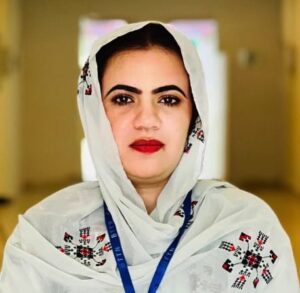
By Sadaf Nadeem
Despite Balochistan’s vast strategic significance and abundant natural resources, the province is still facing serious challenges in infrastructural reforms and educational development, which weaken its resilience and capacity for progress.
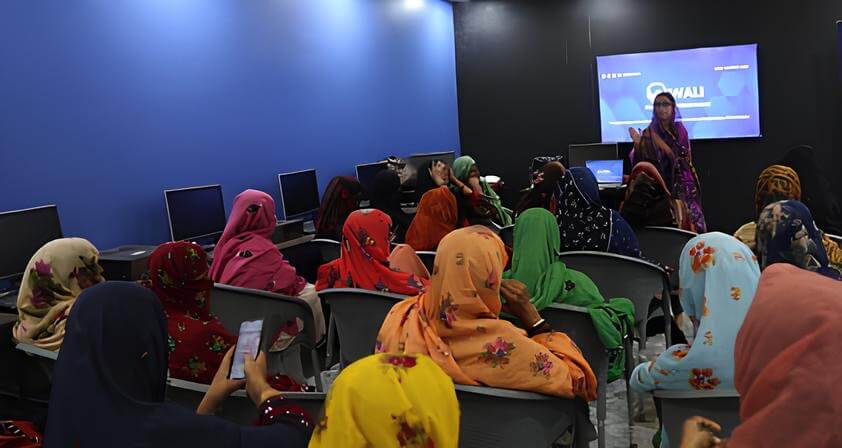
In an era of rapidly evolving technological advancements, empowering Balochistan’s youth with the necessary skills and education has become critical to securing the province’s future. With the rise of Artificial Intelligence AI, cyber warfare, Propaganda warfare, and the increasing influence of digital platforms, a critical question arises: Is Balochistan truly ready to face the future shaped by technological innovation?
Digital transformation is reshaping warfare and opening unprecedented opportunities for education, entrepreneurship, and economic growth. According to the CSCR Report 2022, AI-driven technologies, from surveillance to quantum-secure communication are redefining conflict dynamics. These technologies can also empower youth and foster innovation. The battlefield has expired beyond physical terrain into digital realms such as data centers, satellites, and social media platforms.
Due to Balochistan’s pivotal role in CPEC, the province is on the frontline of digital and kinetic threats. A cyberattack on critical infrastructure like Gwadar Port could disrupt regional stability and national security. This highlights the urgent need to equip youth with digital skills to protect and leverage these assets for sustainable development.
Education is the foundation for building defensive and offensive capabilities. According to Pakistan Bureau of Statistics, 2023, Balochistan’s literacy rate remains below the national average, especially among girls. High dropout rates are mainly due to geographic isolation and security concerns. Until foundational STEM (Science, Technology, Engineering, Mathematics) education becomes accessible and inclusive, the province will lack the human capital needed for AI and cybersecurity fields. Urgent integration of digital literacy and STEM education across districts is required.
According to the UNESCO Education Report, 2022, integrating digital literacy as a core subject within the provincial curriculum is essential. Starting from Grade 6, students should learn basic coding languages like Python and Scratch alongside cybersecurity principles. However, since English proficiency is a major barrier, students should have at least average basic English skills before Grade 6, or technology should be taught in Urdu or local languages to ensure effective learning Establishing low-cost STEM labs will enable hands-on learning, allowing students to assemble drones and program sensors. Meanwhile, teachers should receive stipends and training through MOOCs (Massive Open Online Courses) to enhance their skills.
According to Digital.Balochistan.com,(2025) the digital transformation awareness network (DTAN) trains over 65,000 youth annually in areas such as web development, digital marketing, e-commerce, and freelancing. This initiative collaborates with both government and private sectors to provide certifications and facilitate job placements. Similarly, as reported by QuettaVoice.com, (2023), the provincial government’s IT initiative offers modern courses, including AI, which are accessible to youth regardless of their background or geographical location. These programs hold significant potential to transform the youth of Balochistan into job creators rather than jobseekers.
According to Digital Rights Foundation, 2023, expand vocational training and accessible online courses is crucial for developing practical skills. Many young people spend significant time on Facebook Reels and TikTok, making them vulnerable to foreign disinformation campaigns. Universities like BUITEMS and the University of Turbat can lead “Cyber Peace Clubs” organize hackathons, innovation challenges, and fake-news busting competitions. These clubs should nurture creativity, entrepreneurship, and critical thinking, empowering youth to become national assets in Pakistan’s digital economy. Introducing critical-thinking modules at college level will help students to detect AI-generated deep fakes, secure digital accounts with two-factor authentication, avoid phishing scams, and adopt responsible online behavior. As reported by Cybersecurity Pakistan Report, 2023, digital resilience is as important as physical security in today’s interconnected world.
As reported by the Women in STEM Pakistan, 2023 study, Gender inclusivity is vital for preparing Balochistan’s youth for future tech demands. Despite progress, female enrollment in STEM remains disproportionately low. Encouraging women to pursue cybersecurity, data science, and AI careers will diversify talent and shape innovation. Educational institutions must provide scholarships, mentorship programs, and safe environments to enable women to study and innovate. Ayesha, a 19-year-old from Turbat who taught herself to assemble and fly drones, exemplifies the untapped potential among Balochistan’s young women. With support, she and others can significantly contribute to technological advancement and economic growth.
In many remote areas, reliable broadband and internet access remain scarce, creating “data-dark” zones that increase vulnerabilities. According to Pakistan Telecommunication Authority 2023 the government must prioritize expanding internet infrastructure and incentivize providers like PTCL and private ISPs to serve underserved districts. Coordination between federal and provincial governments is crucial to leave no region behind. Internet connectivity is not just communication, its national security and economic inclusion. Recent developments like Elon Musk’s Starlink launching services in Pakistan offer promising solutions to bridge the digital divide in remote areas providing reliable high speed satellite internet to underserved regions.
If Balochistan’s youth are equipped with skills, knowledge, and resilience, the province can emerge as a leader in innovation and economic growth. Today’s challenges must become tomorrow’s opportunities, not only for defense, but for social progress. Prioritizing education, technology, and digital literacy will ensure Balochistan’s youth play a central role in shaping their future across physical and digital realms.
While concern about fast internet enabling digital radicalization exists, these risks can be mitigated through digital literacy programs, community engagement, and cybersecurity measures. Empowering youth with critical thinking and responsible online behavior reduces vulnerabilities, making internet access a force for positive development.
Author: Sadaf Nadeem – Assistant Research at Balochistan Think Tank Network (BTTN), Quetta.
(The opinions expressed in this article are solely those of the author and do not necessarily reflect the views of World Geostrategic Insights).
Image Credit: WALI