



By Laiba Hussain
Abstract
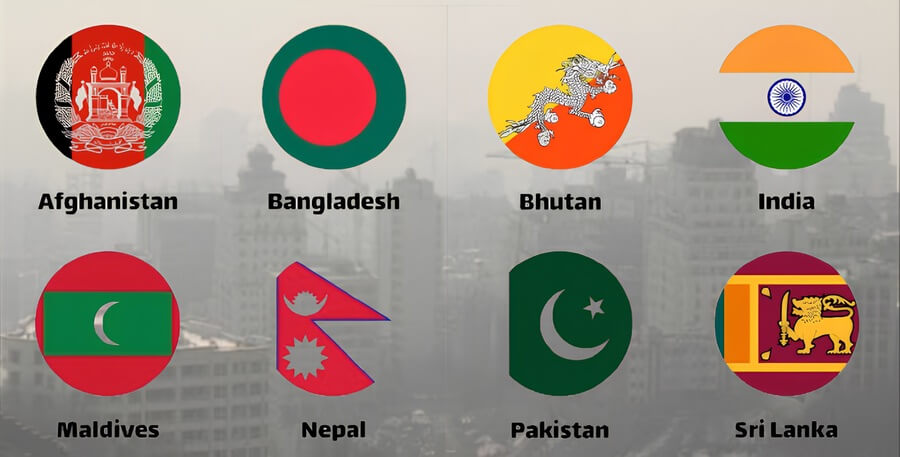
This comparative analysis examines the complex landscape of public policy and governance in South Asia, encompassing India, Pakistan, Bangladesh, Sri Lanka, Nepal, Bhutan, the Maldives, and Afghanistan.

It identifies shared historical legacies, particularly the enduring impact of colonialism, alongside common contemporary challenges including persistent poverty, stark inequalities, ethno-linguistic and religious diversity, institutional weakness, pervasive corruption, climate vulnerability, and a large informal economy. The analysis then diverges to explore the distinct political systems, economic models, social policy approaches, and governance innovations within each nation.
Despite shared foundational challenges, the region exhibits remarkable diversity in governance outcomes, influenced by varying levels of political stability, institutional strength, and policy priorities. Key emerging trends such as digital transformation, the climate crisis, rapid urbanization, and the demographic imperative are discussed, highlighting future governance imperatives centered on institutional strengthening, combating corruption, enhancing state capacity, and fostering regional cooperation for sustainable and equitable development.
Keywords: Public Policy, Governance, South Asia, Comparative Analysis, Colonial Legacy, Poverty, Inequality, Institutional Weakness, Corruption, Climate Change, Political Systems, Economic Development, Social Welfare, SAARC.
Research Methodology
There are three kinds of approaches for conducting research: Qualitative approach, Quantitative approach and a Mixed approach. Quantitative research refers to an inquiry or investigation about a phenomenon through collecting numerical data and executing mathematical, statistical or computational techniques (Adedoyin, 2020). Qualitative research uses descriptive methods to generate meaning and understand the phenomenon under study. On the other hand, a Mixed research involves both qualitative and quantitative research approaches in order to completely understand the phenomenon (Techo, 2016). The given research has used ‘Mixed method’ of research to gain a broader understanding of the phenomenon under consideration by using statistical as well as non-statistical data. Both quantitative and qualitative methods of analysis are used.
Data Analysis
This research paper has employed mixed analysis. Mixed analysis refers to data analysis methods used in mixed research (Onwuegbuzie & Combs, 2011). For quantitative research analysis, tables and graphs are used to understand the data trends and their relations. For qualitative analysis, data from the literature is analyzed and interpreted.
Sources of Data Collection
This research has used secondary sources of data collection. The sources of data used include, e-books, journal articles, reports, online newspapers, online data portals of international organizations, government publications as well as some other credible websites.
Introduction
South Asia is home to billions of people, presenting an eye-opening yet diverse landscape to study public policy and governance through a comparative analysis. It represents different nations with diverse historical backgrounds – India, Pakistan, Bangladesh, Sri Lanka, Nepal, Bhutan, the Maldives, and Afghanistan – the region shares deep roots related to religion, independence, cultural values, and shared commonalities. Besides all these, they also give contrasting views about governance, political system, and electoral process.
A comparative analysis reveals common problems regarding the colonial legacy, persistent poverty, slogans of democracy, institutional weakness, and the cherry on top is the threat of climate change. Despite many differences, South Asian nations share the same system ineffectiveness, corruption, and weak governance, and also have a problem with capacity building.
The Colonial Shadow: British rule and other colonial influences left such scars that cannot be removed. All the systems, such as the administrative structure, the legal system, the education system, and other basic policies, were designed and implemented to control the land and curtail the resources, not for the people’s well-being or to make a welfare state. Post-independence, these could not do much better than expected; the top positions were captured by an elitist group, and the policy structures were handed over to the bureaucracy. They both joined hands to take advantage of their side and made just policies which are far from reality, and the conditions were different on the ground.
Poverty, Inequality, and Human Development: While economic growth has been significant in some countries, notably India and Bangladesh India due to the technology and Bangladesh due to the enrollment in LDCs, poverty remains widespread, and the situation cannot be made better. Stark inequalities – economic, social, regional, and gender-based – persist. This drives core policy concerns around basic service delivery (healthcare, education, and sanitation), social safety nets, job creation, and inclusive growth. Population growth and lack of basic infrastructure are the major factors that cannot be fully ignored.
Ethno-Linguistic and Religious Diversity: South Asia is a mosaic of different caste and creed systems, ethnicities, languages, different cultures and has different social values. To keep all these factors in mind it is very difficult for policy makers to make such policies that can benefit all and nobody complains about them. Due to these variations the policy implementation is also quite a daunting task.
Institutional Weakness and Corruption: The most notable hurdle in public policy making and formation is the weakness of state institutions. Bureaucracies are often politicized and are inefficient, with red tape, and also have a limited technical capacity. Corruption also takes place and damages structures on different levels, distrusting people, misusing resources, severely hindering policy implementation, and service delivery. Judicial systems, while often constitutionally independent, can be slow and often inaccessible to the poor due to systematic flaws.
Climate Vulnerability: South Asia is highly affected by climate change. Rising sea level threatens coastal nations like the Maldives and Indonesia. Floods, glacial melts, cyclones, and droughts are more frequent and intense in Pakistan and India. Making and implementing basic principles to mitigate the effects is in vain, and they mostly contrast with the basic developmental needs
Informal Economy: Black economy is also one of the major factors for stunted economic growth. This complicates the tax collection system, raising questions on regulatory authority, labor rights, and the effective delivery of social benefits, limiting the reach and impact of state policies.
II. Divergent Pathways: A Comparative Lens
Though there are many similarities among these nations, there is a contrast in ruling systems and governance capabilities.
Political Systems & Stability
India: It stands as the world’s largest democracy, with a functional parliamentary system. Key institutions, such as the election commission and the judiciary, face extreme political pressure but remain firm and credible. Decentralization via the Panchayati Raj system is constitutionally enshrined, though implementation varies widely. Stability is relative but significantly higher than many neighbors, allowing for longer-term policy planning (e.g., long-term infrastructure projects, welfare schemes), and almost all prime ministers completed their tenure even for a second or third time.
Pakistan: Characterized by a “hybrid” system where the military remains the dominant political actor, repeatedly interrupting democratic transitions. Federal parliamentary structures exist, but civilian institutions are weak, provincial tensions (e.g., Balochistan) are high, and political instability is frequent. This volatility severely undermines policy continuity and implementation (e.g., repeated shifts in economic strategy). .not even one prime minister has completed their five-year tenure.
Bangladesh: Bangladesh achieves remarkable economic growth under a dominant party system Awami League. However, democratic institutions have been weakened due to controlled elections, centralization of power, and not providing the space to civil society to think and talk. Governance is often characterized as developmental and remains effective in driving the economic outcome, but at the cost of political authoritarianism.
Sri Lanka: Sri Lanka has remained a stable democracy with strong social indicators. However, the devastating 2022 economic crisis exposed profound governance failure, institutional failure, and the danger of the powerful executive presidential seat. Deep-rooted ethnic tensions also impact policy cohesion, periodically erupting in the system.
Nepal: It transitioned from a monarchy to a federal democratic republic in 2008. Though Nepal has made progress in some sectors but governance is questionable due to the coalition of parties, no clear execution policy. There is no enforcement of the federal constitution, and ongoing challenges in defining central-state relations. Political instability hinders the consistent implementation.
Bhutan: Bhutan is itself a case study of to study that is transitioning from a constitutional monarchy towards democracy. It prioritizes Gross National Happiness (GNH) over GDP as its core governance and policy framework, influencing the decisions on environment, culture, development, and infrastructure building.
Maldives: Maldives experiences severe political polarization with its young democracy, with a history of authoritarian reversals. Governance remains fragile. Geographic and administrative centralization pose challenges for equitable development across dispersed islands.
Afghanistan: After the evacuation of the US, Afghanistan is currently under the Taliban Rule (Islamic Emirate), constituting an authoritarian theocracy unrecognized by the international community. Governance is strictly based on the Shariah law, though not all laws are according to this, with severe restrictions on women’s rights and education. Public policy is aligned with religious doctrine, but due to wrong enforcement, it leads to a humanitarian crisis and international isolation.
Economic Policy & Development
India: Pursues a mixed economy, significantly liberalized since 1991. Major policy initiatives focus on manufacturing (“Make in India”), digitalization (Aadhaar, UPI), infrastructure development, and large-scale welfare programs (MGNREGA, food subsidies). Challenges include jobless growth, agrarian distress, persistent inequality, and bureaucratic hurdles to doing business.
Pakistan: Struggles with chronic economic instability, reliant on repeated IMF bailouts. Policy inconsistency, driven by political volatility and security spending, stifles investment. The China-Pakistan Economic Corridor (CPEC) is a major initiative but faces implementation challenges and debt concerns. Key issues: high inflation, debt burden, energy crisis, low tax base.
Bangladesh: Achieves stellar export-led growth, primarily through the Ready-Made Garments (RMG) sector, lifting millions from poverty. A strong NGO sector complements state service delivery. Policy challenges include over-dependence on RMG, infrastructure bottlenecks (ports, power), financial sector vulnerabilities, and the urgent need for climate adaptation investment.
Sri Lanka: Post-2022 crisis, implementing harsh IMF-mandated reforms focused on fiscal consolidation, debt restructuring, and state-owned enterprise reform. The crisis reversed decades of progress in social indicators. The core challenge is rebuilding a sustainable economic model and restoring governance credibility.
Smaller Economies (Nepal, Bhutan, Maldives): Heavily reliant on specific sectors: remittances (Nepal), tourism and hydropower (Bhutan), tourism (Maldives). Policies focus on managing these sectors sustainably, diversifying economies, building resilience to external shocks (like the pandemic’s impact on tourism), and addressing geographic isolation/infrastructure gaps.
Social Policy & Welfare
India: Implements some of the world’s largest welfare programs (MGNREGA guaranteeing rural employment, National Food Security Act, Ayushman Bharat health insurance). Effectiveness varies significantly across states due to capacity and corruption issues. Education and healthcare quality remain major concerns.
Pakistan: Social spending is often constrained by economic instability and security budgets. Programs like the Benazir Income Support Programme (BISP) provide cash transfers but coverage and impact are limited. Health and education indicators lag significantly.
Bangladesh: Achieved impressive gains in primary education enrollment, child mortality reduction, and family planning, often attributed to a combination of government action and NGO work. Challenges remain in education quality, healthcare access in rural areas, and social protection for the growing urban poor.
Sri Lanka: Historically boasted strong social indicators (health, education) relative to its income level, but these eroded significantly during the economic crisis, highlighting vulnerabilities in the social safety net.
Others: Nepal and Bhutan prioritize basic education and health access, though remote areas suffer. Maldives has relatively good social indicators but faces challenges related to youth unemployment and drug abuse. Afghanistan’s social policies under the Taliban are regressive, particularly regarding women and girls.
Governance Innovations & Challenges
India: Pioneered large-scale digital governance initiatives (Aadhaar biometric ID, digital payments – UPI) improving service delivery efficiency and reducing leakage in welfare schemes. However, concerns about privacy, exclusion, and digital divides persist. Decentralization remains a work in progress.
Bangladesh: Demonstrated effective disaster management and climate adaptation strategies at the community level (e.g., cyclone shelters, early warning systems), often involving NGOs. However, centralization and weakening democratic institutions pose long-term governance risks.
Bhutan: GNH is a unique, holistic policy framework attempting to balance economic needs with environmental sustainability, cultural preservation, and good governance. Its practical implementation and measurement are ongoing challenges.
Common Governance Hurdles: Across the board, corruption remains a cancer, eroding resources and trust. Bureaucratic inefficiency slows implementation. Political patronage often trumps meritocracy and needs-based allocation. Limited state capacity, especially at local levels, hinders effective service delivery. Policy fragmentation and lack of coordination between different levels and departments of government are endemic problems.
Emerging Trends and Future Imperatives
Several key trends will shape the future of governance and policy in South Asia:
Digital Transformation: Rapid adoption of digital technologies offers immense potential for improving service delivery, transparency (e-governance), financial inclusion, and citizen engagement. However, managing risks related to data privacy, cybersecurity, exclusion of marginalized groups, and the potential for digital authoritarianism is critical.
Climate Crisis as Policy Priority: Climate change impacts are no longer future threats but present realities. Integrating climate adaptation and mitigation into all core policy areas – agriculture, water, energy, urban planning, health, infrastructure – is non-negotiable. This requires significant financing, international cooperation, and prioritizing resilience.
Managing Urbanization: Rapid, often unplanned urbanization strains infrastructure, housing, and services. Developing effective urban governance frameworks, sustainable city planning, and policies for affordable housing and public transport are urgent needs.
Demographic Dividend or Burden? Harnessing the potential of the large youth population requires massive investments in quality education, skill development aligned with market needs, and job creation. Failure risks social unrest and wasted potential.
Strengthening Institutions: The long-term solution to many governance challenges lies in building strong, independent, transparent, and accountable institutions – the judiciary, civil service, anti-corruption agencies, audit institutions, and electoral bodies. This requires sustained political will and civil society engagement.
Regional Cooperation (SAARC): While fraught with political tensions (especially India-Pakistan), enhanced regional cooperation through SAARC or sub-regional groupings is crucial for addressing trans boundary issues like water management, climate change, trade, and security. Revitalizing SAARC remains a significant challenge but holds immense potential.
Conclusion
Public policy and governance in South Asia exist within a dynamic and demanding context. While bound together by shared historical legacies and formidable challenges – poverty, inequality, institutional weakness, and climate vulnerability – the countries of the region exhibit remarkable diversity in their political systems, economic models, and governance outcomes. India’s democratic resilience and scale contrast with Pakistan’s hybrid instability and Bangladesh’s developmental-authoritarian efficiency. Sri Lanka’s dramatic fall from grace highlights the perils of governance failure, while Nepal and Bhutan navigate complex transitions. The Maldives grapples with democratic fragility, and Afghanistan presents a tragic outlier under Taliban rule.
The effectiveness of policy responses – whether in driving economic growth, delivering social welfare, managing diversity, or combating climate change – is fundamentally intertwined with the quality of governance. Strengthening institutions, combating corruption, enhancing state capacity (especially locally), ensuring policy coherence, and fostering genuine political stability and accountability are the indispensable prerequisites for sustainable and equitable development.
The choices South Asian nations make in navigating their unique governance challenges, while learning from each other’s experiences (both successes and failures), will profoundly impact not only the well-being of their vast populations but also the stability and prosperity of Asia and the world in the decades to come. The crucible of South Asia continues to test the limits and possibilities of governance in the developing world.
References:
Jalal, A. (1995). Democracy and Authoritarianism in South Asia: A Comparative and Historical Perspective. Cambridge University Press.
Kohli, A. (Ed.). (2001). The Success of India’s Democracy. Cambridge University Press.
World Bank. (Various Years). World Development Indicators. World Bank.
UNDP. (Various Years). Human Development Reports. United Nations Development Programme.
International Crisis Group. (Various Reports). Asia Reports – South Asia.
Brass, P. R. (2011). The Politics of India Since Independence (2nd ed.). Cambridge University Press.
Riaz, A. (2016). Bangladesh: A Political History Since Independence. I.B. Tauris.
Jaffrelot, C. (Ed.). (2002). Pakistan: Nationalism Without a Nation?. Zed Books.
DeVotta, N. (2021). Sri Lanka: Political Crisis and Authoritarian Dynamics. Journal of Democracy.
Hutt, M. (Ed.). (2004). Himalayan ‘People’s War’: Nepal’s Maoist Rebellion. Hurst & Company.
SAARC Secretariat. (Various Publications). South Asian Association for Regional Cooperation.
Reports from national governments and statistical agencies of South Asian countries.
Peer-reviewed articles from journals like Contemporary South Asia, South Asia Research, Asian Survey, Governance, Public Administration and Development.
Reputable news sources (e.g., BBC South Asia, The Hindu, Dawn, Daily Star, Himal Southasian).
Author: Laiba Hussain – University student in international relations, with an academic focus in public policy, governance, and sustainability. Lahore,Pakistan.