



By Kanza Sohail
Pakistan’s heavy dependence on maritime trade, growing militarization, and US-China competition in the Indian Ocean make maritime security a key aspect of national security.

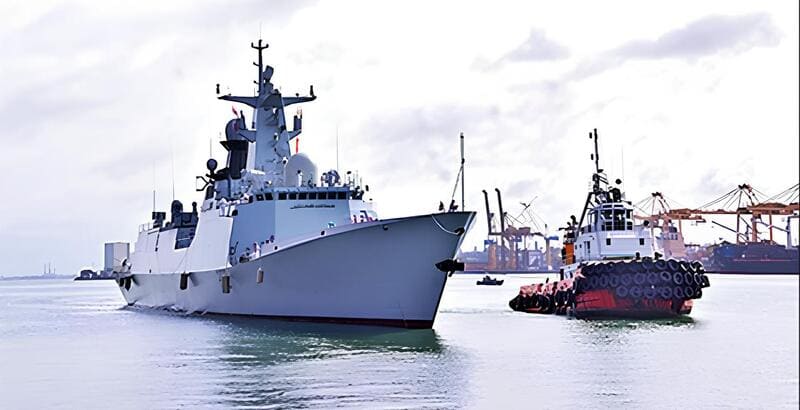
Pakistan’s naval modernization and involvement in Regional Maritime Security Patrols in the IOR are initial efforts, but they lack integration within a broader Indo-Pacific Framework, limiting its blue economy growth. Consequently, formulating an independent Indian Ocean policy distinct from the national maritime policy has become necessary for Pakistan in this evolving strategic environment.
Importance of Indian Ocean Region for Pakistan:
The Indian Ocean region (IOR) is the world’s third-largest ocean, covering Earth’s 20% surface, critical for oil production and trade routes through critical chokepoints like Hormuz, Malacca, and the Bab el-Mandeb Strait. Major powers, especially the US, China, and India, focus on this region amid ongoing power struggles. Pakistan, a key littoral state with a 990 km coastline in the Arabian Sea, is strategically positioned near vital sea lanes of communications (SLOCs) connecting the Middle East, Africa, and South Asia.
Pakistan leverages its navy and CPEC to enhance trade. However, India’s investments in nearby Chabahar Port threaten Pakistan’s strategic position due to port’s proximity to Gwadar, compounded by its exclusion from multilateral organizations such as Indian Ocean Rim Association (IORA) and Bay of Bengal Initiative for Multi-Sectoral Technical and Economic Cooperation (BIMSTEC).
India’s Blue Water Navy Expansion:
Pakistan is facing maritime security challenges due to India’s involvement in regional power dynamics and its expanding blue water capabilities, which are set to grow from 150 to approximately 230 warships by 2037, including up to 4 aircraft-carriers by 2040, supported by 170 carrier-aircraft and an expanded fleet of maritime drones for ISR and Anti-Submarine Warfare (ASW) to counter China and Pakistan’s growing threats.
Moreover, India plans to expand its undersea fleet to around 30 submarines, including 6 air-independent propulsion boats under Project-75(1), to bolster sea-based nuclear deterrence through Arihant-class SSBNs and the introduction of K-4 SLBM, with new naval bases like INS Varsha, in response to China’s expanding presence in the Indian Ocean and Pakistan’s growing undersea capabilities. This could enhance India’s submarine capabilities to conduct covert operations near contested zones and power projection into the Arabian Sea, challenging Pakistan’s EEZ security.
Growing US-China Rivalry:
In recent decades, South Asia’s geopolitical landscape has transformed, with the Indo-Pacific region becoming a center of the arena. The rivalry between US-China, both Pakistan’s allies, could lead to an arms race, forcing Pakistan to choose sides and potentially jeopardizing its security and trade routes through critical sea lanes of communication (SLOCs) to the Strait of Hormuz in the West and Indian Ocean in the East. This growing competition risks a balance of power crisis in the Arabian Sea, affecting Pakistan’s 290,000 sq. km Exclusive Economic Zone (EEZ) and unresolved maritime borders with India. Therefore, it is crucial for Pakistan to safeguard its economic interests, because 97% of its trade transits through the ports of Karachi, Muhammad Bin Qasim, Gwadar, Pasni, Jiwani, Gadani, and Ormara.
CPEC Dilemma:
Pakistan’s foreign policy faces a strategic dilemma, influenced by its deepening ties with China via the China-Pakistan Economic Corridor (CPEC), which has generated tangible economic gains and infrastructure development along with rising threats of piracy and terrorism. Nevertheless, this reliance also entails limitations, particularly in terms of limited economic diversification and regional integration. Moreover, the US Indo-Pacific strategy launched to counter China’s BRI through Quad and AUKUS directly threatens CPEC goals. CPEC also faces risks from US-led IPEF efforts to isolate China’s influence, as seen in the strengthened US-Japan-South Korea alliance and ASEAN outreach.
To increase its geo-economic reach through tourism, fishing, and marine hydroponic fish farming sectors, India’s maritime strategy focuses on establishing sustainable coastal zones. It has announced its nuclear-powered submarines to bolster its ASW capabilities. CPEC and Pakistan’s marine security are further threatened by these Indian activities, which have distorted the balance of power in the region. As a result, maritime security in the Indian Ocean has increasingly become a core component of Pakistan’s national security strategy.
US– India Defense Partnership:
India’s expanding influence and proactive engagement in international and regional frameworks through US-led partnerships such as Indo-Pacific Economic Framework (IPEF) and the Quad countering China position it as an important strategic competitor for Pakistan. This reduced Pakistan’s influence in the region while also bolstering India’s defense & economy. As a result, Pakistan is greatly concerned about Indo-Pacific strategy, which prompts Pakistan to update its defense and naval capabilities.
Pakistan perceives the US-Indo alliance as a potential threat to its security due to India’s advanced Theater Missile Defense system (TMDS) and intricate delivery mechanism, as well as the placement of nuclear weapons, which weakens Pakistan’s minimum deterrence strategy. For example, the 10-year defense deal (2025) accelerates India’s military modernization via US technology transfer, including transport planes, Seahawks, maritime patrol aircraft & armed drones, thereby enhancing India’s maritime security in the region. It gives India a considerable geopolitical advantage, risking Pakistan’s security while further escalating regional tensions.
Piracy Challenges:
Piracy occurrences off Pakistan’s coast are becoming more concerning and have an impact on local fishermen and marine operations in the Arabian Sea. Particularly through its assistance with Combined Task Force (CTF) 151 in the Gulf of Aden, the Pakistan Navy serves a vital role in the fight against piracy. The 2010 hijacking of the MV Suez, during which the crew was held captive for months, and the 2011 kidnapping of an Al Imran fishing vessel, which brought attention to the difficulties of local fishermen, are two notable instances of piracy.
Policy Options for Pakistan:
Expanding trade relations and foreign policy choices can help Pakistan look beyond China and navigate challenges in the Indian Ocean region.
– Defense Partnerships: Strengthening naval capabilities through defense partnerships, particularly with Africa, Turkey, and the ASEAN states, will help secure its interests in the Indian Ocean and balance ties with China while also contributing to regional stability. The 2025 Saudi-Pakistan Strategic Mutual Defense Agreement exemplifies this notion, bolstering defense ties between the two countries while also raising the threats to India’s aspirations for South Asia hegemony.
– Engagement with Regional Frameworks: Participating in regional economic frameworks like the IPEF could enhance Pakistan’s infrastructure development, investments, and trade diversification, reducing dependency on a single market. As part of the ASEAN Regional Forum (ARF), Pakistan must revive its 2003 “Vision East Asia” initiative to explore economic opportunities and adopt a “Go East” policy to engage more dynamically in the Indian Ocean. While CPEC offers an economic platform, a multilateral approach with Southeast Asia may better align with the country’s goals and foster new dialogs with ASEAN.
Participation in Anti-piracy Operations: Pakistan can enhance its maritime security through engaging in regional operations like anti-piracy to address Somali threats, protect trade, and ensure citizen safety. This strategy would bolster its global standing and facilitate a more balanced, sustainable engagement with the US over the long-term.
Diplomacy with India: Reevaluating the relationship with India could open diplomatic channels for cooperation on mutual regional challenges, such as climate change, like smog, anti-piracy, and energy security, like renewable energy. It could foster sustainable peace and promote economic integration and interdependence.
Trade Diversification: To enhance its geopolitical stance, Pakistan should strengthen ties with Russia, Turkey, Central Asian republics, and Gulf states through credible deterrence, diplomatic diversification, & economic advancement to contain Indo-US ties. Additionally, advancing collaboration in technology, such as satellite-based data, commercial drones, AI-enabled defense systems, and crowd-sourced surveillance, will enhance Pakistan’s maritime domain awareness and operational capability in the Indian Ocean.
Conclusion:
The Indian Ocean has become a focal point of strategic competition with direct implications for Pakistan maritime security and economic interests. India’s naval expansion, great power rivalry, threats to CPEC and non-traditional maritime challenges highlight the need for a dedicated policy framework. Therefore, having a clear Indian Ocean policy is vital for Pakistan’s national security as regional powers vie for influence.
Autor: Kanza Sohail – MPhil scholar in Political Science at Kinnaird College for Women University, Lahore, Pakistan. Her research interests include global environmental politics, regional geopolitics, maritime politics and resource wars, with a particular focus on the Asia-Pacific region, Arctic geopolitics and the evolving dynamics of US-China rivalry.
(The opinions expressed in this article are solely those of the author and do not necessarily reflect the views of World Geostrategic Insights).