



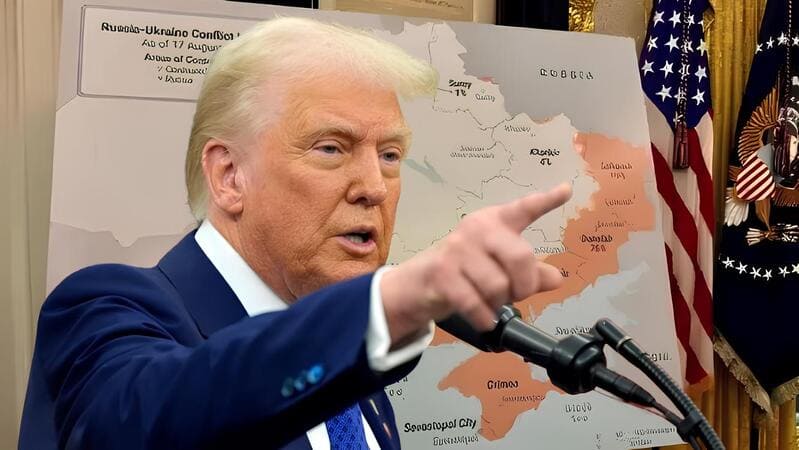
World Geostrategic Insights interview with Sean Philip-Corbett Nottoli on the relevance of the conflict in Ukraine in Trump’s election campaign; How Americans view the Russia-Ukraine war; Trump’s relationship with Putin and European leaders.
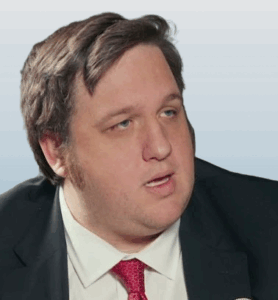
Sean Philip-Corbett Nottoli is an expert in American and conservative politics with over a decade of experience in campaign management and consulting across the United States. He served as a director in Trump’s last presidential campaign. He has also worked for five years with civil society organizations to promote democracy around the world. He has published articles on a variety of global topics in various formats, ranging from security policy in the Baltic region to Russian military strategy and events on the Korean peninsula in China, Japan, and other regions. His research interests include global security issues, state sovereignty, and great power competition. He is currently a Visiting Fellow at the Danube Institute in Budapest, Hungary.
Q1 – During his election campaign, Donald Trump repeatedly claimed that he would be able to end the war between Russia and Ukraine ‘in 24 hours’. However, once in office, Trump has become more cautious about the prospects for a quick peace deal, which is perhaps understandable. You were a full-time regional director for Donald J. Trump’s presidential campaign. How important was the issue of the war in Ukraine in Trump’s presidential campaign?
A1 – Good question. I’ve run campaigns on the ground in 7 states and have consulted in 30. In all of my experience, this is the first time that voters were really placing an emphasis on foreign policy issues. In most election cycles, foreign policy will play a part, but a smaller one, even in presidential elections. Typically, when discussing issues with voters, the topics they raise are domestic. (Economy, social issues, immigration, etc..).
This past election, however, almost every constituent and voter I talked to had an opinion or concern about the war in Ukraine.There was real concern that the Biden, followed by a possible Harris Administration, would get the United States drawn into a war with Russia. To be clear, no one liked what Russia was doing in Ukraine, but the fear of armed and possibly eventual nuclear conflict with Russia was real amongst the voters. There was also considerable anger at the Biden Administration for its increased support for Ukraine and perceived cutback in support of Americans.
While working on the campaign, a massive hurricane devastated two major swing states, Georgia and North Carolina. Thousands of Americans had their homes, cars, and communities completely destroyed (including several Trump campaign staff I worked with). In response to the devastation, Vice President Harris announced the government would be loaning $750 to victims who would have to pay it back. It was stressed that the government couldn’t afford to pay for damages. That same week, however, President Biden and Vice President Kamala Harris announced a new $100 billion aid package to Ukraine.
That one decision really catapulted the Ukraine issue to the forefront of many voters’ minds who lived in swing states like Georgia and North Carolina, and others like Florida, which are regularly hit by hurricanes. In my opinion, with that one decision, the Harris campaign really soured the opinions of millions of Americans on continued support. The vast majority of Trump voters I met supported aiding Ukraine, but they wanted both Europe to pay more than we were and wanted more oversight on aid.
Q2 – According to a number of polls, most Americans do not want US troops to be involved in combat in Ukraine. At the same time, however, there is little support for abandoning Ukraine. Also, Trump’s supposed “friendly” policy towards Russia appears unpopular within the American public. What is your view? Is the war in Ukraine a primary concern for the American people? Do Americans support Trump’s current attitudes towards Russia and Ukraine?
A2 – Ukraine is a priority, but it’s not the top priority for most Americans, especially the electoral majority that handed President Trump a second term. They’re more concerned about the costs of their groceries, ICE, and immigration. There is a lot of support for Ukraine amongst Americans; no one sees Russia as the good guy in this war. Just because they don’t want American troops involved doesn’t mean they are opposed to the US selling or donating weapons to Ukraine for its own defense.
However, the Americans I spoke to during the election were clear that they didn’t want the US to be the primary supporter of Ukrainian sovereignty and security. They want Europeans to pay more for the defense of Ukraine, which is thousands of miles and an ocean away from America, and quite literally on their borders. There has been growing resentment amongst Americans for perceived European apathy in security concerns overall. During the campaign, many recounted stories of watching the months and weeks of Russia’s military buildup on Ukraine’s borders live on television, screaming at European leaders that Putin was obviously going to invade, asking why they (Europe) weren’t doing anything serious about it?
There is a growing attitude in the US that many Americans just want the war to be over. They do not want to put boots on the ground to fight the Russians and potentially start WW3. There is obviously a split amongst Americans between those who want continued and increased support for Ukraine to end the war and those who believe President Trump can force Putin and Zelensky to make a peace deal. It’s clear that a majority of Americans just want the war to end, but there is major disagreement amongst Americans on what the best way to end the war is.
If you ask my opinion on the war, Russia is clearly the aggressor and the villain here. We should continue to support Ukraine until a peace deal is made, and that peace deal will need to be regularly verified. While it may appear that Trump is being friendly with Putin, from my experience, that’s how he behaves when he tries to make a deal with someone. Trump will act friendly with anyone, even Kim Jong-Un if he believes it will help him make gains with them. Most Americans I dealt with in the election ideally want to have a friendly relationship with Russia, but that can’t happen until the war in Ukraine is over.
Personally, I believe we (the United States) should increase support for Ukraine while Putin keeps making unrealistic demands and stalling peace negotiations. We should also hold the EU accountable to make good on their promises for aid to Ukraine, which they still haven’t fulfilled. The EU has promised millions of mortar shells and ammunition for Ukraine, but so far has only delivered roughly a quarter of what it promised. It was disheartening to see aid for Ukraine fall apart in the European Parliament this past March. To end this war, we will all need to increase our support until Moscow gets the message that we aren’t going to let them drag out the negotiations and stall for time.
Q3 – In 2007, after Time magazine named Putin “Man of the Year,” Trump wrote him a letter of congratulations. “As you probably know, I am a big fan of yours!” Many years have passed since then. However, Trump has always surrounded himself with people who do business and sympathize with Russia. Putin and Trump seemed to be on excellent terms at the summit in Alaska. Trump treated Putin with respect, esteem, and friendship, and appeared to be on Putin’s side when it came to critical issues. How would you describe Trump’s personal relationship with Putin?
A3 – Everybody liked Putin in 2007. Only a tiny group of people like John McCain could recognize Putin for what he was at that point. George W Bush liked Putin, and most people around the world laughed at the shirtless photos of Putin riding horses in the wilderness. There’s a reason he was man of the year that year.
Don’t confuse President Trump’s politeness as meaning his administration will be “friendly” with Putin and overlook his aggression. It’s clear that President Trump wants friendly relations with Russia, if possible. After all, Russia is the only country on Earth that possesses more nuclear weapons than the US. President Trump is trying to make a peace deal, but he won’t hesitate to communicate strength if necessary. I believe having the surprise flyover of the B2 Stealth Bomber over Putin’s head as he departed Anchorage was a clear message from President Trump: We want to be friends, but don’t mess with us.
There is an expected decorum when leaders of two nations meet, even if they are at odds with each other. While Trump definitely has a habit of breaking with decorum at times, when it comes to Putin, he’s willing to keep it if he thinks it means it will result in ending the war in Ukraine. Personally, I think Trump is annoyed with Putin and getting frustrated with him. I believe President Trump wants a good personal relationship with Putin and every other world leader, but I think his patience is beginning to wear thin. President Trump has even publicly discussed the fact that Putin says one thing and does another. As long as he believes politeness and decorum will help him make headway in the negotiations, he will continue to be polite and respectful. But, if President Trump begins to believe being polite won’t get him anywhere, don’t be surprised if he starts berating Putin publicly as he’s done with other leaders.
Q4 – On 18 August, President Trump met with European leaders and Zelensky at the White House to discuss the aftermath of the Russia-US summit in Alaska on 15 August. At the start of the meeting, Trump introduced the European leaders with colourful descriptions, using phrases such as ‘great political leader’, ‘my friend’, and ‘source of inspiration’. In your opinion, what does Trump really think of the European leadership, and to what extent is he willing to take the position of European leaders into consideration in the negotiation to put an end to the war in Ukraine?
A4 – I think President Trump is starting to have a more positive outlook on European leadership after the closing of the trade deal with the EU, and now that our allies in NATO have set new spending targets of 5% of GDP on defense. The main source of contention with Europe and Trump, and his supporters, was the perceived notion that the United States was going to have to be the primary guarantor of security in Europe. Now that we’ve had countries like Germany and Poland making rapid gains in increasing their defense spending and others planning to increase theirs, you’re going to see a lot more positive statements about Europe from the White House.
When it comes to taking their considerations into account in negotiating the end of the war, it depends on what those considerations are. If it’s a continued demand that Ukraine lose no territory, then no, he won’t. But, if he sees European leaders willing to make certain concessions, he would definitely be willing to take their concerns on what concessions should and shouldn’t be made to heart.
There has been genuine concern from the White House that the collective demands from European leadership are unrealistic. For many in the Trump Administration today, it’s hard to forget how just three and a half to four years ago, no one in Europe thought that this invasion was possible, even after Putin had invaded and annexed territory from Georgia in 2008 and seized Crimea in 2014. There will need to be many more meetings with President Trump, President Zelensky, and European leaders to determine what the best, realistic peace deal will look like.
As for what that will look like and how the war is likely to end, I have already written on that, which you can find on my Substack here.
Sean Philip-Corbett Nottoli – Expert in American politics and global issues. Visiting Fellow at the Danube Institute in Budapest, Hungary.