



The Secret History of European Intelligence and Mossad’s Assassination Campaign
By Zara Mansoor
A captivating account presenting an unprecedented history of intelligence operations during the Cold War has been presented in a book, Operation Wrath of God: The Secret History of European Intelligence and Mossad’s Assassination Campaign, published by Cambridge University Press in August 2025.

The book stands as one of the most recent scholarly contributions to post-Munich intelligence history. It is written by Aviva Guttmann, lecturer in strategy and intelligence at Aberystwyth University (UK). Her research focuses on intelligence, international relations, and the functioning of covert operations and actions, and European and Middle Eastern security.
Moving towards the theme, the book offers an in-depth analysis of facts that have long remained hidden and explores intelligence history: Campaign of Mossad (Israel’s Foreign Intelligence Agency) in the aftermath of the Munich Olympics massacre in 1972, where several athletes were killed.
The author delves into the history of how Mossad left no stone unturned in hunting down the suspects involved. Mossad’s operations extended across Europe and beyond in pursuit of justice for its slain athletes. The distinction comes when it opens up to the reader that the focus is not only the Mossad’s operations but also the role of European intelligence agencies in fighting alongside Israel. Intelligence-sharing network Club de Berne extended cooperation to Mossad, sharing intelligence at the expense of local sovereignty. It is to pinpoint that strength was gained to acquire justice. As the new archival material has been used by Guttmann, it makes the book more appealing and unique in intelligence studies. As the European and Mossad networks worked in tandem, the world experienced covert operations and the unearthing of the suspects involved.
The opening chapter sets the tone of the entire book, “Intelligence that kills”. The author emphasises that intelligence networks not only work to gather information, but they sometimes are a lethal instrument of statecraft. She calls this phenomenon intelligence that kills, because when this network set for cooperation and security transgresses, direct facilitation of assassinations and targeted killings occurs. She is of the view that after the Munich Olympics massacre, Mossad did not just limit itself to providing information for military action; it took the grounds to create violence through clandestine means. It blurred the lines of Mossad between its traditional working of intelligence and warfare.
Moreover, a paradox is stressed here: that European nations, though they condemned the political assassinations apparently, cooperated silently with Mossad and its network. She labels it as a “shadow alliance” where morality and sovereignty and the rule of law were compromised in the name of countering terrorism. Her writing style discerns how she has not written a moral defence or condemnation but exposes intelligence networks, their dealings, and how far they can go when it comes to their interests. Through interviews, she reconstructs unseen networks and connects dots through her intelligence.
In part one, “Preparing for God’s Wrath”, the section has moved from theoretical basis to actions. The trauma of the Olympics massacre was transformed into a structured campaign of revenge and deterrence. Guttman explains that soon after the attack, Israel began to gather partners to give the culprits the taste of their own medicine. A history’s controversial covert operations were shaped behind closed doors, and targets were marked. She shows that Golda Meir, the then prime minister of Israel, authorised Mossad to “strike the perpetrators wherever they are”; a secret body was formed, a Committee X that was cooperating with the campaign. Her tone here remains cinematic, yet it is grounded in archival research; she alerts readers about the European intelligence cooperation and diplomacy with Israel but also unfolds its hesitancy to confront it. These operations were mostly planned on their (European) soil; they did a deal on their sovereignty even.
In the second part, titled “Europe’s covert war against the Palestinian Armed Struggle”, it is examined how Mossad prepared the “Kill List” that transformed the intelligence files into death warrants, something that happened for the first time in history. Guttmann explored that the targets Mossad identified were through human intelligence or sources, intercepted communications, and European police reports shared through the Club de Berne network. She tries to convince the reader that it was not an isolated act, but transitional intelligence architecture is responsible for it that is built on mutual convenience and secrecy. Moreover, she goes further, stating that moral and legal boundaries were blurred in the decision-making process because some names were genuine and were on a hit list, while the others were merely sympathisers, but they got attacked because of the fact that they extended empathy.
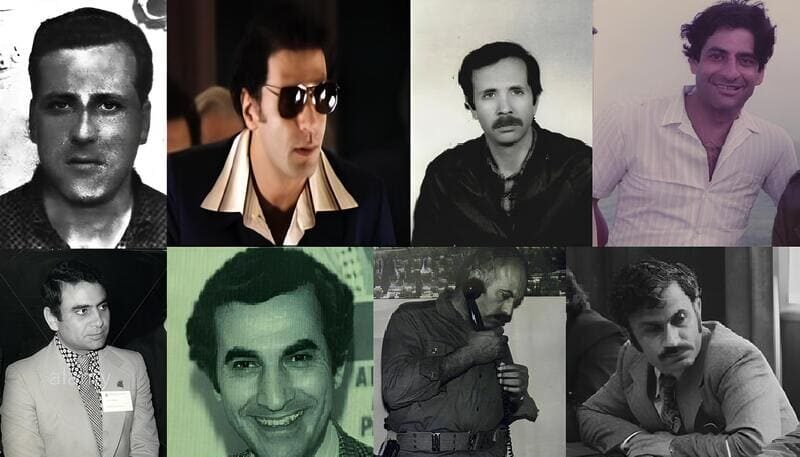
Assassinations in Rome, Paris, Nicosia, Madrid, Jordan and Sudan were carried out by Mossad after the 1972 Munich Olympic massacre against the Palestinian militant network. It all does not end here; it is also to note that states like Italy, Germany, and France also quietly let the monitoring of Israeli teams under the shadow of counterterrorism. All she is trying to explain here is that everything is linked and European partners are as responsible as Mossad. The Palestinian groups were a target of the whole of Europe and not only of Israel.
The third part, “Blunder and Cooperate”, explores how Mossad’s retaliatory campaign began to collapse under its own weight: secrecy, overreach, European backlash, and unfit strategies. The central plank of this section is the Lillehammer affair (1973); it was a mission that went terribly wrong and led the partners to think about cooperating with Mossad as well. Its capability and capacity was questioned as the operation backfired. Guttmann uncovered that Israel’s agency received intelligence that Ali Hassan Salameh, who is the mastermind of the Munich massacre, was hiding in Lillehammer, Norway. It started the operation there, and it is hapless to note that the agency ended up killing an innocent Moroccan waiter.
Salameh, known as the “Red Prince” and the senior member of “Black September”, was the main target and on the hit list of Mossad. As the action took a wrong turn, Norwegian police arrested Mossad officers within days, and as a result, several safe houses were exposed, a network of fake identities was uncovered, and further operations were stalled across Europe. For the first time Europe confronted and accepted its involvement; the Lillehammer affair became public, and it destroyed Mossad’s reputation badly. It became an international scandal. The author discusses the shockwaves that occurred when Norway expelled Israeli diplomats, Europe quit cooperation, and the Wrath of God operation was terminated. The original research included by the author makes it praiseworthy, and the events that have long remained veiled are smoothly uncovered to make the world aware of Mossad’s dirty work, its collaboration with Europe, and how wrong moves and extremely revengeful actions turned the tables within no time.
The book holds its strengths, as the works presented are original, and much research on intelligence networks has been exposed through unused sources. Moreover, shedding light on Israel-Europe espionage sharing that has never been declared. The history of the Munich massacre is revived by Guttmann, and the revenge that followed ultimately led towards the Mossad’s downfall and shame. The high-stakes nature of the operations is discussed and analysed due to the author’s background in intelligence studies. She understands secret operations and how they work, and that is how her book remains distinctive.
In addition, the writing account does not falter to demonstrate states’ cooperation with allies to begin operations, and it also raises questions on the moral grounds of intelligence agencies. It is also a good encounter with the writer, where she highlights that secret services are to provide information and not to wage war; Mossad indirectly waged a war against the network to get justice. It worked beyond its boundaries, which backfired.
If we discuss its flaws, it is significant to note that a few things still remain unclear, depending on interpretation and without proof.
Overall, a book that is a dense intelligence history is focused and requires prior knowledge of the Munich massacre and an interest in intelligence studies. It exposes many of the security layers that dominated the Cold War era and how European states remained active partners in covert operations. Ultimately, Guttmann’s Operation Wrath of God is not just a reconstruction of past intelligence operations but a mirror reflecting the enduring tension between justice, secrecy, and state morality in contemporary counterterrorism.
Author: Zara Mansoor – International Relations’ Scholar and Political and Security Analyst, Islamabad, Pakistan.
Image Source: Historica