



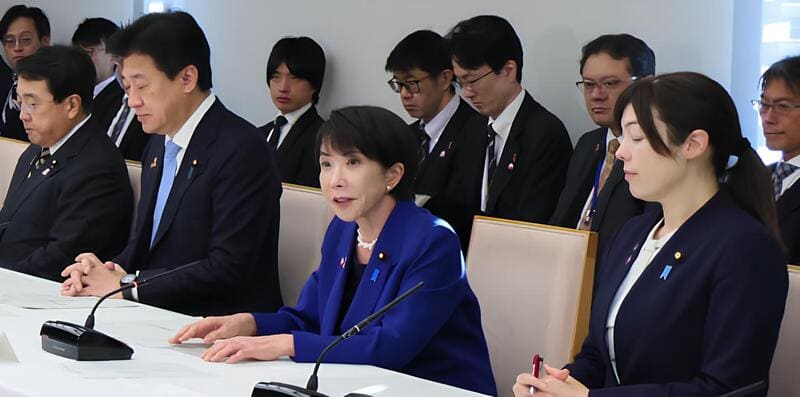
World Geostrategic Insights interview with Kazuto Suzuki on how Japan is adapting its economic security policy to evolving global geopolitical challenges and emerging technologies, such as artificial intelligence and quantum computing.
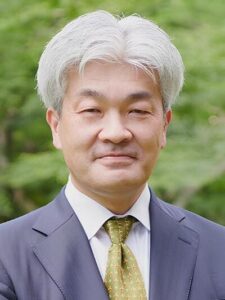
Dr. Kazuto Suzuki is a distinguished Japanese academic, currently Professor of Science and Technology Policy at the Graduate School of Public Policy, University of Tokyo, and Director of the Institute of Geoeconomics. He is an internationally recognized expert on space policy and national security issues, and he has been the President of the Japan Association of International Security and Trade.
Q1 – In November 2025, Prime Minister Sanae Takaichi ordered a review of the Economic Security Promotion Act, enacted three years prior, to address the rapidly changing and severe international security landscape. What are the core objectives of Japan’s economic security policy under the revised Economic Security Promotion Act?
A1 – The Economic Security Promotion Act (ESPA) amendment has five key points. First, to support overseas operations of companies, it will assist Japanese companies in shipbuilding and telecommunications businesses and supporting infrastructure construction for allies like the United States and like-minded nations. Second, it aims to enhance data protection. While Japan has historically been considered vulnerable in cybersecurity, leaks of personal information and technology-related data pose risks to Japan. Furthermore, data such as genomic information is also considered a risk to economic security. Third, it focuses on strengthening supply chains. Whereas past efforts centered on physical goods transactions, this amendment aims to enhance resilience in services, including the installing undersea cables. Fourth, it involves protecting critical infrastructure. While 16 sectors have been designated as critical infrastructure, this amendment adds sectors like healthcare. Fifth, it involves establishing a think tank focused on economic security. To strengthen economic intelligence, a think tank will be established under the National Security Secretariat. Its purpose is to collect information and utilize its analysis to inform economic security strategy.
Q2 – How does the 2025 policy framework balance the need for national security with the principles of free trade and open markets?
A2 – It is not just 2025. The policy principle of Japan is to segment the strategic sectors from other non-strategic sectors. These strategic sectors are defined in the ESPA. These are Antimicrobial substance preparations, Fertilizers, Permanent magnets, Machine tools and industrial robots, Aircraft parts, Semiconductors, Storage batteries, Cloud programs, Flammable natural gas, Critical minerals, Ship parts, Advanced electronic components.
Q3 – What are the primary challenges Japanese companies may face in implementing the government’s economic security directives?
A3 – Under the Economic Security Promotion Act, regarding supply chain resilience, companies apply voluntarily, and the government supports those companies working to strengthen their supply chains. Therefore, companies are not obligated to comply with the law if they do not wish to. Regarding the protection of critical infrastructure, companies must obtain government approval when procuring systems from foreign countries. Consequently, companies cannot procure systems from hostile nations, even if they are cheaper or more efficient. For companies, economic security is necessary to reduce their own business risks. In this sense, the issue is less a challenge and more a question of how much companies consider economic security risks.
Q4 – Are there major differences between the Japanese approach to economic security and that of the United States and Europe, particularly with regard to the balance between national security and free trade principles?
A4 – The United States views economic security as a matter of national security, considering maintaining superiority over other nations as possessing offensive power. Consequently, the weaponization of the economy is prioritized as a national policy tool rather than for corporate profit. Furthermore, dependence on China, a strategic competitor, is recognized as a threat to U.S. security, making the government responsible to diversify supply chains. Europe, while advancing economic security policies led by the European Commission, lacks sufficient communication with businesses and also faces inadequate budgets for investment. Japan’s approach emphasizes dialogue between government and business, with the government actively providing fiscal support to sustain corporate activities when necessary.
Q5 – What role do concepts like “strategic autonomy” and “indispensability” play in shaping Japan’s approach to emerging technologies like AI and quantum computing in 2025?
A5 – Since before 2025, strategic autonomy and strategic indispensability have been central concepts in Japan’s economic security. While AI and quantum computing are considered future technologies, the US and China already hold overwhelming dominance in AI. To prevent being dominated by these countries, Japan aims to enhance its strategic autonomy by developing its own AI. Regarding quantum computing, as it has not yet reached the practical application stage, it is expected that advancing research will enable Japan to have a sort of strategic indispensability.
Q6 – Which emerging technologies (e.g., AI, quantum computing, biotechnology) do you believe will be most critical in shaping future international relations, and where does Japan hold a competitive advantage?
A6 – While all these technologies could potentially impact international relations, it remains unclear whether they will become critical. AI is expected to significantly influence military and economic activities, but its mechanisms will likely be adopted as a universal technology across many nations, similar to the internet. Therefore, possession by a specific nation may not necessarily translate into international political power. Quantum computing will bring an overwhelming leap in computational speed, but it too will become a universal technology, with its products likely used globally in commercial applications. Regarding biotechnology, while significant disparities in fields like drug discovery will arise depending on who possesses the technology, leading to commercial gaps, it is unlikely to directly impact international politics. Japan is advancing research in all these technologies, but it is more accurate to view this as research to avoid being left behind rather than to establish comparative advantage.
Q7 – How does your definition of “geoeconomics”—as the fusion of geopolitics and economy—inform the Institute of Geoeconomics’ (IOG) core research agenda?
A7 – The IOG’s core agenda includes analysis of China’s situation, economic security policy, analysis of regulatory trends in Europe and the United States, analysis of the defense industry and defense technology, and analysis of emerging technologies. These are based on the concept of geoeconomics. Geoeconomics studies how nations wield the economy as a weapon in this new era and the power this confers upon them. By understanding the balance of power between nations not solely through the frameworks of military strength or geopolitics, but through the lens of geoeconomics, we believe the true nature of international relations becomes apparent.
Dr. Kazuto Suzuki – Professor of Science and Technology Policy at the Graduate School of Public Policy, University of Tokyo, and Director of the Institute of Geoeconomics.
Image Source: Prime Minister’s Office of Japan (On November 7, 2025, Prime Minister Takaichi helding the eighth meeting of the Council for the Promotion of Economic Security, on November 7, 2025).