



World Geostrategic Insights interview with Mohammad Khatibi on the fragile ceasefire in Gaza, and conditions for a sustainable peace, the tensions surrounding Iran’s nuclear program, the possibility of a new military confrontation between Iran and the United States, or Israel, in the near future, and the complex challenges to Iran’s regional influence.
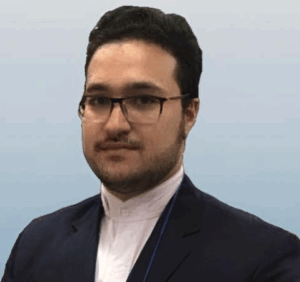
Mohammad Khatibi is an Iranian political analyst, television journalist, and specialist in Middle Eastern affairs. He provides research, expert analysis, and commentary on international relations, Iranian foreign policy, and geopolitical strategy, appearing frequently on various international news channels. Mohammad trained at the School of International Relations of the Iranian Ministry of Foreign Affairs and has acquired a solid academic background in government organizations, diplomacy, and NGOs.
Q1 – The ceasefire in Gaza currently in effect as part of a US-brokered peace plan has been repeatedly violated by both Israel and Hamas since it began on October 10, 2025. Will the ceasefire last long enough to facilitate a transition to a more permanent agreement? What are the essential elements for a sustainable peace in the Israeli-Palestinian conflict, from an Iranian perspective?
A1. The ceasefire remains fragile as Israel continues to violate it, and its durability will hinge on both regional pressures and Israel’s political will. While external actors influence the situation, the underlying issues of the conflict, including the broader Palestinian question, are unlikely to be resolved through a temporary ceasefire. Iran sees Hamas as a vital player in the Palestinian cause and would oppose any peace deal that disarms or sidelines these groups. Iran’s broader regional objectives—such as countering Israeli influence and challenging Arab normalization with Israel—shape its stance on peace negotiations.
Historically, Iran has been skeptical of US-led peace efforts and would prefer a multilateral approach, involving countries like Russia and China, to ensure the Palestinian issue is addressed fairly. In sum, while a ceasefire may offer temporary relief, a lasting peace agreement would require addressing the deep-rooted issues at the heart of the conflict and securing broad international consensus, including Iran, to tackle both the Palestinian question and the wider regional dynamics.
Q2 – What is your assessment of the possibility of a new direct military conflict between Iran and the United States, or Israel, in the near future, and what measures do you consider necessary to ease tensions?
A2 – The dynamics are now significantly more volatile following the June direct conflict. While the scale of the confrontation has reached new heights, it’s crucial to recognize that both Iran and the U.S. are deeply invested in avoiding a broader regional war that could destabilize the entire Middle East. Iran’s leadership, while focused on defending its sovereignty and regional interests, understands the catastrophic consequences of a prolonged conflict with Israel and the U.S.
However, Israel’s determination to “finish the job”—particularly with regard to Iran’s nuclear program—may drive it toward further military operations, escalating the situation further. A renewed diplomatic effort is essential to reach a mutual understanding, yet the U.S. insistence on zero nuclear enrichment for Iran remains a major obstacle, as it is unlikely to lead to productive negotiations.
Q3 – Given the current tensions over Iran’s nuclear program, what kind of “flexibility” is needed from both Iran and its Western counterparts to reach a partial or comprehensive agreement?
A3 – Reaching a partial or comprehensive agreement over Iran’s nuclear program requires significant flexibility, particularly from the U.S. Iran is willing to limit its nuclear advancements, such as capping enrichment levels just above zero and rolling back its stockpile of enriched uranium, while also agreeing to greater transparency and more intrusive inspections by the International Atomic Energy Agency (IAEA) to reassure the West that its nuclear activities are peaceful.
However, Iran views its missile program and broader regional dynamics as red lines, making them non-negotiable. On the Western side, particularly the U.S., flexibility would involve accepting a level of enrichment that reflects Iran’s right to civilian nuclear energy, while ensuring that any enrichment remains far below the threshold for weapons-grade material. This could be accompanied by phased sanctions relief tied to Iran’s compliance, providing a clear incentive for Tehran to cooperate. Additionally, the U.S. must offer security guarantees to Iran, ensuring that the nuclear negotiations are not a pretext for regime change or military escalation, which remains a fundamental concern for Tehran.
Q4 – In your opinion, could Iran be fully reintegrated into the Western economic and financial system?
A4 – Full reintegration of Iran into the Western economic and financial system is theoretically possible but highly complex, requiring significant shifts in both Iranian and Western policies.
Q5 – Given the complex history of Arab-Iranian relations, what are the main diplomatic avenues for improving relations between Iran and its Arab neighbors, particularly Saudi Arabia and Egypt?
A5 – Improving relations between Iran and its Arab neighbors is a complex challenge that requires a multifaceted approach. A key step is reducing anti-Iran sectarian rhetoric and opening direct communication channels for dialogue and trust-building. Regional security cooperation is also crucial, focusing on creating mechanisms to manage and de-escalate conflicts, especially in Yemen and Iraq, where Iranian and Arab interests often clash.
Joint efforts in counterterrorism and fighting radicalization are also important, as all parties face common threats from extremist groups like ISIS. While significant obstacles remain due to deep political and ideological divides, focusing on shared goals—such as regional stability, counterterrorism, and economic cooperation—could lay the foundation for long-term improvement. However, real progress will require difficult compromises from all sides and recognition that cooperation is essential for lasting peace and security in the Middle East.
Q6 – In recent years, Tehran has exerted a strong influence on Iraqi politics, including through the consolidation of its representatives in the Axis of Resistance (AOR). What is Iran’s current role in Iraq? Is Iran still the main foreign power in this country, or is it losing influence, not least due to pressure from the United States?
A6 – Iran-Iraq relations are increasingly under strain due to external pressures, particularly from the United States. Tehran became more active in Iraq following the rise of ISIS, providing critical support to help Iraq defend itself, which strengthened their partnership. Over the years, Iran has strategically backed key political players in Iraq, many of whom gained significant power, especially after the defeat of ISIS.
However, the U.S. maintains a military and diplomatic presence in Iraq, with a focus on countering Iran-aligned groups, and U.S. sanctions on Iran further limit Iraq’s ability to deepen ties with Tehran. Additionally, Iraq’s ongoing political instability and the complexity of its government formation process have made it more difficult to foster stronger cooperation with Iran. While Iran remains a key ally for Iraq, the partnership is increasingly challenged by external pressures, particularly from the U.S. and other regional powers.
Q7 – Relations between Syria and Iran have gone from a strong strategic alliance under the Assad regime to the current tense relationship under the new transitional government led by Ahmed al-Sharaa. What specific actions has the new Syrian government taken to actively distance Syria from Iran militarily, diplomatically, and economically? What measures is Iran taking to maintain its influence in post-Assad Syria, and what challenges does it face?
A7 – Syria has cut ties with Iran under the new transitional government led by Ahmed al-Sharaa. The government has actively pursued efforts to rebuild ties with Arab countries and the international community, shifting away from Iran in favor of reintegration into the Western economy and strengthening relations with nations like Saudi Arabia and the UAE, which have long opposed Iran in Syria. As part of this strategic pivot, Syria is seeking new trade partners to support its reconstruction efforts, focusing on deepening economic ties with Russia and other Arab countries rather than Iran.
Growing international opposition, particularly from the U.S., Israel, and Sunni Arab states, complicates Damascus’ relationship with Tehran, as these nations actively work to prevent Iran from re-solidifying its partnership with Syria. Additionally, Syria’s internal political dynamics, including the need to manage relations between various factions, further complicate the prospects for a return to closer ties with Iran, as Damascus carefully navigates its foreign policy in a highly sensitive and complex environment.
Mohammad Khatibi – Foreign Policy Analysis, Middle East Politics, Broadcast Journalist. Teheran, Iran.