



India’s strategic outlook is undergoing a significant shift, one that seeks to restore the nation’s long-neglected maritime identity. With a revised coastline of 11,098.81 kilometres and a central location in the Indian Ocean Region (IOR), India is not just a littoral state — it is a maritime civilization.

For centuries, India’s maritime tradition flourished — from the naval conquests of the Chola dynasty to thriving trade with Africa and Southeast Asia. However, colonial rule and a post-independence continental focus sidelined our oceanic vision. The 21st century, marked by a global shift toward the Indo-Pacific, offers India the opportunity to course-correct.
Historically, India thrived on maritime engagement. Ancient ports such as Lothal, Bharuch, and Poompuhar were bustling centres of trade and innovation. The Chola navy projected influence across Southeast Asia, while Indian seafarers and merchants played key roles in shaping transoceanic cultural and commercial networks. Yet, post-independence India adopted an overwhelmingly continental orientation, leaving its vast oceanic frontier largely underutilized.
This is now changing. India’s SAGAR vision — Security and Growth for All in the Region — announced in 2015, marks a pivotal moment in India’s maritime diplomacy. It reflects an understanding that peace, stability, and prosperity in the IOR are not only regional priorities but critical to India’s future. At its core, SAGAR seeks to promote inclusive development, maritime domain awareness, and capacity-building through partnerships — especially with island nations and coastal economies.
Meanwhile, the Sagarmala Programme aims to transform India’s ports into economic hubs by improving logistics, reducing costs, and connecting hinterlands to global markets. It also recognizes the untapped potential of the blue economy, spanning fisheries, renewable energy, marine biotechnology, and coastal tourism — sectors that can contribute significantly to livelihoods, sustainability, and national GDP.
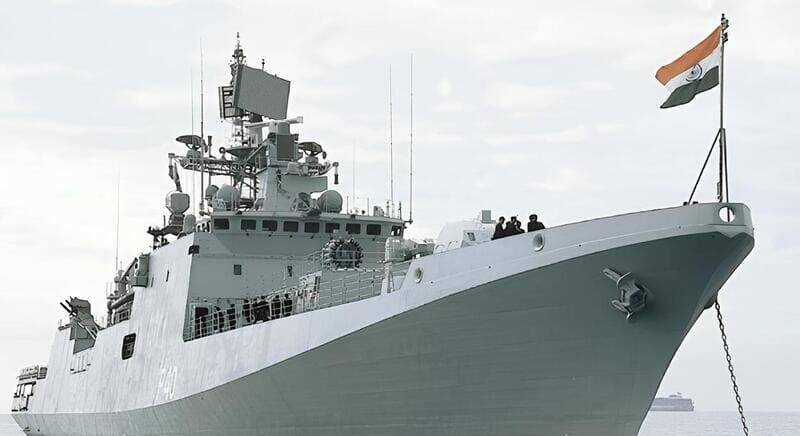
India’s maritime security architecture is likewise evolving. The Indian Navy’s increasing blue-water capabilities, its role in humanitarian and disaster relief (HADR) operations, and coordinated patrols with partner nations such as Australia, France, and Indonesia demonstrate India’s emergence as a net security provider in the IOR. Engagements through multilateral platforms like the QUAD, Indian Ocean Naval Symposium (IONS), and the Indian Ocean Rim Association (IORA) further reinforce this shift.
Yet, India’s maritime resurgence faces significant challenges. China’s assertive naval footprint in the IOR, piracy, transnational maritime crimes, illegal fishing, and the looming threat of climate change to coastal communities demand a coordinated and sustained response. India must strengthen its maritime governance, invest in ocean science and technology, and deepen partnerships with both major and middle powers in the region.
The reclamation of India’s maritime prowess must also be seen as a broader civilizational imperative — to once again be a nation that looks to the seas not just for security and commerce, but for inspiration and leadership. The Indian Ocean is not just a strategic theatre; it is a connector of cultures, an engine of opportunity, and a frontier of sustainability.
As India aspires to become a developed nation by 2047, integrating maritime consciousness into national planning — from education and research to infrastructure and diplomacy — is essential. Reclaiming our maritime destiny is no longer a choice. It is a necessity.
Author: Dr. Aishwarya Singh Raikwar – Assistant Professor, School of Management Studies, Swami Rama Himalayan University, Dehradun, Uttarakhand, India.
(The views expressed in this article belong only to the author and do not necessarily reflect the views of World Geostrategic Insights).