



By Muhammad Naseem
The recalibration of Pakistan’s diplomatic and economic relations with Washington is not just a trade agreement, but a realignment of strategic approaches to focus on how to leverage evolving global dynamics to the advantage of its national interests.
Pakistan, over the years, has been in a position of trying to stabilize its economy and balance its relations between the United States and China. The July 2025 bilateral trade agreement with Washington is a breakthrough, marking an instance where “Pakistan escaped punitive tariffs, gained preferential treatment in exports, stimulated new investment and regained strategic relevance”.
The trade accord, officially announced on July 30, 2025, by President Donald Trump, promised the U.S.-Pakistani partnership in the exploration of Pakistan’s enormous oil reserves, while simultaneously lowering tariffs on Pakistani imports. Trump also emphasised that the two nations has reached a historic deal on energy exploration and trade facilitation, which Pakistan’s Ministry of Commerce confirmed. For Islamabad, this was a diplomatic coup: rather than receiving a paralyzing 29% tariff, which would have brought Pakistan to its knees, it received a lower 19% tariff- the most favourable of any in South Asia, beating India and Bangladesh.
The stakes are immense. The exports made by Pakistan to the U.S., estimated at approximately $5 billion a year, are a lifeline to industries such as textiles, surgical equipment, leather products, and information and technology services. It would have cost the economy between $1 billion and $1.4 billion in lost output, right at a time when an already teetering economy is on an IMF Extended Fund Facility program. Instead, “the partnership would create jobs, protect the market, and restate Pakistan’s strategic pertinence in a multipolar order.”
The market responded with enthusiasm to the optimism. Following a few days of the agreement, the Pakistan Stock Exchange 100 (KSE-100) index surged by almost 1,000 points, marking the quickest rise in several months as investors interpreted the agreement as a signal of restored foreign confidence and reduced uncertainty. Such financial buoyancy was more than just numbers; it demonstrated that Pakistan has achieved a landmark in business confidence, showcasing a level of resilience under pressure.
The architecture of the deal suggests that Pakistan will reap numerous long-term benefits. Firstly, the oil exploration provision is a potential game-changer. Pakistan has long struggled with the issue of chronic energy shortages, as it is heavily reliant on imported fuels that deplete its foreign reserves. Pakistan can progress towards achieving energy security by opening its reserves to U.S. technological skills, investment, and minimising its balance-of-payments vulnerability. The symbolism of the United States publicly confirming the viability of the Pakistani energy prospect is a crucial indicator, even though the specifics are still being discussed, and it is a sign of revived trust in its marketability.
Second, the online aspect of the transaction demonstrates Islamabad’s progressive thinking. Pakistan would concede to suspend its taxes on American companies on digital services, a move that critics have framed as an act of concession, but in reality a bargaining manoeuvre: the rollback would allow Pakistan to have preferential treatment of its expanding exports of IT and startups, which its youth population has already established dynamic global connections. Pakistan has a significant youth bulge comprising 65% of its population, which is likely to be advantageous in collaborations related to IT and digital infrastructure. These sectors have a higher export value and transfer of knowledge.
Third, the agreement has placed Pakistan at an advantage in the regional competitive matrix. A country that was once regarded as a reliable ally of Washington in South Asia, India has been experiencing increased tensions with the U.S. regarding oil imports from Russia and trade restrictions. In contrast to India, which is facing tariffs of up to 25% on its main exports, Pakistan was granted the lowest regional tariff regime at 19%. Such a comparative advantage would help exporters secure a market share in areas dominated by Indian manufacturers, thereby further enhancing Islamabad’s trade profile.
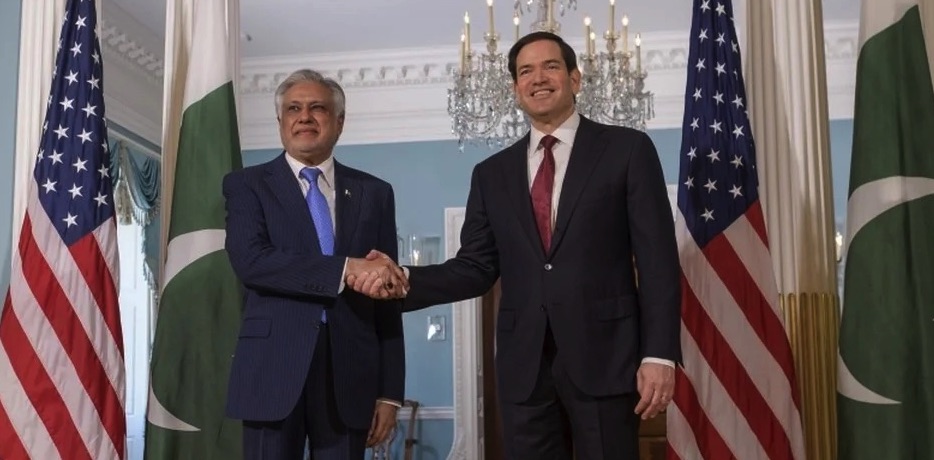
The agreement has far-reaching diplomatic implications beyond its economic implications. U.S. Secretary of State Marco Rubio congratulated Islamabad on Pakistan’s Independence Day in August 2025, specifically mentioning American interest in investing in the Pakistani mineral industry, including its largest deposits of gold and copper, such as the Reko Diq gold and copper mine, Such an overture is indicative of U.S. awareness of Pakistan’s centrality in the politics of resources. It is the era where the competition over critical minerals has turned into a battleground between the U.S and China.
The kind of attention is strategic autonomy, not dependence, in the case of Islamabad. Pakistan is engaging in what scholars refer to as multi-alignment by diversifying its partners, attracting U.S. capital in energy and IT, while still pursuing cooperation with China in infrastructure and Russia in defence. This puts the state in a position to reap the most significant benefits without being locked into zero-sum great-power conflicts. In this regard, the deal represents a form of pragmatic projection of sovereignty: Pakistan sets the rules of its interaction, striving to develop in many respects and avoiding its over-reliance.
The Prime Minister Shehbaz Sharif was jubilant about the deal, considering it a turning point. In speech, he praised President Trump’s leadership and stressed that the accord would secure Pakistani workers and ensure the maintenance of export revenues, marking a new beginning in bilateral relations. It is widely accepted in the United States, particularly in business circles and among exporters themselves, who now believe they have a chance to increase their access to the world’s largest consumer market.
This agreement can be characterised by three challenges as Pakistan converts it into long-term benefits. First, implementation will be crucial. Pakistan needs to establish clear regulatory frameworks for oil and mineral exploration to reassure foreign investors and prevent bureaucratic delays. Second, there has to be domestic legitimacy. Although the deal has attracted cheers among business leaders, the government needs to explain its benefits to the ordinary people so that they do not perceive that compromises were made at their expense. Third, Pakistan should ensure it hedges against the unstable politics of the U.S. Although the Trump administration has preferred engagement, institutionalisation of the commitments is needed to endure electoral cycles in Washington.
The U.S.-Pakistan trade agreement of 2025 concerns not only tariffs and oil. It is rather about acknowledging Pakistan as a strategically relevant nation, its ability to navigate structural power shifts, and its determination to earn a respectable position in Global Politics. Islamabad has successfully established the foundation for economic resilience and strategic diversification by transforming a looming crisis into an opportunity. The dialectic of this realignment is that the pressure can be transduced into leverage, dependency into autonomy and transactionalism into transformation by Pakistan. This accord will not be remembered just as a bargain but as the beginning of Pakistan reclaiming its role in the international community.
Author: Muhammad Naseem – Researcher and analyst, graduate in International Relations from NUML, Islamabad, Pakistan.
(The views expressed in this article belong only to the author and do not necessarily reflect the views of World Geostrategic Insights).
Image Credit: AP (US Secretary of State Marco Rubio with Pakistani Deputy Prime Minister and Foreign Minister Ishaq Dar, on July 25, in Washington).