



First part of a series entitled Global Ideology and Human Value by Sunny Lee, Founder and President at CGPS (Center for Global Peace and Security), and Director at IKUPD (Institute for Korea-U.S. Political Development), Washington DC.
A new global trend of democratic leadership is rapidly transforming to technology and mineral security, impacting on economic prosperity. In particular, cutting-edge technologies related to military, industry, economy, and diplomacy would be considered as the most critical factor to define a superpower.

Democracy highly counts on technological superpowers so that it reorganizes the critical structure of the global map initiating people’s life and human rights. Currently, Korea is the top first in democratic potential, surpassing technological superpowers such as the U.S., Germany, China, and India. Without Korea’s semiconductor technologies, industrial companies in international society can’t produce competitive products.
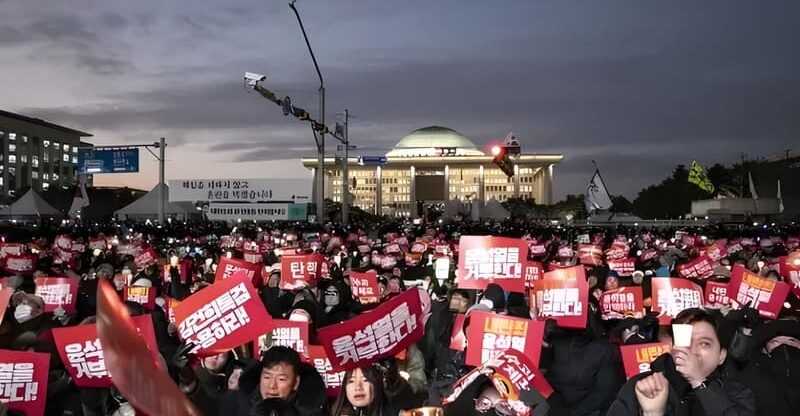
Moreover, Korea recently showed such an amazing democratic recovery from the former President Yoon SeukYeol’s self-coup, who was immediately impeached while awaiting the death penalty. Korea’s KOSPI recorded 6,305.67 on February 27, 2026 from 2,399.49 in the time of martial law on December 3, 2024. KOSPI jumped up to 75.9% from -7.3% and KOSDAK 37.5% from -21.85%. It is 4,3 times compared to the growth rate of S&P 500 that Korea becomes absolutely the number one in the global stock markets. The world would be astonished by the miracle of Korea’s fastest democratic recovery as the successful model leading the global society.
As an example, on January 19, 2026, Korean President Lee JaeMyung and Italian Prime Minister Giorgia Meloni agreed to elevate bilateral relationship to a future-oriented strategic partnership and advanced industrial cooperation. They focus on expanding trade, fostering SMEs, and collaborating with high-tech industries to drive future growth by strengthening industrial competitiveness and supply chain resilience. Cultural exchange also goes beyond economic benefits, initiating social trust and mutual understanding as an advanced democratic country.
Both leaders signed three MOUs on semiconductors, disaster management, and cultural heritage protection. In particular, cooperation in advanced manufacturing sectors such as AI, semiconductor, aerospace, and critical minerals was emphasized. President Lee JaeMyoung revitalized the Korea-Italy Business Forum as a platform for resolving business challenges and leveraging Italy’s robust SME ecosystem. He highlighted that the joint commitment and action on global issues and peacebuilding will bring a positive impact on the Korean Peninsula and the world. Prime Minister Meloni also affirmed Korea as a key partner of G7 and promised a continual multilateral cooperation in economy, industry, science, and culture.
Italy-Korea strategic partnership will also reconstruct the basic norms of democracy with a prospective vision. Italy has original technologies as the center of Europe toward the global markets and Korea could be the hub of highly advanced manufacturing industry through the reorganization of supply chain and capital. With their industrial synergy effects, they also flourish excellent cultural heritage and pop culture to amuse human society. Such multi-layered cooperation works as a benchmark for global partnerships and enhances joint capabilities to address global challenges and promote democratic achievements.
Democracy and New Global Order
There are three critical partnerships to boost democracy and reorganize global order through technological adventures. As a global potential leader, Italy and Poland’s national competitiveness has been highly upgraded as the central power in Europe by industrial and military partnership with Korea. Korea also fosters strategic partnership with Brazil in South America and also Singapore and Philippines in Asia, in addition to Turkey, UAE and Egypt in the Middle East. In particular, Korea’s shipbuilding entrepreneurs with superior manufacturing capacity for export to Canada and Saudi Arabia account for billions of dollars.
First, it is Italy-Korea’s strategic partnership. Italy is a rising star in Europe with superior technologies and manufacturing background to design such an independent European power map as the main country of G7. Italy initiates its potential as a global leader, while precisely recognizing the new global leadership based on technology alliance. Especially, Italy-Korea cooperation in semiconductor, AI and robotics directly resolves the population decline crisis.
Italy and Korea set up a 2026-2030 Action Plan with a solid work schedule in military and aerospace as matching Lee JaeMyoung Administration’s policy focused on pragmatism and manufacturing capacity. It signifies a mutual strategic cooperation in which Korea establishes a mass production base via Italy to dominate European markets. For example, although Italy’s Leonardo S.p.A., has core defense technologies and sophisticated blueprints, it definitely needs Korea’s fast manufacturing capability and price competitiveness. Such joint ventures of Italy and Korea change the critical structure of global defense markets, propelling fast delivery of customized military weapons to overall areas through Italy in Europe.
Second, it is Korea-Poland’s deepening strategic partnership beyond defense deals. By importing superior military weapons from Korea, Poland has become the military superpower in Europe since the war in Ukraine. Their rapidly expanding relationship originally comes from accumulated trust, economic integration and cultural exchange. As well, such a prospective relationship has become the main part of the Polish economy that more than 700 Korean companies operate in Poland such as Samsung, SK, and LG Energy Solution. Bilateral trade between Korea and Poland has remarkably surpassed $10 billion annually and Korean investors lie in its market size, location and access to the EU’s single market with more than 500 million consumers. As a result, the IMF reports that Poland ranks among the world’s 20 largest economies by GDP in 2025.
As well, Poland’s defense partnership has proved that Korean companies are diligent, credible and technologically advanced such as Korean shipbuilding is considered as the most advanced technology in the world, suited to the operational requirements of the Baltic Sea. Poland pursues to move beyond simple procurement toward greater technology transfer and Polish localized production, focusing on joint manufacturing and marketing. Consequently, Poland accounts for 60% of lithium-ion battery production in Europe as the top first country surpassing Germany and the UK, largely due to Korean investment. Korea has also kept strong footprints in Poland such as AI, semiconductors, fintech, space technology, and specialized defense components.
Third, it is Brazil-Korea’s partnership as the successful case of the new global leadership, simultaneously developing democracy and economy. The complementarity between the two countries creates solid foundations for strengthening the bilateral partnership. On February 24, 2026 in Seoul, as the core member of BRICS, the Brazilian President Lula highlighted that Brazil and Korea both have fulfilling opportunities through cooperation and exchange of experiences in strategic areas. He emphasized that Brazil would learn Korea’s technological sophistication, especially on the issue of energy transition with critical minerals.
Brazil and Korea have a trade exchange of $11 billion. Korea is Brazil’s 4th trading partner in Asia, tending to grow more in speed. President Lee JaeMyoung willingly signed agreements with Lula in variable areas such as technology, agriculture, medicine production and expansion of cultural and educational exchanges. He surely announced that these agreements will explore mutual development through a synergy effect of Korea’s technological superiority to upgrade Brazil’s economic prosperity with an annual growth rate of 4%. In addition, Lula’s economic success shows that Brazil’s Gini coefficient dropped to the lowest level in history as it explored not only the economy but also democratic welfare based on human equality. Such remarkable achievements and experiences will be fully boosted in the cooperation with Korea’s high technologies as the live model of strategic partnership in international society.
Global Leadership for Democracy and Human Rights
Democracy is now facing variable challenges through dictatorship and authoritarian governments. However, it can also be a kind of testimony of global leadership and a turning point to flourish democratic achievements. Ironically, critical crises against democracy and human rights are dramatically enhancing superpower’s status for global peace and security.
First, it is US role as a global leader to eradicate worldwide dictatorship and simultaneously initiate democracy and human rights conditions. Since September 11 Attacks, the United States have conducted their democratic leadership by controlling regional conflicts or wars. For example, after Trump arrested Maduro who dilapidated Venezuela’ economy and democracy, rapid regime change has induced national normalization. Inhumane torture chambers were dismantled while releasing political prisoners. Venezuela’s economy will be soon settled down by catching up murderous inflation rates through cooperative oil development with US refine technology. It will also impact Cuba’s democratic reform which absolutely relies on Venezuela’s oil and Maduro’s dictatorship. In the Gulf War, the U.S. executed the death penalty of belligerent dictator Hussain and propelled Iraq’s democracy and national development.
Trump also encouraged Iranians to terminate Khamenei’s dictatorship and finally he was killed by U.S. attack, expecting Iran’s economic development and democracy. Furthermore, the U.S. has supported Ukraine $300 billion three times higher than Europe and US defense budget in 2026 FY is $1.1 trillion much more than the total amount of NATO countries for Europe’s security. The U.S. spends most of its military expenses for regional security as hindering authoritarian dictatorship’s expansion against democracy from Europe to the Indo-Pacific area.
Second, it is North Korea’s human rights violation and its hereditary dictatorship. North Korea rapidly increases surveillance, information controls, and restrictions on market activity despite deepening food insecurity. Kim JongUn’s totalitarian government is surely implicated in human rights abuses including abduction, severe punishment, and overseas deployment of workers or soldiers under such abusive conditions in the Ukraine War. As a result, the UN General Assembly in December 2024 and the Human Rights Council in April 2025 repeatedly adopted resolutions condemning North Korea’s grave human rights violations.
However, South Korea’s superior democratic system and economic competitiveness will motivate North Korea’s opening and democratic adventures as the Lee Jae Myung Administration focuses on developing South-North exchange routes. If not only South Korea but also international society can freely visit North Korea, its human rights violations will be mitigated and political camps will shut down. As a result, economic sanctions will be lifted so that foreign investment and international markets will boost North Korea’s economy. It could be an initiative that North Korea turns into a normal country in the international society, willingly discarding nuclear weapons and concentrating on economic development. South Korea, the U.S. and international communities should cooperate to achieve such a successful outcome how democracy can change a closed society and authoritarian government like North Korea.
Third, it is China’s minority pressure against human rights. According to Human Rights Watch’s 2026 World Report, China sharply intensified repression, targeting minorities, social activists and Hong Kong’s democracy movement while expanding religious control and overseas surveillance. It describes critical aspects of shrinking freedom, tighter ideological control, and growing global concern. Minority communities such as Tibetans and Muslim Uyghurs, and ethnic and religious groups in Xinjiang face severe pressure against humanity. Uyghurs remain imprisoned by preventing independence movements and public activities related to the Dalai Lama in Tibet cause drastic suppression. Hong Kong also experienced further erosion of civil liberties since the National Security Law came into force 5 years ago.
If Xi Jinping willingly resolves all these human rights violations, China’s position as a global power will be much upgraded. Although Xi Jinping insists on authoritarian dictatorship based on the Communist Party, China would be newly evaluated and recognized as an advanced country following up the global standard of democratic value. Xi Jinping should speculate what a superpower really means not from economic and military dominance but social conditions, compromising human dignity and political freedom. Subsequently, his new ambition of ‘Chinese Dream’ would reorganize China’s national identity to improve human rights.
Fourth, it is the strength of dictatorship or transformation toward authoritarian government against democracy such as South Korea’s former President Yoon SukYeol’s self-coup. As tempting to turn over democratic system, his hot-tempered martial law failed to achieve a coup d’état. Still, many countries in Africa, South America, and Asia eagerly conduct self-coup to reinforce dictatorship or power continuance through constitutional reform. On the reverse, it triggers civil resistance and democratic movements such as Myanmar, Nepal, and Iran.
On December 3, 2024, Yoon SukYeol unexpectedly declared emergency martial law, citing the threat from pro-North Korean anti-state forces and curtailing efforts processed by the Democratic Party. It lasted just a few hours before being lifted unlike successful cases of around 80% of self-coup. Over half of self-coup targets the judiciary or the legislature, while around 40% seeks to undermine democratic elections or prevents election winners from taking office. The rest target political elites or a nominal executive such as Yoon plotted to grab executive power from the opposition-led legislature. Nonetheless, highly awakened civilians associated with superior democratic politicians successfully prohibited it without any bloody sacrifice. Such a highly recognized K-democracy was fascinated by people as a worldwide syndrome to resist dictatorship or authoritarian government.
Democratic Transformation toward Global Prosperity
Currently, the global society is exposed to a complicated environment of ongoing structural transformation and the rapid spread of technologies through the fourth industrial revolution. It is the biggest challenge of current democratic institutions and their established forms of governance and regulation. At the same time, such new environments also bear variable opportunities to strengthen and expand the existing democratic framework to reflect a more complicated and interdependent world.
These issues involve the impact of ongoing and simultaneous changes as underpinning beneficial democratic regulation. As specifically combining economic, legal and political perspectives, it is necessary to explore how some adaptations apply to existing democratic institutions. Moreover, it further improves the functioning of democracies while delivering additional economic benefits to citizens and society as whole for global prosperity. As a result, a potential direction will be established by supporting democratic decision-makers, regulating complexity as well as tackling ongoing and future challenges.
First, digitalization, social networks, artificial intelligence (AI) and genetics would be potentially disruptive innovations when they make the regulatory environment more rapid, fluid, and uncertain. Although technological developments offer a large scale of potential welfare achievements, they also bring negative outcomes. Policy-makers can pursue and promote interventionist policies encompassing alternative views of ethics and individual rights. The European Commission’s Joint Research Centre (JRC) pointed out that such a disruptive innovation has the potential to be instrumentalized in the pursuit of egoistic and non-ethical goals, bypassing or undermining existing regulatory standards in democratic countries.
Second, the rise of new global economic powers based on relatively autocratic tendencies might be combined with an increasingly uneven distribution of wealth. Climate change is such a critical case that democratic, economic, social and environmental progress can’t always go together. There is also an important estimation that only 1 % of the world population would possess two thirds of global wealth in 10 years. Meanwhile, autocratic tendencies could expand the lack of universal access to social protection and quality of education and furthermore, the lack of professional opportunities will impact on the most vulnerable. As a result, democratic participation and civic engagement could be more confrontational.
Third, globalization and reorganization of supply chains at the international level signify that the world’s economies become highly interdependent and much more complicated. Consequently, such growing interdependence could force governments to rethink their policies and organizational forms, even making it difficult for them to tackle regulatory challenges in a timely manner. Nonetheless, public administrations willingly develop systemic approaches and design coordinated solutions strategically across actors, sectors, and skills while building up the possibility of new alternative paths for democratic development.
Rethinking globalization to rebuild the middle class and save the planet, Professor Dani Rodrik at Harvard suggests a new vision in his book, published in 2025, ‘Shared Prosperity in a Fractured World.’ He emphasizes that fighting climate change, saving democracy, and eradicating poverty are urgent global challenges and shows how the world can achieve all three objectives simultaneously. These dilemmas can be resolved by accelerating the green transition to achieve a sustainable planet, shoring up the middle class to restore democratic foundations, and hastening economic revitalization in the developing world to end poverty.
The rising tide of authoritarianism has demonstrated an inability to alleviate economic anxieties. Economic nationalism has also raised the specter of increased protectionism as deteriorating prospects for economic growth. Consequently, global prosperity can be explored through new forms of collaborative public-private action to promote renewables and green industries, middle-class jobs, and enhanced productivity in labor-absorbing services. This new vision of globalization will reorganize the legitimate desire of governments by democratic transformation to pursue their economic, social, and security interests simultaneously.
Prospective Vision for Human Society
Contemporary democratic challenges shake the overall global orders but simultaneously, it will be a turning point that the world resets democratic norms and rethinks the intrinsic human value. The prospects for democracy, sustainability, and economic development would be always optimistic through multiple experiments around the world. Still, democracy is the most perfect system and value to boost human society. There is no substitutional ideology to replace democracy with a demand of more advanced and complemented democratism.
Democracy is the ultimate goal to direct the global society to reach, guaranteeing genuine human value. It is also the most critical agenda whether democracy fosters economic growth and development. According to the democracy-economic development nexus by a global time-series dataset, 177 countries with improved GDP per capita favor robust democracy measures, proving impact of democratization on rapid economic growth and development.
The relationship between economic development and democracy has made important progress so that democracy bears a long-run economic benefit. For example, the standard deviation improvement in democracy results in a 96% increase in income per capita through the 19th to 21st century. In addition, democracy fosters the equivalent development of human, social, and political capital with a democratic dividend on economic development.
Therefore, democracy and human value count on the background of economic prosperity and political sustainability. We can’t imagine human dignity in an authoritarian government that dictatorship always parallels the horrible situation against democracy and human rights. Authoritarian activities in the global society have become the biggest challenges demolishing the critical foundations of democratic value. Ironically, such an agitating environment will be a clue to reshape democracy and strengthen an intrinsic human value that human society should pursue and advance together.
Author: Sunny Lee – Founder and President at CGPS (Center for Global Peace and Security), and Director at IKUPD (Institute for Korea – U.S. Political Development), Washington DC. Sunny Lee is the author of 115 academic books in politics (original English and in German, French, Russian, Polish, Dutch, Italian, Spanish, and Portuguese). She is a bestseller writer not only in politics but also in literature on Amazon. Her recent book is titled: “The Influence on Humankind’s Peace through Korean Reunification: Creating new paradigm in social science by interdisciplinary research.”
(The opinions expressed in this article are solely those of the author and do not necessarily reflect the views of World Geostrategic Insights).
Image Source: Bloomberg (Demonstrators protesting against former South Korean President Yoon Suk Yeol outside the National Assembly in Seoul, on December 7, 2024).