



The global economy is undergoing a period of profound transformation: geopolitical tensions, the return of protectionism, and the restructuring of supply chains are making the international business environment increasingly complex.

In recent years, trade agreements between the European Union and the United States of America have been the subject of growing criticism in Europe, as they are considered detrimental to European strategic autonomy and competitiveness. In this context, strengthening economic cooperation between the People’s Republic of China and the European Union is not only a contingent necessity but a strategic choice for the future. Green development, understood as a transition to a more sustainable economy and society, must aim to reduce or eliminate dependence on fossil fuel sources.
As has been clearly perceived by European public opinion, agreements with the United States of America have led to a sharp increase in fossil fuel imports at high prices, which is placing a burden on businesses and households. Furthermore, dependence on fossil fuels hinders the energy transition, as there is an environmental impact that increases emissions and contradicts climate objectives.
On the other hand, the People’s Republic of China exports renewable energy products at competitive prices and advanced technology, such as photovoltaic panels, wind turbines, and storage systems. These supplies make it possible to reduce the costs of the European green transition, accelerate the upgrading of the energy mix, and promote climate and global environmental protection.
Energy is now one of the most promising areas for a qualitative leap in Sino-European cooperation. It offers industrial complementarity for building advanced value chains together. Moreover, the economies of China and the European Union are highly complementary: Europe excels in advanced technology, green standards, and innovation capacity; China has a complete production chain, large-scale manufacturing capacity, and access to emerging markets. By collaborating in areas such as smart manufacturing, digitalization, and green mobility, the two sides can open up markets for each other, integrate industrial and innovation chains, and create new growth drivers. In a context of unstable global supply chains, this complementarity strengthens the competitiveness and resilience of both economies.
The European Union is concerned about the rising costs of global trade resulting from increased protectionism and trade barriers, and calls for trade liberalization as an antidote to protectionism.
Strengthening economic ties between the European Union and China can therefore help diversify risks, expand bilateral trade and investment, ease international political tensions, and ultimately promote a more open and multipolar world economic order.
Through the integration of the Belt and Road Initiative and the EU’s digital and green strategies, Sino-European cooperation can play a constructive role in global trade governance. Global challenges such as climate, energy security, and economic recovery are currently a shared responsibility that no country can tackle alone. On climate, China and the European Union share a commitment to the goals of the Paris Agreement on climate change (22 April 2016). With regard to technological innovation, it is necessary to reaffirm the joint development of clean energy, artificial intelligence, and low-carbon industries, which will lead to global benefits.
On international governance, greater Sino-European coordination is needed to help strengthen balance and stability in the world order. These shared responsibilities elevate Sino-European cooperation beyond the economic sphere to a strategic and, at the same time, human dimension.
Faced with expensive energy, industrial security concerns, and uncertainties in global governance, Europe as a whole, and the European Union in particular, need new partnerships.
Cooperation with the United States of America, as we have emphasized above, entails high economic and environmental costs; In contrast, cooperation with China offers opportunities for green, efficient, and future-oriented development.
Strengthening economic ties between the PRC and the EU not only serves the interests of both sides, but also ties in with the needs of global sustainable development.
On a planet threatened by divisions, cooperation between China and Europe can ensure mutual prosperity and bring stability and confidence at the global level.
And in the context of a profound transformation of the global economy, China now finds itself at the crossroads between media perceptions and economic reality, which point to prospects for general confidence. While narratives focused on slowdown and risks prevail in Western countries, China is leading a new wave of global competitiveness through innovation and industrial upgrading.
It is undeniable that the Chinese economy is also experiencing the difficulties of a transition phase: correction of the real estate sector, recovering consumer confidence, and geopolitical friction. However, these obstacles have not stopped the emergence of new growth engines, which testify to the real resilience of the country’s economy. The new factors are: 1) artificial intelligence, set to become the main driver of development over the next ten years; 2) electric vehicles and green energy: China’s PR already occupies a leading position worldwide; 3) advanced manufacturing: industrial robotics, semiconductors, and smart manufacturing are strengthening the country’s global share.
The above factors are redefining China’s industrial structure and providing stable support for global supply chains.
In recent years, China’s economic policy has shifted from a risk containment approach to a phase aimed at stimulating innovation and unleashing market potential; this is a shift from control to empowerment policies.
Measures include support for private enterprises and the technology sector to attract capital and accelerate innovation; expansion of domestic demand and promotion of consumption to replace the investment-driven model; and green policies that integrate energy transition and industrial upgrading, strengthening China’s role in global climate governance.
This regulatory evolution not only stabilizes domestic expectations but also creates new opportunities for international cooperation, uncovering the high potential of an undervalued market. The Chinese capital market currently presents generally modest valuations but with high growth potential. A huge number of listed companies have untapped growth margins, and leading companies in the aforementioned sectors, such as artificial intelligence, renewable energy, and the digital economy, continue to grow rapidly.
The low participation of foreign investors indicates ample opportunities for returns; the combination of low valuations and robust growth prospects makes the Chinese market particularly attractive for long-term investors.
China is not only a beneficiary of its own development, but also a key player in global trade and investment networks, offering opportunities for comprehensive cooperation.
Its vast market and comprehensive supply chain offer a stable platform for international collaboration; technological innovation and the green transition provide opportunities for cooperation with partners around the world; the expansion of infrastructure projects and the opening of markets strengthen global connectivity and economic dialogue. Interaction not only promotes the optimization of value chains, but also contributes to the stability and growth of the world economy.
The future of the Chinese economy is a story of resilience, innovation, and opportunity. The challenges are real, but they do not obscure the long-term trends. For investors, looking at the People’s Republic of China with a strategic perspective means seizing one of the most promising markets in the world; for trading partners, deepening cooperation with China means gaining advantages in a phase of restructuring global supply chains.
In the next decade, the PRC will not only be part of the risk narrative, but will become one of the main sources of confidence for the global economy. For those with strategic vision and patience, the Chinese economy is writing a new and exciting chapter: a story of innovation and development for shared prosperity across all countries of the world.
Author: Giancarlo Elia Valori – Honorable de l’Académie des Sciences de l’Institut de France, Honorary Professor at the Peking University.
Giancarlo Elia Valori is a highly regarded Italian manager, playing a leading role in fostering dialogue and cooperation between countries. He is currently President of the Foundation for International Studies and Geopolitics.
(The opinions expressed in this article are solely those of the author and do not necessarily reflect the views of World Geostrategic Insights).
Note: This article, like all articles published on World Geostrategic Insights, cannot be republished without the written permission of the editor of World Geostrategic Insights.
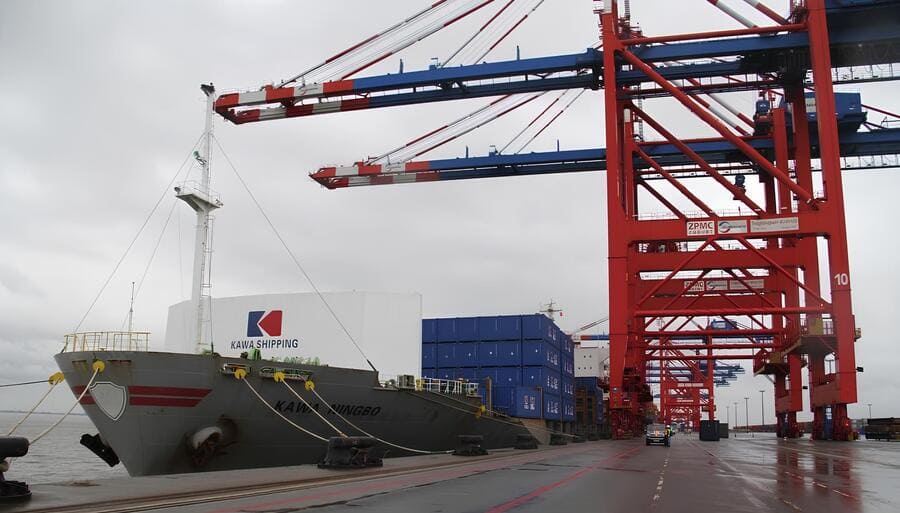
Image Credit: Xinhua/Shan Weiyi (The first container ship of the “China-Europe Express”, the fastest direct route connecting Europe and China’s Yangtze River Delta region, arrived at its destination at the Jade Weser Port in Wilhelmshaven on January 24, 2025).