




World Geostrategic Insights interview with Lee Khuay Khiang on the adaptability of Singapore’s State Led Capitalism model to rising global protectionism and US-China rivalry, whether the People’s Action Party (PAP)’s centralized approach can keep pace with faster private sector innovation, and how Singapore can balance national security and openness.
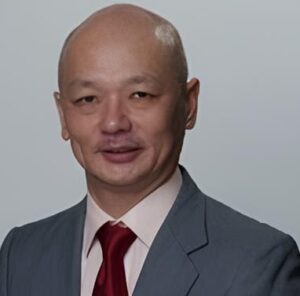
Dr. Lee Khuay Khiang, PhD, is an author, researcher, and lecturer based in Singapore, specializing in political economy, corporate strategy, international trade, and geopolitics. He is an experienced educator, holding several adjunct and associate lecturer positions: Adjunct Lecturer at the University of Newcastle – Australia (Singapore Campus), Associate Lecturer at the Singapore University of Social Sciences, Associate Lecturer at the Singapore Institute of Management. Dr. Lee’s research focuses on state-led capitalism, state power, and economic policies, particularly within the Southeast Asian context. His notable publication is the book: Singapore’s State-Led Capitalism in a Rules-Based World Order (2024/2025, Leiden University Press / Amsterdam University Press).
Q1 — Can Singapore’s state-led, rules-based model adapt to a more fragmented, protectionist world order?
Short answer: Yes and No — Singapore can adapt, but not without structural limits that even its highly capable system cannot fully overcome.
Yes: Adaptation is possible through pragmatic recalibration rather than wholesale abandonment, particularly if trade tensions de-escalate. Singapore’s core strengths — including robust rule-of-law institutions, technocratic policy competence, significant fiscal buffers, targeted state investment capacity, and an extensive network of free-trade agreements — remain durable assets in a turbulent global environment. These capabilities allow Singapore to function as an interoperable hub across rival blocs, even as geopolitical fragmentation deepens. At the same time, the transition from an era of largely open globalization to one defined by strategic competition and contested technology supply chains requires Singapore to carefully distinguish between commercial openness and national-security–driven restrictions, strengthen domestic economic and supply-chain resilience, and intensify efforts in multilateral rule-making to preserve its comparative advantage as a neutral, reliable node. Recent developments, such as the introduction of investment-screening mechanisms and continued advocacy for trade rules at the WTO and in digital-economy agreements, illustrate that Singapore’s governance model is evolving rather than eroding (UNCTAD Investment Policy Hub+1).
No: Despite its capacity to adapt, Singapore faces structural limits in a fragmented world. Great-power securitization increasingly overrides economic logic, shrinking the space for small states to operate purely on rules and neutrality. The bifurcation of critical technologies — in areas such as AI, semiconductors, and digital standards — forces Singapore to make alignment decisions it cannot indefinitely avoid. Rising protectionism undermines the effectiveness of free-trade agreements and rules-based multilateralism, which have long been foundational pillars of Singapore’s strategy. Additionally, Singapore’s reliance on global connectivity becomes a potential vulnerability as supply chains renationalize or regionalize. In this context, Singapore can mitigate pressures but cannot fully overcome the structural constraints imposed by a global environment increasingly shaped by power politics rather than rules.
Overall, Singapore’s state-led, rules-based model remains adaptable and relevant, but it is not omnipotent. While its strengths ensure continued strategic relevance, global fragmentation imposes real limits that demand careful, calibrated navigation.
Q2 — How can Singapore navigate US–China rivalry and rising protectionism while remaining an open hub?
Singapore can maintain its role as an open, high-trust economic hub by combining rule-based neutrality, strategic differentiation, and economic diversification, while simultaneously addressing domestic pressures that affect competitiveness. Its neutrality should be anchored in transparent, rules-based economic governance. By preserving tariff-free free-trade agreements, robust dispute-resolution mechanisms, and predictable investment-protection frameworks, Singapore can decouple routine commercial cooperation from geopolitical volatility. Clear regulatory communication ensures that both US and Chinese firms operate in a low-surprise environment, reinforcing Singapore’s reputation as a predictable and reliable partner.
At the same time, Singapore must differentiate between sectors that can remain fully open and those that require targeted safeguards. Sensitive technologies, dual-use assets, defence-adjacent investments, and critical infrastructure warrant narrowly calibrated screening, while non-sensitive sectors — such as manufacturing, logistics, finance, and digital services — remain broadly accessible to foreign investment. The screening regime is designed to be rules-based, transparent, and time-limited, reducing chilling effects on business while protecting strategic interests. This approach allows Singapore to manage security pressures without slipping into protectionism or signaling alignment with any particular power bloc.
Economic diversification and value addition are equally critical. Singapore mitigates exposure to any single pole by expanding trade and investment flows across ASEAN, South Asia, the Middle East, and Europe, while moving further into high-value sectors such as advanced manufacturing, green and digital finance, AI governance, biomedical innovation, and intellectual-property intermediation. Strengthened regional arrangements, including CPTPP, RCEP, and DEAs, provide additional strategic buffers and reinforce Singapore’s role as an interoperable node amid US–China bifurcation.
Singapore also leverages small-state diplomacy to expand its strategic space. Its leadership in forums such as the UN Forum of Small States allows it to shape global norms in digital trade, sustainability standards, and dispute settlement, emphasizing that rules rather than power should govern global interaction. At the same time, Singapore continues to broaden its ecosystem of business and network connectivity. Deepening ties with multinational business councils, industry associations, and chambers of commerce, while leveraging agencies such as EDB, Enterprise Singapore, and GIC/Temasek to engage emerging tech ecosystems and frontier markets, helps the city-state insulate itself from coercion or forced decoupling. Expanding ASEAN-based supply chains, services, and digital platforms further reinforces resilience.
Domestic sustainability remains central to this strategy. To preserve its attractiveness as a global hub, Singapore must address high cost-of-living pressures, particularly rising rents. Calibrated land-release policies, increased commercial-space supply, and incentives for decentralized business districts can stabilise rental costs. Targeted transfers, productivity-linked wage support, and competition-enhancing measures in food, transport, and housing ensure that global openness translates into broad-based domestic legitimacy. Without addressing these internal pressures, Singapore’s external strategy would lose credibility, as the city-state’s competitiveness is directly tied to its domestic economic health.
In sum, Singapore operationalizes its long-standing posture of pragmatic impartiality not through retreat but through calibrated openness. By combining targeted screening, diversified networks, small-state diplomacy, and measures to manage domestic competitiveness, Singapore can remain an open, rules-based node even as the global order fragments.
Q3 — Can a centralized, long-term PAP government approach keep pace with faster, spontaneous innovation in the private sector? How is Singapore using RIE and ITMs?
Short answer: Yes and No — Singapore’s hybrid model helps it keep pace, but inherent limits remain.
Yes: The state-led, long-horizon approach can keep pace with private-sector dynamism when combined with decentralised innovation. While central planning may appear slow compared to hyper-agile startups, Singapore employs a hybrid system that pairs long-term strategic direction with private-sector spontaneity. The government channels sustained R&D investment through RIE2025, maintaining roughly one percent of GDP over the plan period. These resources support talent pipelines, translational research, shared innovation platforms, and mission-oriented clusters, lowering the cost and risk of experimentation for private firms while creating a stable capability base they can leverage.
Complementing this, Industry Transformation Maps (ITMs) coordinate state–industry collaboration by jointly setting productivity, digitalisation, and capability goals, aligning grants, training, regulatory support, and capability hubs, and refreshing sectoral strategies in areas such as advanced manufacturing, finance, and maritime. This accelerates the adoption of innovations across both SMEs and larger firms. Public–private platforms further de-risk experimentation. Agencies such as A*STAR, EDB, IMDA, and MAS fund prototyping, scaling, and digital testbeds, including frontier-technology programmes like AI.SG, enabling startups and incumbents to iterate rapidly without bearing the full upfront cost. In this way, strategic state direction complements and amplifies private-sector initiative.
No: Despite these mechanisms, the centralised, state-led model has structural limits. Over-centralisation can inadvertently pick winners based on institutional familiarity rather than market potential, reinforce path dependence around preferred industries, and crowd out more experimental startups. Coordination mechanisms like RIE and ITMs, while effective, can lag behind rapidly evolving global technology trends. SMEs, even with grants and capability support, often face constraints in managerial bandwidth, risk appetite, and absorptive capacity, limiting the speed of innovation diffusion. Moreover, as frontier technologies like AI, biotech, and digital finance evolve, excessive ex-ante regulation risks stifling experimentation rather than enabling it.
To prevent strategic direction from morphing into command-economy behaviour, Singapore must preserve regulatory sandboxes for agile experimentation, maintain open public procurement opportunities for startups, strengthen SME adoption support, and ensure innovation funding does not become overly concentrated among politically proximate incumbents. Singapore’s hybrid RIE–ITM system succeeds when it delivers strategic guidance without suffocating spontaneity. It allows the state to coordinate long-term capability development while keeping the private sector nimble, but sustaining this balance requires constant vigilance to avoid over-centralisation and regulatory rigidity.
Q4 — With 2024/25 investment-screening rules allowing intervention in “critical” entities, how can Singapore balance national security and openness?
Singapore balances national security and openness by following a resilience-based, precision-oriented approach. Its goal is to ensure that security measures are targeted and effective without undermining the broader investment-friendly environment. The 2024/25 Significant Investments Review Act exemplifies this philosophy, providing clear designation powers, targeted triggers, and legal reviewability to reduce uncertainty for bona fide investors and prevent policy creep into general sectors.
Instead of resorting to blanket prohibitions, Singapore employs proportional measures. Regulators can implement governance or board-composition requirements, work with security-cleared local partners, enforce non-voting stakes or ring-fenced operations, or introduce data-localisation and access-control conditions. Outright prohibitions are used only when these mitigations fail. Clear review timelines and appeal mechanisms further reduce chilling effects that could discourage legitimate investment.
Singapore also ensures that screening is consistent with its international commitments. Measures are aligned with free-trade agreements, digital-economy agreements, and investment treaties, allowing investors to retain recourse under domestic law or treaty protections. By invoking national-security exceptions narrowly and proportionately, Singapore preserves trust, limits the risk of retaliation, and maintains its reputation as a rules-reliable hub.
Effective screening depends on interagency coordination and investor engagement. Trade, economic, defence, intelligence, financial, and digital regulators collaborate closely, while structured outreach — through guidelines, advisories, and consultations — ensures the regime is predictable and transparent. This predictability is essential to sustaining openness even under heightened security pressures.
At the core of Singapore’s approach is a resilience-oriented philosophy. Rather than seeking isolation, Singapore builds systems capable of absorbing, adapting to, and recovering from shocks while remaining open. Guardrails protect critical nodes — infrastructure, data, finance — without restricting the broader economy, mirroring Singapore’s wider defence posture of strong internal protections combined with external connectivity. Economic diversification across markets, supply chains, technologies, and talent circuits acts as a further buffer against coercion. Redundancy and capability buffers in energy, water, finance, and digital infrastructure ensure continuity even under stress, while globally recognised rule-of-law institutions serve as both economic and security assets, reducing vulnerabilities to hostile influence. Social and political cohesion reinforces resilience, enabling Singapore to maintain openness without strategic exposure.
Evidence shows that Singapore’s screening framework is intentionally targeted, transparent, proportionate, time-limited, and interoperable with international norms. By protecting what must be protected and keeping open what can remain open, Singapore strengthens national security without undermining the broader investment regime.
Q5 — Must Singapore rebalance growth with more social spending and redistribution given ageing and cost pressures? Will that alter its model?
Yes — but only to a degree.
Singapore’s model has always combined pro-growth policies with pragmatic, targeted social support rather than broad-based redistribution. Ageing, rising healthcare needs, and mounting household cost pressures mean some rebalancing is unavoidable — yet this does not amount to a fundamental shift away from the country’s core developmental model.
Social spending has already increased substantially over the past decade, particularly in healthcare, long-term care, family support, and lifelong learning initiatives. Budget 2025 reinforces this trajectory with further commitments to healthcare, eldercare infrastructure, and family-related programmes. As Singapore’s demographic profile shifts, this upward trend will continue.
The challenge is to rebalance without undermining competitiveness. This requires a combination of targeted benefits, productivity-linked investments, and careful fiscal calibration. Expanding portable and means-tested support — such as lifelong learning credits, subsidised eldercare, and wage supplements for lower-income workers — can strengthen social resilience while preserving incentives to work. At the same time, higher social spending must be paired with active labour-market policies: accelerating automation in labour-intensive sectors, expanding the eldercare and “silver economy” industries, and enhancing reskilling pathways so older workers remain employable. These productivity gains help offset the fiscal burden of rising social needs.
A progressive but measured financing mix can support this shift. Modest, carefully designed increases in upper-band income taxes, refinements to wealth-transfer levies, and higher contributions from top earners can raise revenue while maintaining Singapore’s attractiveness as a competitive, low-distortion economy. Public–private co-provisioning — through supplemental insurance, employer benefits, and private eldercare services — also helps distribute long-term costs and expands service quality without overloading the state.
Will this alter the core model?
Only if redistribution becomes broad, unconditional, and detached from productivity. As long as increases in social spending remain targeted, means-tested, fiscally disciplined, and tied to economic upgrading, the foundational state-led developmental model remains intact. The principles that define Singapore’s approach — macro-stability, rule-of-law credibility, pro-business conditions, and strategic public investment — continue to guide policy.
In short, Singapore must recalibrate its growth model to manage both long-term ageing and immediate cost pressures. But this recalibration represents pragmatic evolution, not a departure from the country’s core governance philosophy.
Dr. Lee Khuay Khiang – Author, researcher, and lecturer.