



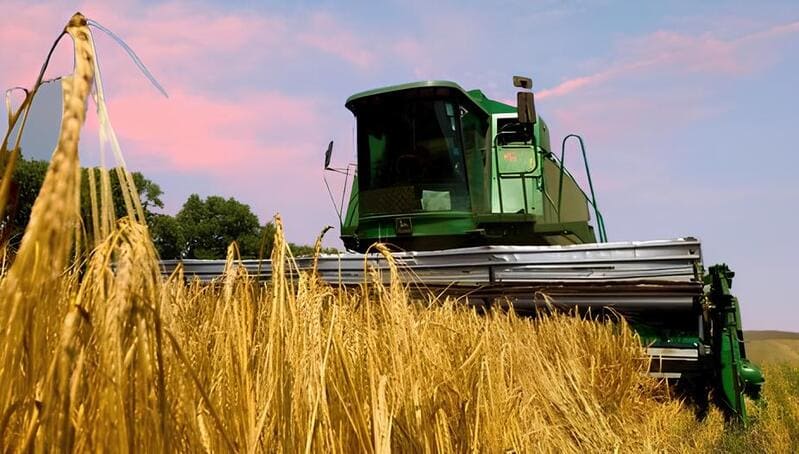
World Geostrategic Insights interview with Vitaliy Skotsyk on initiatives aimed to revitalize Ukraine’s economy through sustainable practices such as soil recovery and AI-driven agriculture.
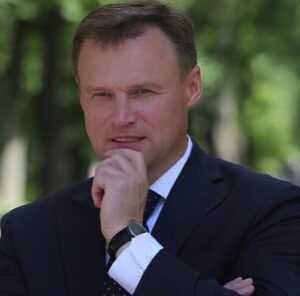
Vitaliy Skotsyk is President and CEO of the Institute of Geopolitics and Strategic Management, Kyiv, Ukraine. He is also the Architect of URBE(Ukraine Regenerative Bioeconomy Ecosystem), the Founder of the Center of Excellence for Life Sciences, Agriculture, and Bioengineering (CE-LAB), the Co-founder of the New Grain Logistics (NGL) project, the Co-founder of the Ukr-Sun renewable energy project for Ukraine, and the founder of Carbon Credit Ukraine (CCU).
Q1 – You are the Architect of the Ukraine Regenerative Bioeconomy Ecosystem (URBE) and the Founder of Carbon Credit Ukraine (CCU), how do these initiatives directly contribute to national resilience and post-war reconstruction?
A1 – URBE was designed by IGSM as a practical tool for rebuilding Ukraine’s economy through science-driven regeneration. URBE integrates soil recovery, biochar, carbon removal, renewable energy, agrologistics, AI-powered agriculture, and community-based development into one nationwide ecosystem. CCU as part of URBE focuses on soil carbon, agro-waste valorization, and carbon-removal projects. Together with NGL, they restore degraded and war-polluted soils, return small farmers and communities to economic activity, attract international climate finance, create new green jobs, and position Ukraine as a climate-positive reconstruction model.
Q2 – You have emphasized the role of the bioeconomy in resolving economic, environmental, and social challenges. Which specific bioeconomy sectors (e.g., bioenergy, soil restoration, etc.) hold the most immediate potential for attracting significant foreign investment and job creation?
A2 – Three sectors stand out: (1) Biochar & carbon-removal technologies; (2) Soil restoration and phytoremediation; (3) Bioenergy and green fuels. These sectors generate immediate employment, attract climate finance, and allow Ukraine to become a European hub for the regenerative bioeconomy.
Q3 – The AgHoldCo Ukraine project aims to restore the agricultural sector through small and medium-sized farmers. How can you address historical challenges, such as those related to land sales moratoriums and funding sources, to ensure this investment model is transparent and effective?
A3 – AgHoldCo is a US company project aimed to transform historical constraints into opportunities through transparent digital land registries, satellite monitoring, standardized financing for small farmers, and governance aligned with global ESG standards. This creates a safe environment for investors and enables Ukrainian farmers to scale production sustainably. The land reform allows individuals and companies to buy and sell agricultural land which is a significant investment improvement.
Q4 – You are the Founding Partner of CE-LAB, Center of Excellence for Life science, Agriculture and Bioingenuity. CE-LAB primarily focuses on AI-powered precision agriculture. How do you envision AI and advanced technology helping Ukraine “build back better” in its agricultural sector, especially considering the damage from the war?
A4 – CE-LAB integrates AI technologies such as satellite analytics, soil sensors, digital twins, and crop-modeling systems. These tools increase yields, reduce inputs, accelerate soil recovery, detect contamination, and lower production risks. AI allows Ukraine to rebuild its economy and agricultural sector on an advanced technological foundation. With help of AI CE-LAB select the newest technologies, analyze them and test on research plots in Ukraine and convert to scale use.
Q5 – What are the biggest regulatory or legislative hurdles in Ukraine that need to be overcome to fully realize the potential of projects like CCU and CE-LAB, and are there specific policy changes you advocate for?
A5 – Key regulatory reforms include: (1) Legal recognition of carbon-removal projects; (2) Simplified import and certification of advanced technologies; (3) Long-term land-use stability and transparency; (4) Government tax credits and use of green bonds. These reforms would unlock billions in climate finance and enable national-scale deployment of CCU, NGL, CHIU and others.
Q6 – You are the co-founder of the New Grain Logistics (NGL). How is such a project innovating Ukraine’s export capacity, particularly given the challenges with traditional Black Sea routes and rail gauge differences at western borders?
A6 – NGL modernizes Ukraine’s logistics through 409 local elevators, 24 regional bioclusters, and 3 multimodal terminals on the EU border. This creates resilient continental export corridors, reduces dependence on Black Sea ports, and keeps value-added processing inside the country. The new cross border terminals will have both railway systems connected in one place which will boost goods flow between Ukraine and the EU. The annual 15 mln t grain flow will go from regional farmers and community elevators to bioclusters when biofuel, animal feed, and biogas will be produced. For Ukraine energy security, veterans work placements, rural areas development NGL is important, for world food security it is very highly needed. Small farmers produce over 50% of Ukraine agriculture output, they are core of current Ukraine as they did not leave the country in such a difficult period of time, their production growth potential is more than double.
Q7 – As President and CEO of the Institute of Geopolitics and Strategic Management, what is your vision for the future of Ukraine, in a context of global geopolitical turmoil?
A7 – Ukraine’s future rests on three pillars: (1) Security through strong partnerships; (2) Economic transformation through the regenerative bioeconomy; (3) Development of human capital and leadership. Ukraine has the opportunity to become a global leader in resilience, regeneration, and strategic innovation. The old economy is destroyed, we build new industries and have no privilege to waste time, we need to build the best in the world. We do that with clear vision having two research arms on hand IGSM and CE-LAB, strong cooperation with leading research and educational centers in the world and dedicated international teams.
Vitaliy Skotsyk -President and CEO of the Institute of Geopolitics and Strategic Management, Kyiv, Ukraine.