



By Tahira Mushtaq
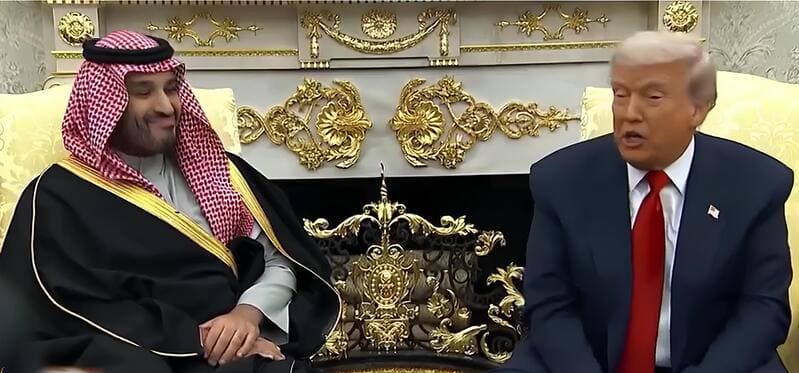
The implications of President Trump’s decision on 18 November to grant Saudi Arabia Major Non-NATO Ally status represent a reconfiguration of US-Saudi relations and of the broader strategic design of the Middle East.

Although Major Non-NATO Ally status grants no legal rights to Saudi Arabia concerning a mutual defense commitment as with NATO, the military, technological, and operational consequences are profound. Such a determination makes arms transfers and defense integration possible, permits the stockpiling of U.S. arms on Saudi Arabia’s territory, and gives Saudi Arabia broader access to cutting-edge U.S. military technology. Such steps reflect a profound integration of Saudi Arabia into U.S.-led security systems, and a deeper partnership than has been the case in the previous decades.
This decision aligns with a changing geopolitical scenario. The advancements in Iran’s missile and drone technology, the volatility of the Red Sea corridor, and the emerging competition with great powers has increased U.S. apprehensions regarding the region’s security. For a number of years, the U.S. has stationed thousands of servicemen and positioned air-defense systems, particularly in Saudi Arabia, where Prince Sultan Air Base has been one of the most important facilities for integrating the surveillance and missile defense systems. The MNNA status enhances this partnership by reducing administrative obstacles, allowing for more rapid joint military training and streamlined military collaboration.
Among other items, the announcement discusses the sale of F-35 specialist stealth fighters to Riyadh. Were this to happen, it would be Saudi Arabia’s first acquisition of advanced American stealth technology. F-35’s sensors and re-equipping abilities and stealth and networking capabilities would improve Saudi operational and interoperability capacity with the US. To be sure, the sale also raises important strategic and geopolitical questions. Israel has historically relied on qualitative technological edge (deterrence), while Congress will be concerned to ensure that this technological edge does not erode. Defense planners, not to mention the Pentagon, will face in Riyadh the geopolitical problems of other alliances, especially to military maintenance, the military use of equipment end-use, and security.
Military spending is also connected to other economic and strategic relationships. In Saudi Crown Prince Mohammed bin Salman’s recently completed visit to the US, Saudi Arabia promised to increase investments in the US from $600 billion to $1 trillion in the areas of infrastructure, energy, and technology. If this promise fully materializes, it will help bolster economic relationships in both Saudi Arabia and the US and allow Washington to have more control over its allies. Such predictions of investment have Saudi Arabia escaping the position of being a mere military client to being a military, and more importantly, economic ally.
With greater closing of the US-Saudi alliance, possible consequences also arise, some of which are not so positive. In the Middle East, the arms race could be problematic. Strengthening military capabilities of Saudi Arabia could disrupt the already fragile balance of military power in the Middle East, especially in the Gulf region where the military is allied with the US. Moreover, the US arms Saudi Arabia with additional military technology, and that country has a dual technology relationship with a power, China that some in the U.S. would consider a rival. Both arms transfer and technology transfer could be problematic. The US could have greater military and economic engagement with Saudi Arabia, but consequences, especially with military technology, will have to be weighed carefully if the US is to maintain a balance in the region.
Domestic politics will also affect how this strategy is implemented. While the executive branch can designate the country as MNNA, large arms transfers, particularly an F-35 sale, are subject to congressional oversight. Legislators may seek assurances on the human rights, security of the technology, and end-use verification. Yemen’s War and incidents such as the assassination of journalist Jamal Khashoggi continue to shape the congressional debates. These factors outline the conflict between the executive’s ambition and the legislature’s restraint regarding U.S.-Saudi military cooperation.
Strategically, this designation is indicative of Washington’s attempt to enhance burden-sharing with a key partner. Given its geographic location, vast energy resources, and multiple influences in the Arab and Muslim worlds, Saudi Arabia is a key player in any Middle East security arrangement. The U.S. seeks to cushion the need for active, sustained military presences on the ground by bolstering Saudi Arabia’s military capabilities, formalizing military cooperation, and amplifying regional deterrence, particularly for Iranian threats. But this predictability, and trust, are crucial to the success of the strategy. Saudi Arabia needs to feel its security is sustained and the United States needs to trust Riyadh will not back track on its promises.
This decision impacts regional diplomacy as well. Security relations with the U.S. may enable Saudi Arabia to emerge as a key player in the diplomacy designed to facilitate the normalization of relations with Israel. However, security benefits tied too closely to political concessions may weaken perceived reliability. Long-term partnerships, however, are best when predictable and reciprocal, as opposed to being solely transactional in nature.
Geopolitically, this signals an attempt by the U.S. to pull Saudi Arabia to its side in a time of increasing great-power rivalry. Saudi Arabia’s increasingly active relations with China and other actors provide it with important strategic advantages, but it also increases the necessity for Washington to put forward to Riyadh a sustainable and valuable offer to remain aligned. MNNA status provides significant levels of security and operational benefits, but stops short of a formal treaty alliance with all of its obligations. However, should the U.S. fail to provide guarantees that are both sufficient and unconditional, it is likely that Riyadh will continue its diversification of partnerships, with the aim of undermining American influence.
Lastly, the designation strengthens the United States’ bilateral security and economic relationships, the United States may be viewed as placing a premium on the human rights and governance vices, and as such, losing a moral compass. Balancing such trade-offs will involve the United States gaining respect and trust from other countries for international relations. This can be achieved through proper communication and providing a framework for guiding such relationships.
To conclude, the enhancement of Saudi Arabia’s status to Major Non-NATO Ally represents a structural change in the United States (U.S.) approach to the Middle East. The U.S. will significantly buttress Saudi Arabia’s military capabilities, and Saudi Arabia will become a key economic partner of the U.S. in the region. However, the elevation of Saudi Arabia’s status also presents certain risks to the U.S., in the form of potential disruptions to the geopolitical status quo, local backlash, and criticisms of U.S. reliability.
The manner in which the U.S. and Saudi Arabia will manage the potential risks will determine whether the U.S. designation of Saudi Arabia will lead to the establishment of a stable cooperative partnership, or whether it will remain an unstable, cooperative arrangement that is high in visibility. The decision by Trump to elevate Saudi Arabia’s status to Major Non-NATO Ally illustrates the complexities of modern American Middle East diplomacy and focuses on America’s evolving approach to Middle East security in the twenty-first century.
Author: Tahira Mushtaq – Student of International Relations at University of Sargodha, Pakistan.
(The opinions expressed in this article belong only to the author and do not necessarily reflect the views of World Geostrategic Insights).