



Throughout my military career, I have lived through very different experiences. From commanding a peacekeeping mission in distant Timor-Leste to directly witnessing the horrors of war in Iraq.

I was under thirty when the Berlin Wall fell and the Cold War began its slow dissolution. At that moment, like many others, I believed that peace would become a lasting reality and that wars would be reduced to localized, temporary conflicts driven by circumstantial interests. I learned to live with fear and with the absurdity of war. I saw the impact of terrorism on city streets, on innocent civilians, and on children left mutilated. I was tasked with translating horrific acts into daily mission reports, always with the inner conviction that such injustice could not endure forever. Today, as we enter 2026, that feeling has profoundly changed.
I felt something I had never felt before. Perhaps it is age, perhaps the fact that I now analyse global geopolitics exclusively through open-source information, or perhaps it is simply that I am the father of three children. Whatever the reason, the sense that we are closer to war than to peace feels stronger and more tangible than ever.
The year 2025 was dominated by the war in Ukraine, the conflict in the Middle East, and the abrupt return of Donald Trump to the presidency of the United States — a development that further destabilised an international system already under severe strain. All of this leads me to view 2026 as a potentially more dangerous year, in which each conflict carries geopolitical implications of unprecedented scale. Never before has the prospect of new and more violent conflicts felt so acute. Ukrainian President Volodymyr Zelensky has repeatedly warned that the war with Russia could escalate into a global conflict. While I consider myself an optimist by nature, I now carry the uncomfortable sense that such a possibility is closer than ever.
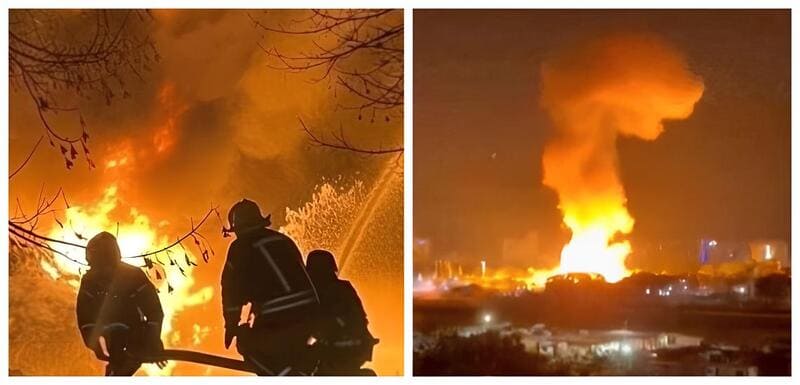
We ended 2025 with clear signs of hybrid escalation, such as Russian drones probing NATO air defences. This persistent hybrid tension is unlikely to end well. The evidence is clear. The world entered 2026 amid renewed international turbulence. The direct involvement of the United States in Venezuela, culminating in the capture of Nicolás Maduro, opened unprecedented and deeply unsettling scenarios within an already fragile global order. This episode represents not only a shift in Venezuela’s internal balance, but a rupture in how international power is exercised and perceived. The result is a more unstable world, where precedents outweigh stated intentions. Rather than restoring clarity, such actions deepen uncertainty: when rules cease to be universal, instability becomes structural rather than episodic.
The world changed in 2025 with Donald Trump’s return to the centre of the international stage. Not because conflicts began then, but because the implicit rules that had contained disorder no longer applied. Strategic predictability, functional multilateralism, and the notion of U.S. leadership as a stabilising force were replaced by a transactional, abrupt, and highly personalised approach. In 2026, the cumulative effects of this shift became visible early and with greater risk. Allies began acting independently, adversaries tested boundaries more aggressively, and authoritarian regimes felt emboldened, assuming that international responses would be inconsistent or selective.
The issue is not Trump as an individual, but the systemic signal his approach sends: power overrides norms, short-term interests override stability, and deterrence becomes unpredictable. In a world already strained by regional wars, energy tensions, latent economic fragility, and weakened states, this unpredictability acts as an accelerator of conflict. 2025 opened fractures; 2026 threatens to deepen them. We are not necessarily facing more conflicts, but conflicts that are harder to manage, harder to mediate, and more prone to escalation. That is what makes 2026 potentially more dangerous — and therefore worse.
The year 2025 was marked by two major wars. In Ukraine, more than 15,000 civilians lost their lives. In Gaza, following the Hamas attacks of 7 October 2023, which killed approximately 1,200 people and took 251 hostages, the Israeli government, led by Benjamin Netanyahu, vowed retaliation, plunging the region into another cycle of violence. Meanwhile, far from the media spotlight, Sudan has endured a brutal civil war between rival military factions, resulting in over 150,000 deaths and around 12 million displaced people, a conflict largely ignored.
Donald Trump repeatedly claims to have “resolved eight wars.” Yet Gaza remains far from pacified, and Ukraine is nowhere near a credible ceasefire. While suffering in the Middle East is undeniable, the war in Ukraine is fundamentally different. It carries a distinct and potentially far more severe risk. Conflicts such as Vietnam, the First Gulf War, or Kosovo were devastating, yet they never threatened global peace. At the time, major powers exercised sufficient restraint to prevent regional wars from escalating into nuclear confrontation. Today, that restraint is eroding.
Russia, sensing a diminished U.S. commitment to Europe, appears prepared to pursue a far more aggressive form of regional dominance in 2026. President Putin’s recent statement that he does not seek war with Europe but is “ready immediately” if Europeans do, echoes rhetoric used prior to the 2022 invasion of Ukraine. Officially justified as opposition to NATO expansion, Putin has since made clear his broader ambition: to restore the former Soviet Union’s spheres of influence, starting with neighbouring countries.
Putin understands that 2025 brought what the West once considered unthinkable: the real possibility of U.S. disengagement from the post–World War II security architecture. The Trump administration’s national security narrative, portraying Europe as facing “civilisational decline,” aligns closely with Kremlin perspectives. On the domestic front, Putin faces economic pressures, inflation risks, declining energy revenues and the need to raise taxes to finance the war. However, none of the above factors seem likely to change his course of action.
The European Union, despite an economy ten times larger than Russia’s and a population three times greater, has struggled to relinquish comfort and fully assume the costs of its own defence. For decades it relied on U.S. protection, but the United States has changed: more inward-looking, less predictable, and less committed to Europe. Even if Trump’s political influence wanes, the debate has shifted dangerously toward isolationism. A future U.S. president, even one more aligned with NATO, may find it difficult to reverse this trajectory. Putin has clearly understood this.
Meanwhile, China continues to increase pressure on Taiwan. President Xi Jinping has made reunification a central objective, and Beijing’s strategy toward Taiwan will likely become increasingly explicit.
All of this leads to a troubling conclusion. 2026 is shaping up to be a decisive year. Geopolitical seismic activity is accelerating, and the world around us is exceptionally volatile and dangerous.
The war in Ukraine may end soon, though I doubt it. If it ends on terms favourable to Putin, Europe will face a prolonged period of strategic insecurity. Europe still lacks sufficient autonomy, political will, and influence to shape global security outcomes. Strategic autonomy, based on military, diplomatic and industrial capabilities, will be more vital than ever in 2026 if Europe wants to regain its place at the negotiating table. No excuses. No ambiguity.
Should a Third World War ever materialise, it is likely to be diffuse, hybrid, diplomatic, technological, and economic in nature, a conflict in which authoritarian regimes test the resilience of democracies. This process is already underway. The defining question is whether Europe will have the clarity, unity, and courage required to stop it.
Author: Fernando Figueiredo – Retired Portuguese Army colonel and former NATO professional, who held various strategic leadership positions, currently serving as a defense consultant at Pulsar Development International. His work focuses primarily on defense requirements, offering expertise and a network of contacts that enable operational challenges to be overcome with effective, tailored solutions.
(The opinions expressed in this article belong only to the author and do not necessarily reflect the views of World Geostrategic Insights).
Image: Russian drone attacks against Ukraine and US strikes in Venezuela on 3 January 2026.