



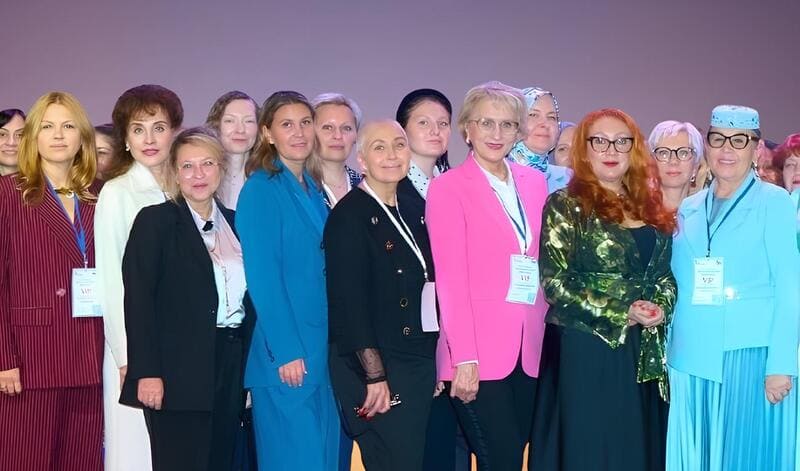
The ascent of women to positions of authority represents one of the defining transformations in twenty-first-century governance and corporate structures.
Across political institutions, multinational corporations, technological sectors, and social enterprises, women are assuming roles from which they were historically excluded. What once appeared exceptional has matured into a sustained global movement reshaping power dynamics worldwide.
Historically, leadership structures evolved within traditions that systematically limited female participation. Social conventions, cultural expectations, and institutional biases created formidable obstacles to women’s professional advancement. Yet despite these barriers, women consistently demonstrated resilience, intellectual capability, and strategic vision. Their contemporary presence in senior positions does more than diversify institutional leadership—it fundamentally challenges and expands conventional understandings of what effective leadership entails.
Education as a Catalyst
Educational access constitutes perhaps the single most significant factor driving women’s increased leadership representation. Rising female enrollment in higher education, professional certification programs, and executive development courses has accelerated this trend. Universities globally report growing female participation in business administration, legal studies, engineering disciplines, and political science departments.
This educational foundation provides women with both technical expertise and strategic decision-making capabilities. Professional development initiatives, leadership seminars, and international networking platforms further enhance their competitiveness at senior levels. Mentorship programs and women’s leadership conferences offer crucial support structures and career navigation assistance.
The Soviet Legacy: Formal Equality and Informal Constraints
The Soviet experience offers instructive insights into the relationship between formal rights and actual leadership outcomes. Following the 1917 revolution, women attained legal equality with men, including access to free education and guaranteed employment. The 1936 Constitution codified gender equality, established civil marriage, mandated equal compensation, and opened higher education to women across all disciplines. These measures produced substantial female participation in scientific research and industrial management. Universal employment policies and official encouragement of women’s advancement into professional elites created unprecedented opportunities.
By the 1980s, women constituted over half of all specialists with higher and secondary specialized education. The state actively promoted female entry into traditionally male-dominated professions—engineering, physics, medicine—creating a substantial pool of qualified women prepared for leadership responsibilities.
Yet formal equality coexisted with persistent social challenges. The “double burden” phenomenon required women to maintain full-time employment while bearing primary responsibility for domestic work and child-rearing. Additionally, a recognizable glass ceiling operated at the highest levels: despite their numerical strength in middle management, women remained virtually absent from Politburo membership and other pinnacle decision-making bodies.
The Persistent Pay Gap
Compensation inequality remains a global phenomenon, with women earning approximately 20-22 percent less than men for comparable work. Contributing factors include the “motherhood penalty,” occupational clustering in lower-compensated fields, and persistent sectoral segregation.
Contemporary Russia exhibits a wage gap exceeding 30 percent, positioning it among G20 nations with the most pronounced inequality. The widest disparities—reaching 33.4 percent—appear in culture, sports, and leisure industries. This gap consolidated after 1991, when economic restructuring channeled women disproportionately into lower-paying sectors.
International comparisons reveal similar patterns: European Union data shows Estonia at 21.3 percent, Austria at 18.4 percent, and Switzerland at 17.9 percent. Globally, women earn approximately 77-80 cents per dollar earned by men. Vertical segregation—women’s underrepresentation in senior leadership despite their presence in middle management and increasing educational attainment — constitutes a particularly resistant structural challenge.
Leadership Styles: Gender Dimensions
Leadership fundamentally determines organizational effectiveness. Effective leaders connect personnel with objectives, directing collective effort toward optimal outcomes. Organizational performance depends directly on leadership quality.
Research suggests gender-associated differences in leadership approaches. Masculine-coded leadership typically emphasizes directiveness, outcome orientation, dominance, conservatism, risk acceptance, and unilateral decision-making. Feminine-coded approaches tend toward democratic processes, relationship building, empathy, motivation, collaborative partnership, and adaptive flexibility—qualities particularly effective in complex, rapidly evolving environments. Neither style proves inherently superior, though masculine approaches appear more frequently in large-scale, high-stakes projects.
Women leaders often demonstrate elevated productivity, heightened responsibility, and superior long-term strategic planning—characteristics notably documented in Russian corporate contexts.
Women in Business: Progress and Persistent Challenges
Women’s business prospects are transforming rapidly. Increasing female representation in executive positions and entrepreneurship correlates with enhanced profitability and innovation. Grant Thornton International documents steady global increases in women’s leadership participation. International Labour Organization research indicates that gender-diverse leadership correlates with 20 percent higher profitability. Guidant Financial reports that women-owned enterprises grow at nearly twice the rate of male-owned businesses. As Chief Women Leaders observes, women executives actively shape business futures by cultivating inclusive, flexible, purpose-driven organizational cultures.
Nevertheless, the gender financing gap persists as a formidable obstacle. Grant Thornton International projects that certain sectors may require twenty-five years or more to achieve leadership parity despite recent advances.
The Global Women’s Leadership Movement
The women’s leadership movement constitutes a coordinated international effort to advance gender equality in decision-making, political participation, and corporate governance. Initiatives including UN Women’s leadership programs and the Global Network of Women Leaders target systemic barriers—stereotypes, discriminatory legislation, institutional biases—that limit female representation. Evidence confirms that women in leadership enhance decision quality, boost profitability, and accelerate innovation.
Organizations like WIEGO focus on empowering women in informal economic sectors, while the Women’s Leadership Challenge provides targeted leadership development training.
Regional Movements
The Russian women’s leadership movement has gained substantial momentum through state-supported initiatives such as the “Woman Leader” project at the Senegh Management Workshop. Women constitute 40 percent of individual entrepreneurs nationally. The movement emphasizes management competency development, social project implementation, work-family integration, and traditional values promotion. The “Woman Leader” project has graduated over 1,620 participants from 42 countries, building communities for social initiative implementation. RANEPA and similar institutions contribute by fostering safe professional environments and supportive networks.
In India, women’s leadership in local councils correlates with measurable infrastructure improvements, including a 62 percent increase in drinking water projects.
The African Women’s Leadership Fund advances young women’s political participation across sub-Saharan Africa, amplifying their influence in democratic processes and decision-making spheres.
Middle Eastern women’s empowerment accelerates regionally, with the 8th Middle East Women Leaders’ Summit and Awards scheduled for October 2026 in Dubai.
Asian women’s leadership advances despite cultural and structural barriers, driven by specialized training initiatives like the Asia Women Leaders Program, expanding ASEAN political participation, and increasing female heads of state.
Conclusion
Progress notwithstanding, women remain underrepresented at highest leadership levels. McKinsey and Company research indicates that while leading companies have increased women’s leadership representation by 7 percentage points since 2021, advancement remains uneven across sectors and regions.
Women consistently demonstrate capacity for creative problem-solving and alternative pathway identification. Their inclination toward flexibility, compromise, and empathetic engagement suggests that increased female political representation might temper international conflicts and foster more collaborative approaches to global challenges. Whether this potential materializes depends on continued movement momentum and the systematic dismantling of remaining structural barriers.
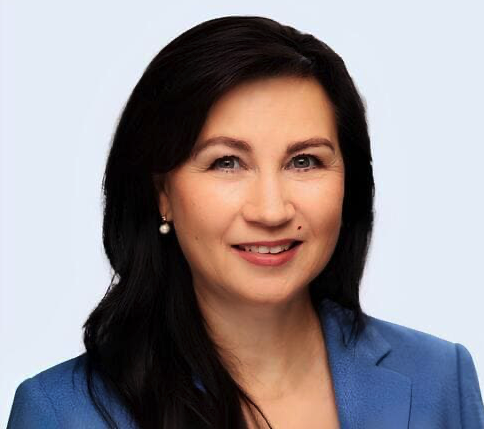
Author: Tatiana Pokrovskaia – international business development expert with more than 20 years of experience in the markets of Africa, CIS, Asia and the Middle East, repeatedly bringing Russian companies into international markets. Based in St. Petersburg, Russia, her work focuses on strategic partnerships, market expansion, and the promotion of innovation through the development of winning marketing strategies, essential for driving international business growth.
(The opinions expressed in this article belong only to the author and do not necessarily reflect the views of World Geostrategic Insights).
Image Source: “International Union of Women” organization, Moscow.