



Wars, treaties and conflict dominate world history. History can provide valuable insights into why global relations operate in a way that they do. Realism, a perspective on international relations, focuses on an understanding of power as a main driver of international politics.

Unlike moral and/or ethical, realist theorists view power and political survival as the main commitment of states and how they engage with others regarding their relations. As an example of realism, in 421 BC, the city states of Athens and Sparta signed the treaty known as the Peace of Nicias, which was designed to create peace between the two city-states who were engaged in the Peloponnesian War (431 – 404 BC). Ultimately, within a short time, neither state honoured the treaty that was intended to create a peaceful relationship. A Greek leader, Alcibiades, initiated an invasion of Syracuse in 415 BC and was representative of how states will disregard treaties when their national interest is affected. Furthermore, the actions taken by Alcibiades illustrated an important realist principle that the international system is constantly changing, adversarial and deceptive.
The concept of Realism suggests that humans naturally have tendencies towards being selfish, egotistical, and motivated by a desire to gain an advantage over other individuals. The belief is that humans will always want to have power and superiority over other people. Realist theorists argue that since states are made up of humans, they will exhibit the same tendencies as individuals do. As such, states cannot be trusted by other states.
Even though we live in a modern world that is technological, advanced, and civilised, we still see a world where power is still determined by conflict, competition, and effort to obtain power. History is replete with examples of how the reasoning behind Realism has been proven true through a variety of historical events.
The Peloponnesian War (431–404 BC) is a good example of how power struggles caused decades of violent conflict due to competition among both the Athenian and Spartan sides, both trying to be the most powerful. Furthermore, in the years 334 to 323 BC, Alexander the Great’s conquest of lands around the world was driven largely by greed and the desire for control and influence. Another example of how states exhibiting Realist principles can lead to lasting consequences was seen in the three Punic Wars between Rome and Carthage from 264 BC to 146 BC, which resulted in the emergence of Rome as the dominant military power of the Mediterranean. Likewise, the protracted wars between Rome and Persia, from AD 54 to 628, showed that the rivalry between the two empires created lifelong acrimony. Additionally, the expansion of the Mongol Empire during the 13th Century by Genghis Khan exemplifies that competition for power among different countries has impacted global politics.
The Thirty Years’ War (1618-1648) was one of the early stages of conflict for European countries including France, Sweden and the Habsburgs resulting in widespread destruction across Europe. Similar types of conflict were fought in later years such as the Seven Years’ War (1756-1763), Napoleonic Wars (1803-1815) and Crimean War (1853-1856), which again showed states competing against other states for power, territory and influence. The 20th Century would see conflicts on a much larger scale and more destructive than in previous centuries. World War I (1914-1918) and World War II (1939-1945) caused massive physical destruction and loss of life due to their worldwide consequences. The atomic bombings of Hiroshima and Nagasaki illustrated the ultimate effects of nation-states’ power struggles. Following World War II, other major conflicts included the Korean War, the Vietnam War, the Soviet–Afghan War, the Iran–Iraq War, and many Arab-Israeli Wars that highlighted that international politics is based on interests and strategies. In the recent past, there have also been conflicts such as the September 11th attacks, Iraq War, and Afghanistan War, demonstrating again that conflict will continue to be a fundamental part of global political issues.
Realism prioritizes state self-preservation during crisis situations over permanent friends or alliances, which may always be based on respective state interests, not friendships. Therefore, once there is a shift in the cause of respective state interests, then respective states who had a history of friendship will quickly revert to an enemy relationship. Similarly, there have been numerous attempts by philosophers, theorists, and political scientists through history to create a method to establish worldwide peace; however, because of human nature- due to the self-interested nature or inherently aggressive behaviour of people- achieving bilateral or multilateral trust amongst individual states, where they agree not to compete against each other, is an impossibility in real world politics.
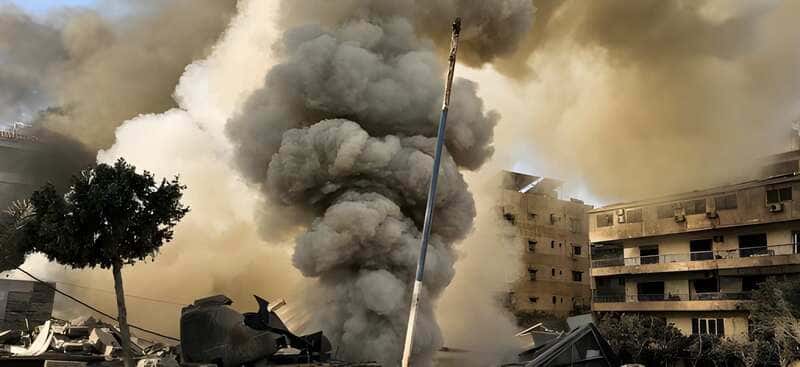
Ultimately, in international relations, the only way for states to assure their respective national security is by maintaining their own national defence capabilities and resources. Since the beginning of Israel’s offensive against Iran in 2025, with the assistance of the United States, there have been an estimated recent war 2026 1,200 Iranian civilians who have died as a result of this offensive. The question is simple, including who is coming to support Iran? The answer is nobody. Over the past several years, the U.S. and Israel have accused Iran of being the leader of an “axis of resistance” and of supporting and having proxy groups located throughout the Middle East, such as those in Yemen, Lebanon, and Iraq.
Although, when Iran faced direct military pressure, these alleged allies of Iran did not visibly intervene in order to confront Israel or the United States on behalf of Iran.
Thus, it raises questions about the reality of politics as a social construct (e.g., what is the real definition of where one lives). Kenneth Waltz, an influential political scientist in International Relations, made a statement that could describe a little bit of this harsh reality; he noted that when a state calls for assistance (a plea for help) in the international community, a state does not necessarily know if any other country would respond.
States work primarily (if not only) for their own self-interest (not out of loyalty or moral responsibility). This view represents a theory known as “Realism,” which is based on how much power, self-interests and survival dominate international relationships and determine how the international system functions.
Another issue that arises out of the alleged indecision or silence of international institutions is the inability of institutions that proclaim to promote liberal values to do so. The United Nations was established to maintain international peace and security (thus stabilize Europe). Furthermore, the UN establishes peacekeeping operations throughout the world while also serving as a protector of the international order.
Critics argue that these institutions become ineffective (and/or silent) when a powerful state (or states) is involved in the conflict.
As an illustration, with the attack on the Gaza Strip by Israel which resulted in numerous civilian deaths (including children), there have been challenges regarding what role international law and global legal organizations have to play. Observers are left questioning; Where are the principles of international law? Where are the institutions that are supposed to enforce those principles?
Bodies like the International Court of Justice are intended to facilitate the resolution of disputes and to maintain justice; however, their presence and authority are marginalized when states that have greater power are involved in a dispute. As a result, there is a perception that most international organizations, including the IMF, FATF, WTO, and UNSC, impose sanctions and/or pressure primarily on less powerful states, as opposed to more powerful states. Therefore, because of the significant amount of power held by major states in these institutions, critics of these global governance structures contend that those structures reflect the interests of the most dominant states and not universal justice.
The ongoing IRAN VS USA-ISRAEL conflict will have significant ramifications around the globe, above the political implications alone. A long-lasting Israel-Iran conflict could create instability for the entire region of the Middle East. A critical consequence of this is likely to be the disruption of global energy supplies. Being adjacent to significant oil transportation channels, an escalation in hostilities would have the potential to reduce the levels at which the country is able to produce, export, or import oil. Resultantly, a global oil disruption could produce oil shortages and increased energy prices. Countries with oil reserves may take advantage of these shortages to increase their pricing of oil, creating additional economic strain for countries that import oil. As a result of regional instability, the potential for larger security dilemmas for states may exist. Countries may respond to this by increasing their own military spending or developing new alliances due to fear of the threats they may face. Regional air transportation routes may also be disrupted due to the lack of stability in the Middle East, causing adverse effects to international air travel and cargo transportation. Delays with courier services and global trade logistics could have impacts throughout the global supply chain. The economic consequences may include increased inflation and the higher cost of basic commodities. In an environment of declining geopolitical trust, countries may be less willing to engage in diplomatic and economic relations, resulting in the emergence of new geopolitical blocs and a reshaping of the global balance of power.
These developments only reinforce the core assertion of realist theory; specifically, power politics continues to dominate international relations. Despite the fact that liberal institutions advocate for values of cooperation, rule of law, and collective security, the actual implementation of these values by means of liberal institutions is frequently limited by the interests of the great powers. Realists believe that states exist in an anarchic world and must depend primarily on their own resources for their continued survival within that world, which is why many scholars continue to view realism as the theoretical framework that is most applicable to current international relations. Regardless of the fact that there are international institutions and that liberals endorse normative values, when states engage in crises, they consistently demonstrate that power and self-interest outweigh moral considerations. Therefore, for those who attempt to explain international relations, realism remains the most viable and influential theoretical framework.
Author: Rana Danish Nisar – Independent international analyst of security, defense, military, contemporary warfare and digital-international relations. He is Assistant Professor at the School of Governance and Society (SGS) of the University of Management and Technology (UMT), Lahore, Pakistan.
(The views expressed in this article belong only to the author and do not necessarily reflect the views of World Geostrategic Insights).
Image Source: AFP