



By Marriyam Siddique
“We know exactly where Khamenei is hiding, but we’re not going to take him out (kill!), at least for now.” – President Trump
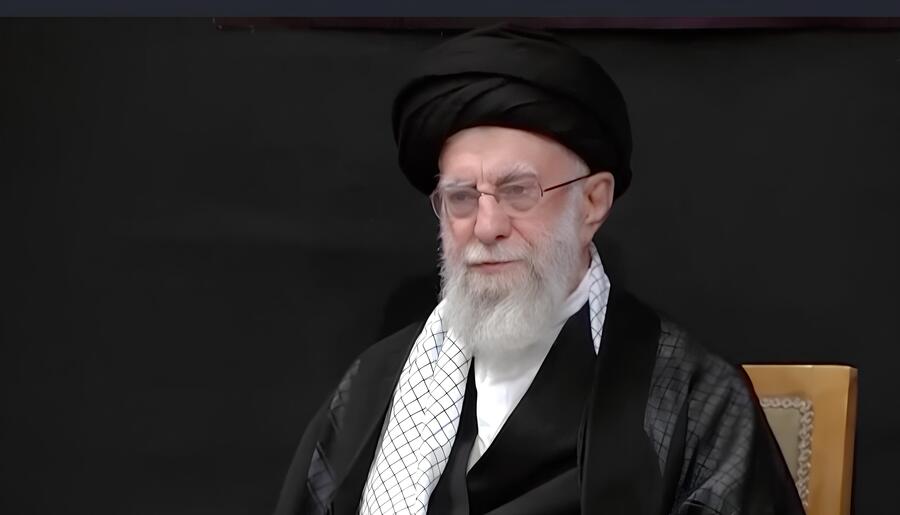
It would be a mistake to view the threats by the US and Israel to assassinate Ayatollah Khamenei, the face of Iran’s revolutionary leadership, as merely a regional ploy. Khamenei’s influence extends far beyond that of a typical religious or political leader; he represents a significant shift in the ideology of Shiite political Islam.

Based on his teachings on Wilayat al-Faqih, which means “guardianship of the Islamic jurist,” he reorganized the role of the clergy in society and argued that they should have jurisdiction over both religious and secular affairs. Revolutionary in its stance, it argued that we should not sit on our hands but rather actively participate in politics to pave the path for the Twelfth Imam, the Mahdi.
As a result of this shift in ideology, a political school of Shia Islam emerged, one that questions the immaculate separation of religion and state. A global catastrophe might break out as a result of the assassination plot targeting such a prominent religious figure, which would have far-reaching consequences. It could trigger sectarian schisms and violent uprisings because it undermines Shia legitimacy and identity.
For the sake of regional stability, it is imperative that the US and Israel refrain from launching a military assault against Iran in the future with the intention of removing its religious-political leadership.
All around the globe, Shia communities would see the death of a top religious leader as a direct threat to their religion and political ambitions. Killing a revered figure in Shia tradition would undoubtedly radicalise Shia populations, leading to vicious cycles of vehemence and revenge, as martyrdom is a fundamental theme in Shia consciousness, as symbolised by the tragedy of Karbala, destabilising not just the Middle East but also the larger regions of South and Central Asia, where
Shia populations reside dispersed among other communities, this would escalate a localised war into a larger sectarian and ideological struggle. Have the potential long-term consequences of these measures taken into account the likelihood of widespread sectarian reprisals and instability in the region?
The worldwide political Shia Muslim community faces serious consequences. A more forward-looking and revolutionary political position, held by Qom, and a more conservative one, Najaf, are the two main centres of Shia religious authority, and their differences would be exacerbated by the assassination or targeting of such a figure.
There is a growing concern that this polarisation could worsen sectarian tensions, escalate violence, and hinder attempts at peaceful political engagement. The targeting of Shia political and religious leaders is a provocation that cuts to the core of people’s religious and communal identities; why don’t these states recognise this? Instead of suffering, Iranians have shown incredible resilience in the 12-Day War with Israel.
The peril to assassinate someone associated with Ayatollah Khomeini’s legacy further muddies the global community’s perception of political Shia Islam. According to Khomeini’s global perception, a united Muslim Ummah that can repel Western supremacy and colonial legacies, rather than nationalist or sectarian differences, should be the foundation of Islamic authority. Nevertheless, this prophecy has given rise to several Shia groups in the Middle East, South Asia, and Central Asia, and it has influenced the political climate in states with large Shia populations.
A potential consequence of attempting to remove Iranian leadership is that these groups would become even more estranged and motivated towards vengeance rather than reconciliation. The situation is extremely dangerous if war breaks out again. If religious leaders in the region were targeted in an attack, a regional firestorm would most certainly follow a war between Israel and Iran. Threatening regional stability and further destabilising states like Afghanistan, Iraq, and Lebanon, the involvement of Shi’ite political actors and militias in the conflict is a real possibility.
This alarming situation appeals for rapid contemplation. The US should modify their strategies of regime change. Stopping the militarisation of sectarian identity requires global institutions and regional forces to work together to support political solutions that honour religious pluralism.
By attacking the complex web of faith, politics, and identity within Shia political Islam, the plot to assassinate Ayatollah Khamenei goes beyond a mere geopolitical manoeuvre. Khomeini’s revolutionary style combined religious authority with political control, which was a major departure from the traditional form of spiritual-only leadership. Any violent attack on such a leader would only deepen the divide between political activists and those seeking spiritual guidance. As a result, sectarian and political tensions among them will escalate.
One aspect is evident with such provocations: diplomatic norms have clearly degraded if the world does not care if a world leader publicly discusses the possibility of assassination. Cautious Iran prioritises defending the principle that world leaders should not be used as bargaining chips and that military action should be restrained to preserve international harmony.
Author: Dr. Marriyam Siddique – Senior Research Fellow, Maritime Centre of Excellence, Pakistan.
(The views expressed in this article belong only to the author, and not to her institution, and do not necessarily reflect the views of World Geostrategic Insights).