



By Muhammad Faiz ur Rehman
An arms race is a competitive process between states in which they develop and modernize their military capabilities in response to each other’s actions.

Such a race arises due to a lack of trust, uncertainties, and the absence of an effective mechanism to stop these developments. Nuclear arms races have a high potential for destabilization, as they involve weapons that can have catastrophic consequences if miscalculated.
Both the United States and the Soviet Union have a stockpile of nuclear warheads. Deterrence prevented direct conflict, but the competition itself posed a major threat to global politics and economics, bringing the international system to the brink of nuclear catastrophe on several occasions. Arms control was introduced as a system to counter these dangers by aiming to limit weapons, reduce incentives for escalation, and increase transparency—factors that can control the rivalry between the two sides.
In February 2026, the New START Treaty – a nuclear arms control agreement between the United States and Russia – expired, raising serious concerns that the nuclear competition between the US and Russia may once again intensify. New START was the last remaining treaty to control the strategic nuclear forces, essentially serving as the cornerstone of the post-Cold War nuclear stability. This would bring the two largest nuclear powers, for the first time in more than fifty years, to the possibility of operating without the presence of any legal binding to limit their nuclear and strategic arsenals. This article examines the background to the new START Treaty, the nuclear arms race between the US and Russia, and the implications, uncertainties and risks for the global nuclear order. It will also explore non-treaty options that could preserve global nuclear governance in the absence of such legal bindings.
Background of New START:
After the Cold War, New START was born from the initial efforts to limit US-Russian strategic competition. Signed in 1991, the Strategic Arms Reduction Treaty (START I) limited 6000 accountable warheads and 1600 strategic delivery vehicles for each side. It incorporated proper measures for verification, such as onsite inspections, and stood in force until December 2009. Along with the START I, strategic offensive reductions treaty (SORT) was also signed in 2002, which limited stationed warheads but lacked mechanisms for verification, definitions, and counting rules. SORT expired in 2012.
As the START I’s expiration approached, U.S and Russian officials started exploring alternative agreements but failed to produce a consensus during the final years of the W. Bush administration. Russians rejected the US proposal, which was solely focused on the limitation of deployed warheads, creating a potential to develop unlimited delivery systems and stockpiling of reserve warheads, providing bases for a potential breakout.
In 2009, with Barack Obama taking office as president, arms control once again became an issue on the bilateral agenda. President Dmitry Medvedev and Obama agreed to begin negotiations in April 2009. They outlined a basic framework for the new treaty by July of the same year. Negotiations heavily relied on the START I framework, helping in fast progress. New START was signed in 2010 and came into force in February 2011.
This treaty included three numerical limitations: 1550 deployed Strategic warheads, 700 deployed Intercontinental ballistic missiles (ICBMs), Submarine-launched ballistic missiles (SLBMs), heavy bombers, and 800 non-deployed and deployed launchers. A comprehensive verification regime was established, which included notifications, data exchange, a bilateral consultative commission for compliance issue and lastly onsite inspections. The U.S. and Russia met the requirements of the treaty by February 2018. Making it an enhancing tool for transparency and predictability.
The treaty was set to expire in 2021, but it was extended for five years just a few days before its expiration. However, Russia suspended this treaty in 2023 as a response to the US military support to Ukraine. Although the arms control agreement remained formally in force, it eventually came to a standstill due to the suspension of warhead inspections. This created the potential for a renewed arms race.
Renewal of the Arms Race between the US and Russia
Expiration of the New START treaty has left Russia and the USA’s nuclear planning without any legal force to control their arsenal developments. Both states have developed their modernization programs around the treaty’s proposed limit, but after its expiration, without any such mechanism, the arms planning would enter into a phase of uncertainty.
Russia and the US have substantial “upload capacity” warheads, which means that they can simply increase the number of warheads by placing more on existing delivery systems that already have deployed warheads on them. To comply with the new START, the United States has placed single warheads on each of the 400 Minuteman III ICBMs. However, they can be configured to carry up to three warheads. Additionally the US can reactivate “warm” ICBM silos, which are maintained at 50 for now. Once fully uploaded, the United States ICBM force would multiply and reach up to 950 warheads, which is approximately 400 warheads right now.
Moreover, the US could also upload the submarine-launched ballistic missiles; right now, the trident SLMBs are maintained on four to five warheads, whereas it has the capacity to carry eight warheads. The number of warheads on the deployed SLBM could be doubled to 2300, which is roughly 944 warheads, if reactivated. The nuclear bomber-based weapons can be deployed more easily, with nearly 700 gravity bombs and cruise missiles available.
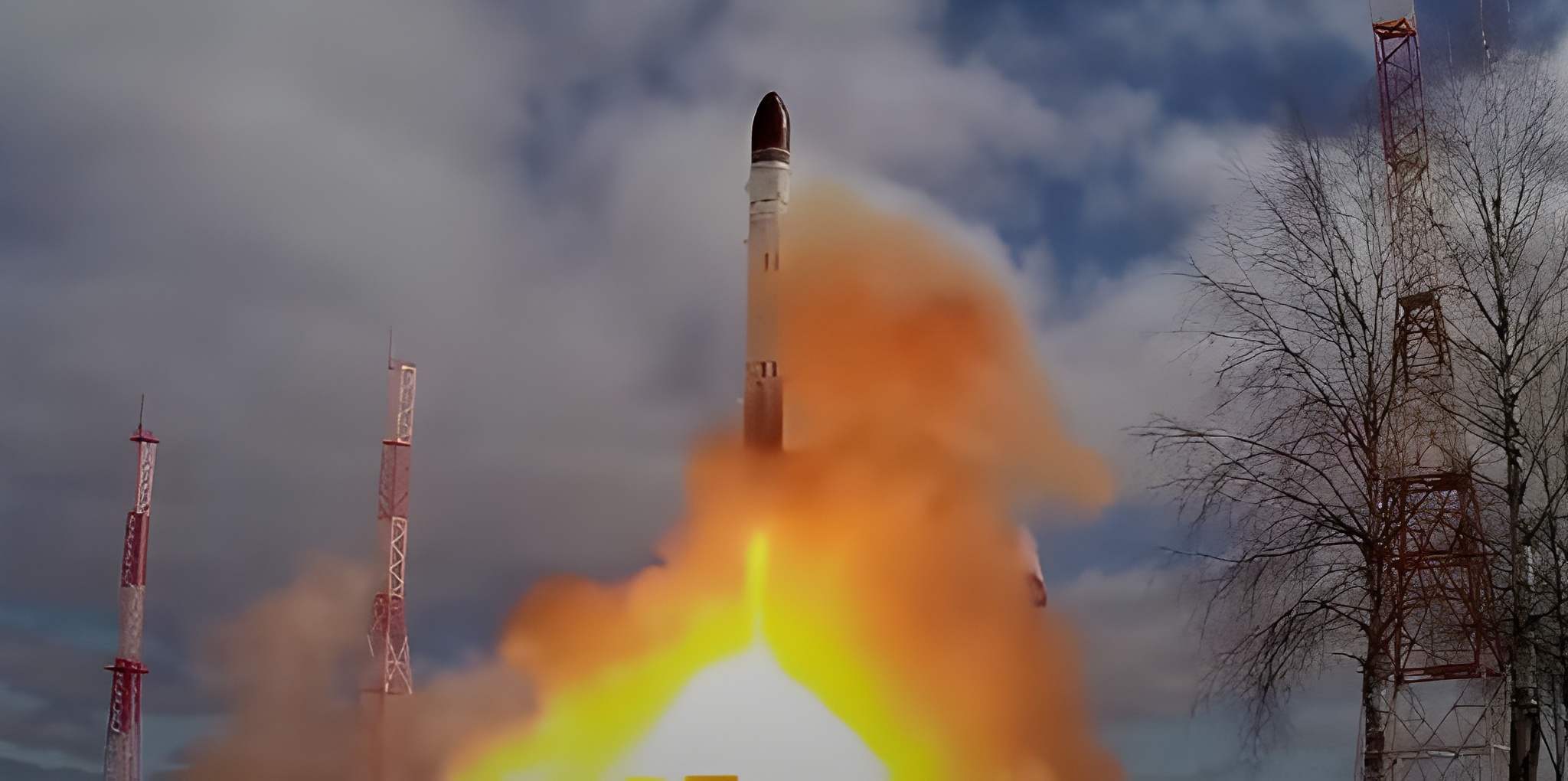
On the other side, Russia possesses the same capabilities. The newer RS-28 Sarmat is capable of carrying ten warheads, whereas Russia’s SS-19 ICMBs are limited to meet the treaty’s limits, which is believed to hold up to ten warheads at a time. The same is believed to have been done with the SS-27 Yars. Considering the nonexistence of the New START, there would be an increase in Russian ICBM warheads from 812 to 1185. Similarly, with the SLMBs, there is an estimate that these warheads can rise from 560 to around 800 warheads. While hundreds of additional weapons could be deployed through bomber forces.
This increase in the warheads is not difficult because it doesn’t require building the new launchers and missiles. It is reposted by the congressional budget that it requires around 100 million dollars for a simple upload of warheads around the nuclear triad. This cost is a one-time expense and makes it relatively feasible for rapid expansions of these arsenals.
Disruption in global nuclear order:
The New START’s collapse poses consequences beyond the bilateral relations of the U.S. and Russia. These arms control agreements hold a central role in maintaining the global nuclear order because they reinforce norms of transparency and restraint. Their decline points towards the deteriorating confidence in the commitment of nuclear-capable states to comply with their responsibility in managing their arsenals.
The Nuclear Non-Proliferation Treaty rests on the bargain that non-nuclear states show consensus to not develop nuclear weapons, and the nuclear armed state would comply with the disarmament negotiations; moreover, the end of the New START treaty shows Russia and the United States as nuclear powers weakening this bargain and abandoning their obligations. This will increase international concerns about compliance with NPT, leading other nuclear-armed states to reassess their nuclear posture, leading to proliferation pressures.
China’s rising power also complicates the nuclear order. China’s arsenal stockpile was comparatively smaller when the New START treaty came into existence. In 2022 Pentagon reported that China can deploy 1500 warheads by 2035. This development influences Russia and USA’s calculation, lowering incentives for bilateral restraint. The risk of extensive nuclear competition would be increased.
Evolving alignment can be seen due to increasing technological and energy cooperation between Russia and China. Both have developed civilian nuclear energy cooperation, which includes the development of Russian-designed VVER-1200 reactors at China’s Xudapu and Tianwan, with agreements signed in 2025 for additional units. They have also announced cooperation in nuclear power systems for lunar missions. This includes a proposed nuclear power plant to be built between 2033 and 2035.
While civilian in nature, these developments can shape broader geopolitical alignment and technological self-reliance, developing a multipolar nuclear environment complicating bilateral arms control models.
Doomsday
Recently, The Bulletin of the Atomic Scientists revealed that the doomsday clock has advanced 85 seconds to midnight, the closest since 1947. The cited reasons behind this advance include the collapse of nuclear arms control, the absence of strong diplomatic systems, and growing rivalry between nuclear-armed states posing threats for escalation management. Such Erosion of arms control between the world’s two major nuclear arsenal states poses concerns of destabilization because the end of arms control regimes will reduce predictability and transparency in nuclear governance.
Post New START Risks and Uncertainties
Just after the New START’s end, the immediate risk of strategic uncertainty would develop. Both sides would rely on national technical means such as inspection through satellites. Without on-ground inspections and data sharing from both sides. This initiates a trust deficit and worst-case planning.
These increased uncertainties and removal of agreed communication and verification mechanisms may also cause misinterpretation for crisis management. For instance, casual military activities can be seen as the preparation for an attack, which can increase pressure for escalation.
Such an uncontrolled environment may induce an arms race that could expand beyond strategic nuclear weapons. Russia and the USA may spend more on non-strategic nuclear weapons, defense missile systems, and contemporary conventional systems to offset uncertainty, further complicating deterrence.
There would be increased financial risks for both sides. It is estimated that the development of such extensive strategic forces could cost the United States between $88 and $439 billion dollars in acquiring these systems, with additional annual operation costs. These monetary figures do not include the costs of development, research, and production of warheads. Similar pressure would be seen on the Russian side.
Non-treaty Pathways
Absence of formal agreements like New START doesn’t make escalation inevitable, despite the existence of risks. The possible option without a formal political agreement is adherence to New START‘s core values. This “gentleman’s agreement” would help maintain the existing force systems without any formal approval.
Both states can opt to put a cap on the number of arsenals voluntarily, maintaining them below their maximum technical capacity. While both sides would not be legally constrained, the public declarations providing arms ceilings would ultimately signal strategic restraint. These limitations can serve as a reference point to strategic restraint while not needing to be symmetrical declarations.
However, such agreements without legislative approval, containing the absence of any verification mechanisms, such as data exchanges, would have loopholes due to classification and legal constraints. In these temporary, informal structures, both would have to rely on the means of technology, and any miscalculation can increase uncertainty.
Other options could be a unilateral transparency mechanism, confidence-building focusing on crisis management, Routine Communications about developments, and declarations of force levels from both sides. These steps do not carry the potential to replace any treaty, but they aim to reduce misinterpretations and signal restraint.
Policy options should be adopted that reduce rapid warhead upload on existing delivery systems, communication mechanisms, and predictability elements preservation. Such a measure could stabilize relations and help reduce the destabilizing outcomes of a renewed arms race.
Conclusion
New Start holds the status of the last remaining formal agreement between the USA and Russia that limits the strategic nuclear forces; its expiration would pose existential threats to global nuclear governance. The treaty provided guardrails for arms control, such as verification protocols, which helped to sustain arms restraint for over a decade. Its subsequent end would formally remove any obligations and incentivize the arms race.
Both the United States and Russia have the financial and technical capabilities to rapidly expand their nuclear warhead arsenals simply by loading them onto existing delivery systems. Such actions appear rational in such an uncertain environment, but the consequences would extend beyond bilateral rivalry, weakening nonproliferation norms and undermining the global nuclear order.
It is clear that arms control in these political conditions is difficult; unconventional options could provide a limited but significant brake on further arms development. Therefore, compliance with existing limits, confidence-building initiatives, and transparency measures can prevent the development of dangerous patterns similar to those seen during the Cold War competition. Ultimately, the future of the nuclear order depends not only on formal agreements, but also on the political will of actors to responsibly manage rivalry and the intense international system.
Author: Muhammad Faiz ur Rehman – Research Intern at the Center for International Strategic Studies AJK (CISS AJK). He graduated in Political Science and Public Policy from the National Defense University in Islamabad and has worked in various NGOs and think tanks in research and analysis roles.
(The opinions expressed in this article belong only to the author and do not necessarily reflect the views of World Geostrategic Insights).
Image Source: Russian Ministry of Defense.